
Armenia: The Country That Has Been Here Since the Beginning
The first Christian nation. The oldest winery on earth. A culture that has survived everything.
There are countries you visit and countries that change the way you think about history. Armenia is the second kind. It is a small, landlocked country in the southern Caucasus that has been at the centre of the world's most consequential events, the rise of Christianity, the Silk Road, the great empires of Persia, Rome, Byzantium and the Ottomans, the Soviet experiment, one of the twentieth century's defining genocides, and has emerged from all of it with its language, its alphabet, its church, its food and its particular dignity entirely intact. To travel through Armenia is to move through one of the oldest continuously inhabited landscapes on earth and to understand, slowly, what it means for a people to have held on to everything that matters about themselves across four thousand years of history.
It is also a country of extraordinary beauty. The monasteries, many of them carved directly into mountain rock faces or perched on promontories above deep gorges as if the architects were making a statement about the relationship between faith and the landscape it inhabits, are among the most dramatically situated religious buildings anywhere in the world. The wine, produced from indigenous grapes in one of the oldest wine-producing regions on earth, is extraordinary and almost entirely unknown internationally. The brandy, which has been distilled in Yerevan since the nineteenth century and which carries the particular character of Caucasian oak ageing and Armenian mountain fruit, is one of the great spirits of the world and one of the least celebrated. And the people, shaped by a history of survival and by a hospitality tradition that reflects the deep Armenian understanding of what it means to receive a guest, are among the warmest and most generous you will encounter anywhere.
Yerevan: the pink city at the foot of Ararat
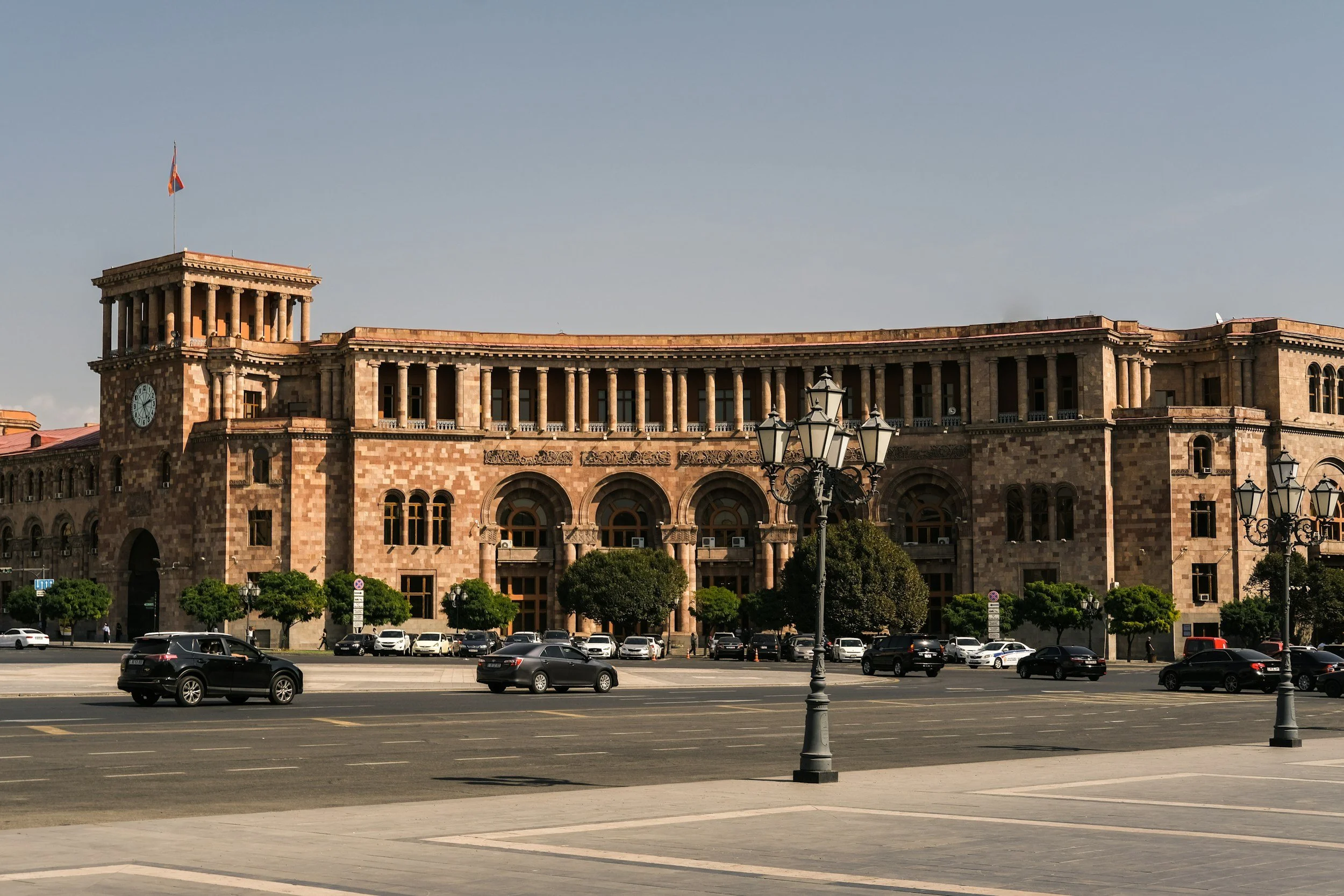
Yerevan is one of the oldest continuously inhabited cities on earth, founded in 782 BCE and now a capital of wide boulevards, rose-coloured tuff stone buildings, open-air sculpture and café culture that reflects the deep creative tradition of a people who have expressed their identity through art across millennia. The city faces Mount Ararat across the Turkish border, the great snow-capped peak that is the symbol of Armenia and has been since the earliest Armenian literature, visible from almost every point in the city on a clear morning and heartbreaking in its proximity and its inaccessibility.
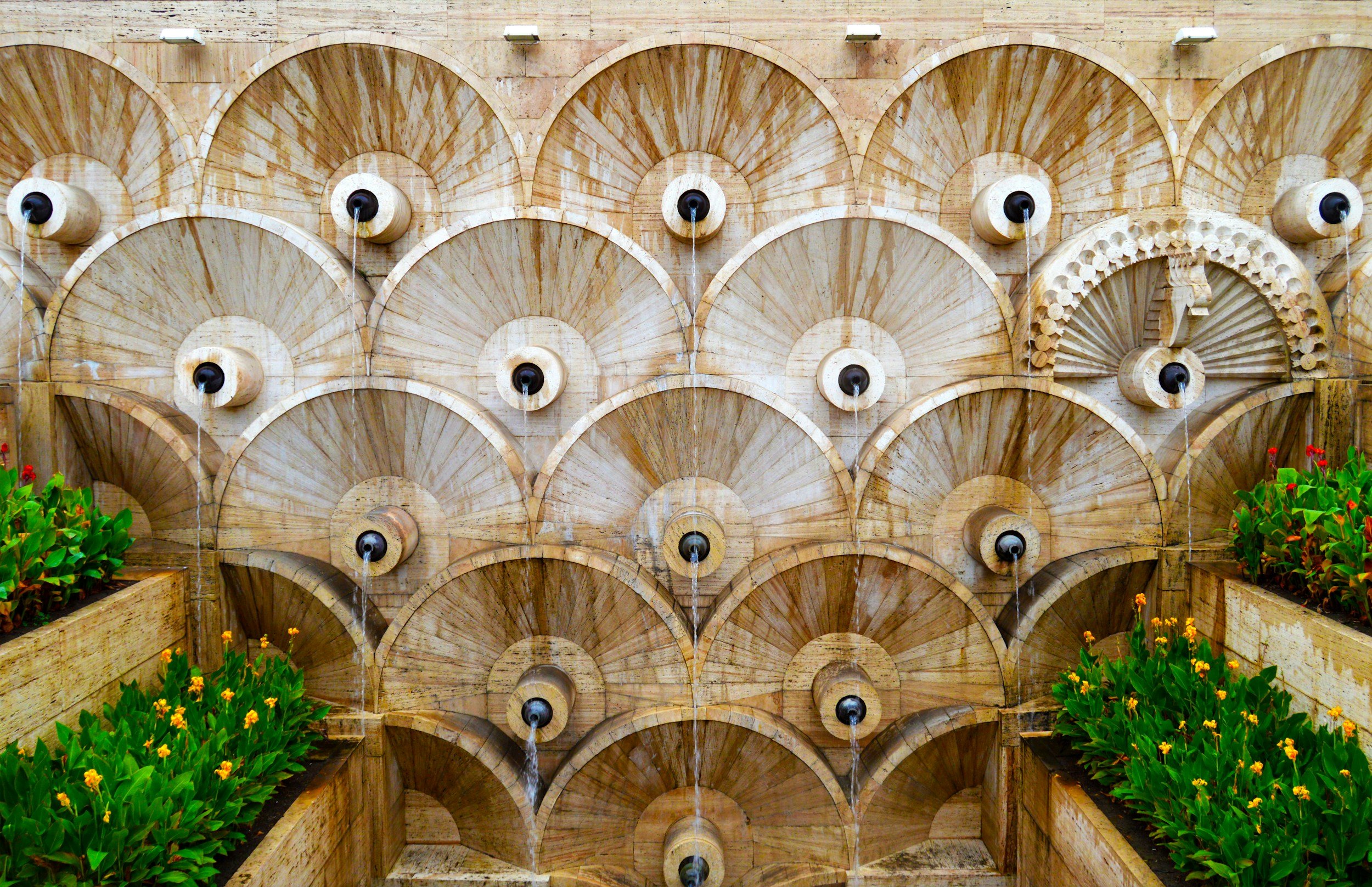
The Cascade complex, the giant open-air staircase of fountains and contemporary sculpture that rises from the city centre to the Victory Park above, is one of the finest urban public spaces in the Caucasus. The sculpture garden at its base, with works by Fernando Botero and other international artists placed alongside Armenian contemporary pieces, reflects the cosmopolitan ambition of a city that has always understood itself as a cultural centre. The view from the top of the Cascade on a clear morning, with Mount Ararat filling the southern horizon, is one of the finest views available anywhere in Armenia.
The Matenadaran, the repository of ancient manuscripts on the hill above the city, is one of the most important libraries in the world and one of the least known internationally. It contains over 23,000 medieval manuscripts, the largest collection of Armenian manuscripts anywhere on earth, along with texts in Arabic, Persian, Greek and other languages that passed through Armenia on the Silk Road. A private visit with a specialist guide who can explain what the illuminated manuscripts reveal about Armenian artistic and intellectual culture across fifteen centuries is one of the most genuinely educational experiences Yerevan offers.
The Armenian Genocide Memorial of Tsitsernakaberd, on the hill above the city, is the defining civic monument of modern Armenia. The eternal flame at its centre and the twelve slabs that lean inward above it, representing the twelve lost provinces of historical Armenia, are one of the most powerful pieces of memorial architecture in the world. It requires no guide and no explanation. It requires only the willingness to be present to what it commemorates and to understand that this is a country that has built its contemporary identity in full knowledge of what was done to it in 1915.
The open-air sculpture that lines the streets of central Yerevan, the Cafesjian Centre's collection on the Cascade and the works scattered through the city's parks and squares, reflects a cultural policy that has made Yerevan one of the most art-rich public spaces in the region. A private morning walking the city with a guide who knows the artists and the stories behind the works reveals an urban culture of genuine ambition and sophistication.
The wine: the oldest vineyards on earth
Armenia's wine culture predates almost everything. The world's oldest known winery was discovered in a cave complex in the Vayots Dzor region in 2011, dating to around 4000 BCE. The region's vineyards, planted with indigenous varieties including the extraordinary Areni Noir grape that exists nowhere else in the world, produce wines of a character that is genuinely unlike anything made in Western Europe.
The Vayots Dzor wine region is where the Armenian wine tradition was buried during the Soviet period, when the vineyards were uprooted and replaced with brandy production crops, and where it has been most dramatically revived over the past two decades. The vineyards here include some of the highest altitude vines in the world, producing wines with an intensity and a mineral character that reflects the extraordinary terroir of the Armenian highlands.
A private wine tasting at one of the boutique producers in the Vayots Dzor, tasting with the winemaker and understanding the specific history of a wine tradition that was suppressed for seventy years and has been rebuilt from almost nothing, is one of the most compelling wine stories available anywhere in the world. The combination of the ancient cave, the indigenous grape and the dramatic gorge landscape of Noravank, the extraordinary monastery carved into the red rock walls above the winery, makes this one of the most complete afternoon experiences in the country.
The Karas wine region near the Turkish border offers a completely different experience, with vineyards planted on the volcanic soils of the Ararat Valley producing wines in a more international style. The drive through this wine country passes the Cathedral of Etchmiadzin, the mother church of the Armenian Apostolic faith and a UNESCO World Heritage Site that has been the religious centre of the Armenian world since 301 AD when Armenia became the first country to adopt Christianity as its state religion.

The monasteries: faith carved into stone
Armenia's monasteries are the most important and most moving expression of the country's identity. They are not simply old buildings. They are the physical embodiment of a faith that has defined and protected the Armenian people across seventeen centuries of invasion, occupation and attempted erasure, and they carry that weight in their stones in a way that is immediately felt even by visitors with no particular religious interest.
Geghard, the monastery partially carved directly into the rock face of a mountain gorge east of Yerevan, is a UNESCO World Heritage Site and one of the most extraordinary religious buildings in the world. The combination of the carved chambers, the spring that runs through the main church and the acoustic properties of the stone rooms, where the polyphonic chanting of the Armenian liturgy resonates in ways that seem to come from the rock itself, make it unlike any other religious site in the region. The hike from Garni to the monastery through the gorge, a walk of approximately two hours through one of the most dramatic landscapes in Armenia, is the right way to arrive at Geghard for those willing to make the approach on foot.
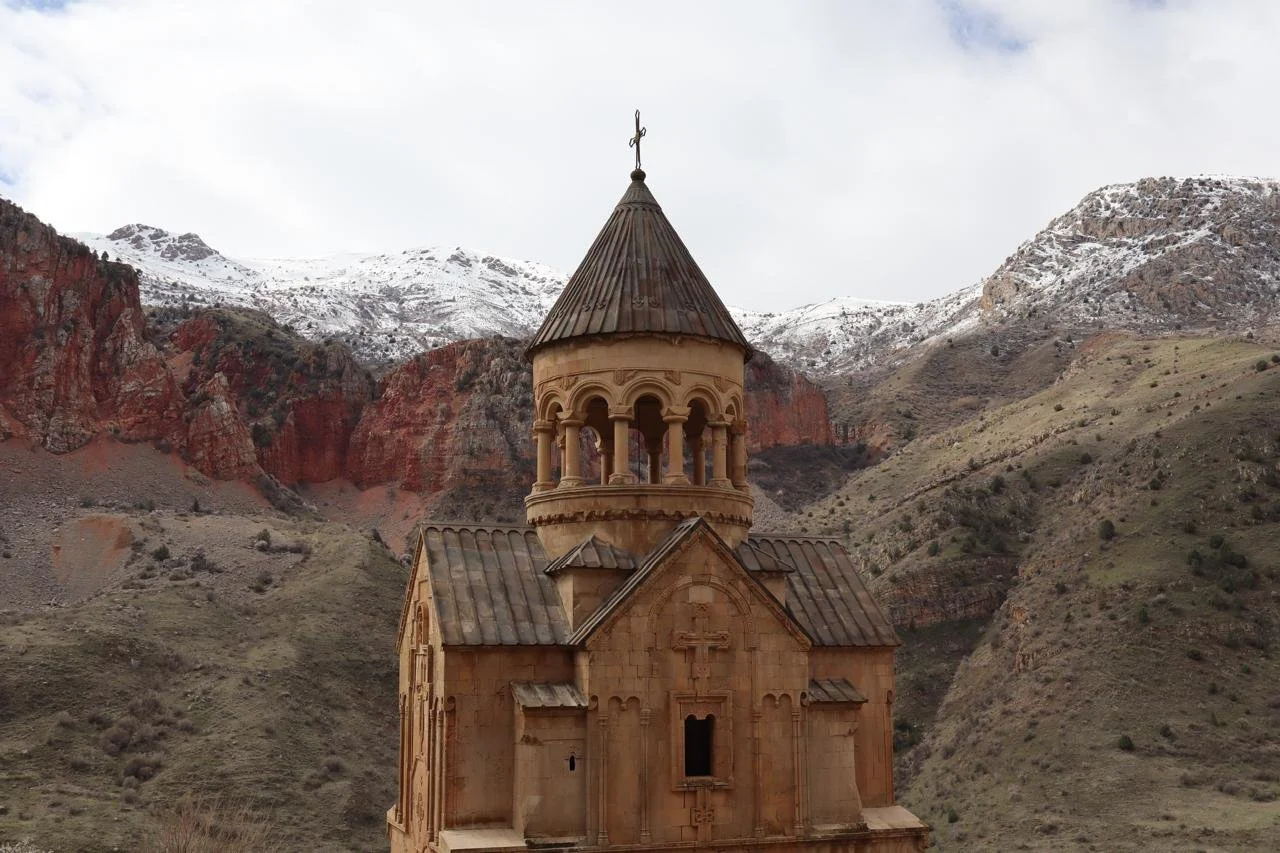
Noravank, set into a narrow canyon of extraordinary red rock in the Vayots Dzor wine country, is the most dramatically situated monastery in Armenia. The canyon walls rise sheer on both sides, the monastery perches on a narrow ledge above the valley floor and the combination of the architecture and the geology produces a view that is genuinely unlike anything else in the Caucasus. The light in the late afternoon, when the red walls of the canyon are lit from the west and the monastery is in shadow, is when Noravank is most extraordinary.
The Cathedral of Etchmiadzin, the mother church of Armenian Christianity built in 301 AD, is the most important religious site in Armenia and one of the oldest Christian churches in the world. A private visit with a guide who understands the full depth of the Armenian Apostolic tradition gives this extraordinary building the context it deserves and transforms what might otherwise be a very old and very significant church into something that explains the entire subsequent history of the Armenian people.
Lake Sevan and the Soviet landscape
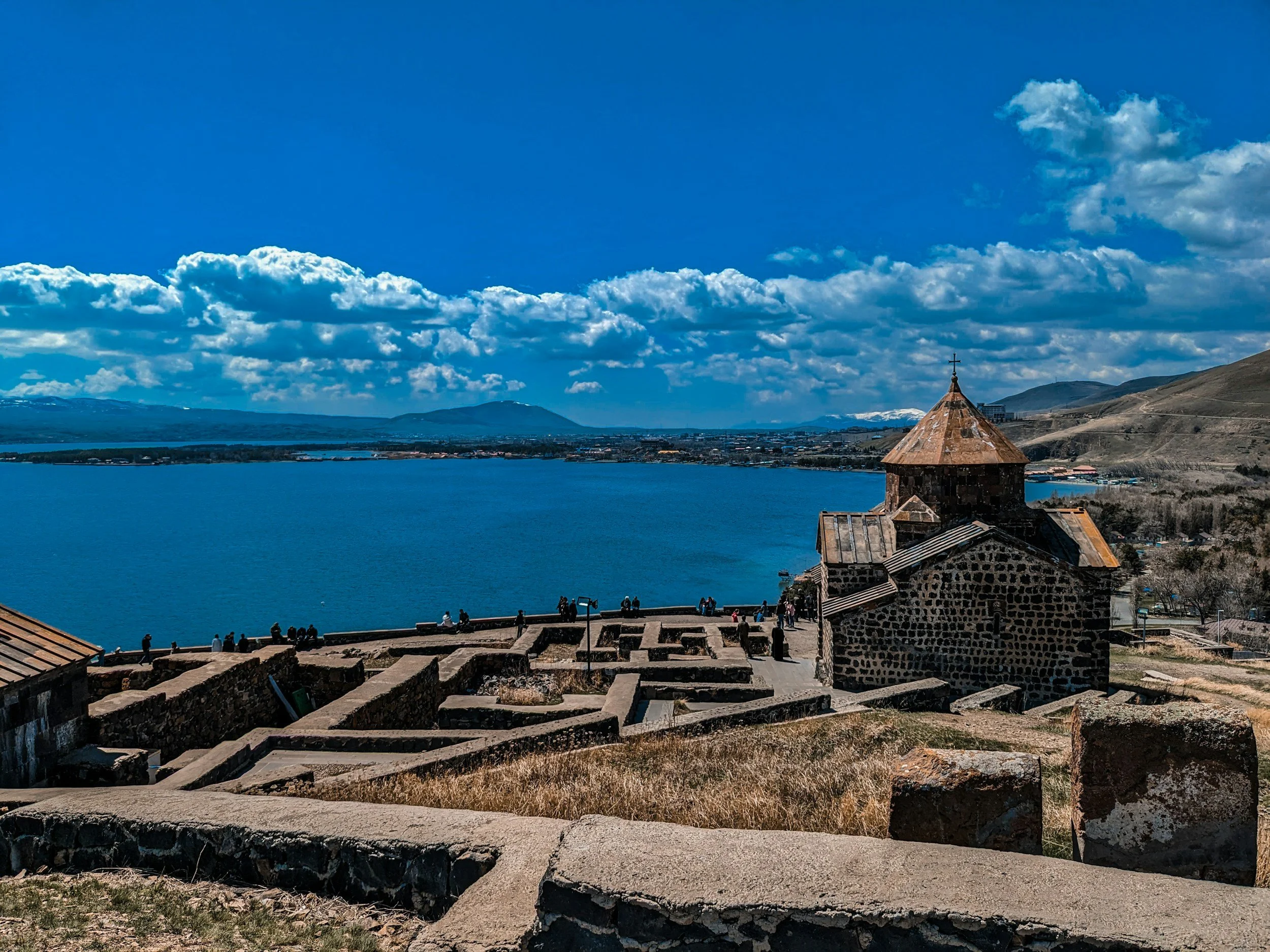
Lake Sevan sits at 1,900 metres in the highlands northeast of Yerevan, a vast expanse of deep blue water that the Armenians call the Sea of Armenia. The Sevanavank monastery on its peninsula, the extraordinary quality of the light on the water in the afternoon and the particular atmosphere of a lake that carries the traces of the Soviet era in its architecture and its infrastructure give it a character that is entirely specific to Armenia and unlike any other lake landscape in the Caucasus.
A private boat trip on Lake Sevan, with sparkling wine on board and the monastery on the peninsula growing smaller as you move out onto the water, is one of the most quietly memorable experiences Armenia offers. The combination of the altitude, the colour of the water, the surrounding mountains and the specific quality of the Armenian light in the late afternoon produces a visual experience that is difficult to describe accurately and impossible to forget.
The vintage four-wheel drive journey along the lake shore, stopping at the farms producing the fresh white cheese that has been made in this region for centuries and understanding the relationship between the Soviet-era landscape and the ancient Armenian culture that has always existed beneath it, is one of the most specifically Armenian days available in the country.
Lavash, carpets and the food that defines a culture
Armenia's culinary and craft traditions are inseparable from its identity as a people, and the experiences that reveal them most honestly are not in restaurants or museums but in the homes, workshops and village kitchens where these traditions are still practised daily.
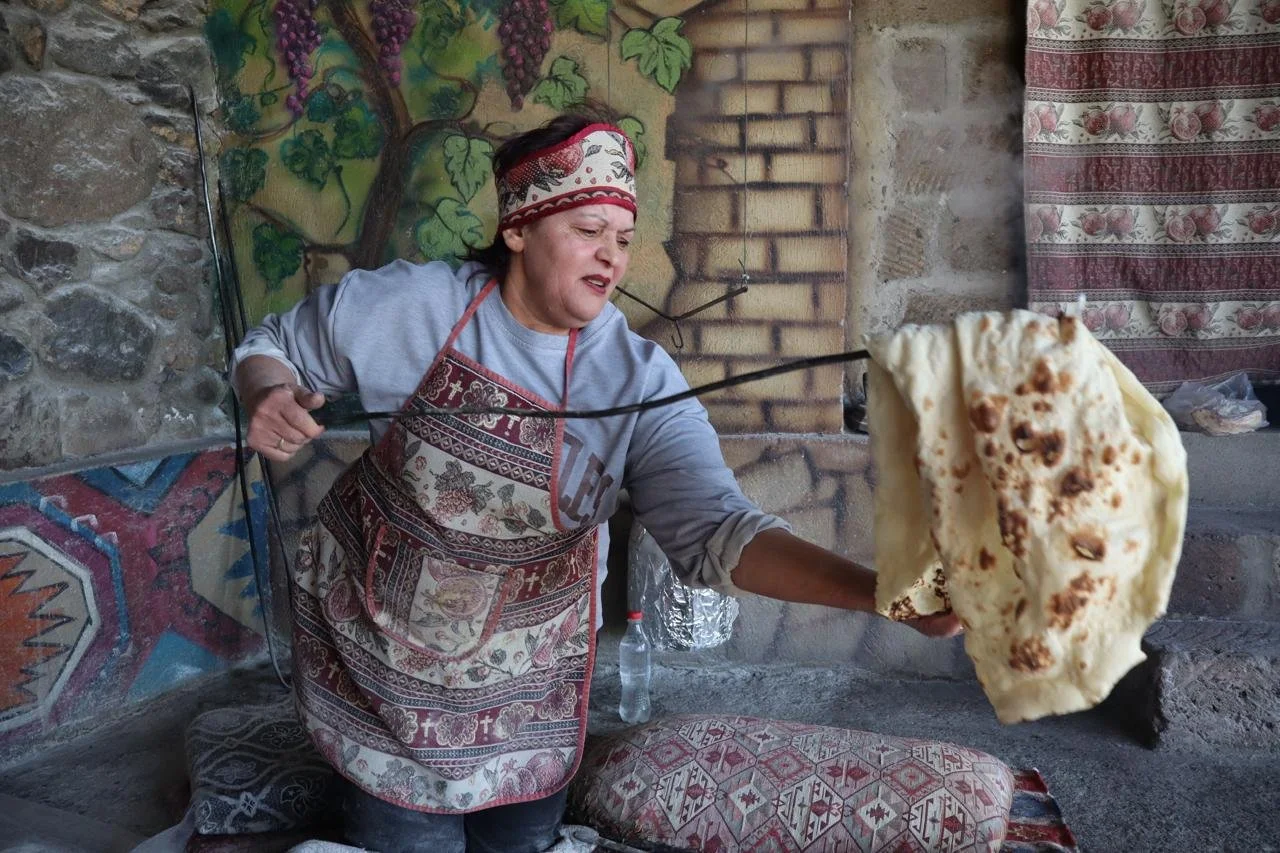
Lavash is the foundation of Armenian food culture and one of the most ancient bread traditions in the world, recognised by UNESCO as an Intangible Cultural Heritage of Humanity. The thin flatbread, stretched by hand to almost translucent delicacy and slapped against the inner wall of a tonir clay oven buried in the earth, bakes in seconds and emerges blistered and fragrant in a way that no oven-baked bread can replicate. A private lavash-making session with a village family, learning to stretch the dough over the cushioned baking pillow and lower it into the heat of the tonir, then eating the bread warm with fresh white cheese and herbs from the garden, is one of the most intimate and most memorable experiences Armenia offers. The women who make lavash in the traditional manner typically work together, passing the stretched dough between them in a rhythm that has not changed in centuries, and watching the coordination and the ease of the process reflects something essential about the collective dimension of Armenian village life.
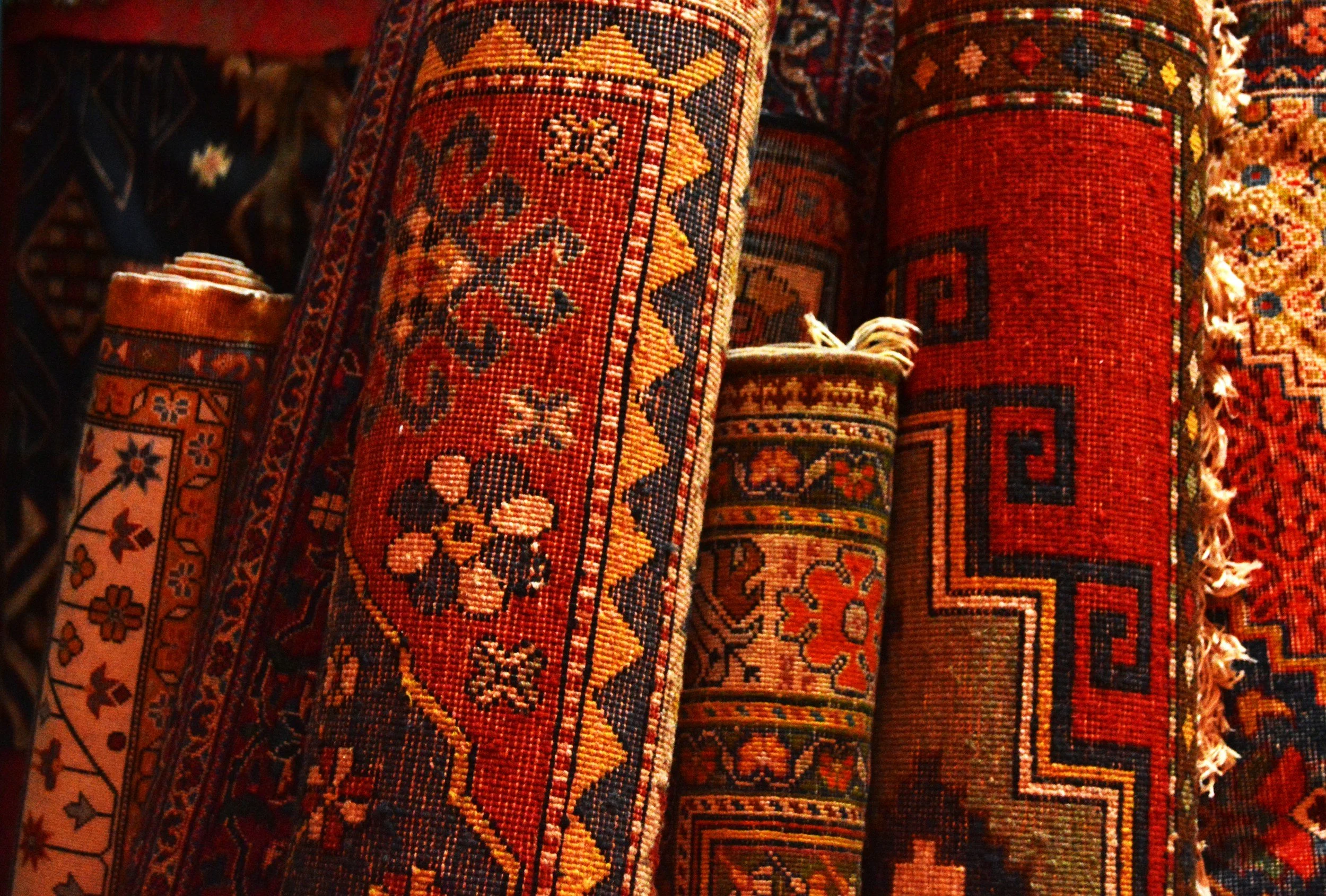
The Armenian carpet tradition is one of the oldest and most technically accomplished in the world, predating the Persian carpet culture that most international visitors associate with the region. Armenian carpets, or karpets, the word from which the English language borrowed its own term, have been woven with specific regional designs, natural dyes and hand-knotted techniques for at least two thousand years. A private visit to one of the carpet workshops or family weaving studios where this tradition is still practised, understanding the specific symbolism encoded in the geometric patterns and the relationship between the design vocabulary and the specific village or region it comes from, reveals a craft tradition of extraordinary depth that most visitors to Armenia never encounter.
The food of Armenia is deeply rooted in the agricultural calendar and in the specific produce of the Armenian highlands. The cheeses, particularly the string cheese braided with black nigella seeds and the aged varieties produced in the mountain villages, are of extraordinary quality and reflect a dairy tradition shaped by the specific grasses of the high altitude pastures. The dried fruits, apricots, figs and mulberries dried in the traditional chir manner in the sun-drenched courtyards of the Ararat Valley, are among the finest preserved fruits in the world and carry the particular intensity of Armenian summer concentrated into a small, extraordinary thing. A private food experience combining a village cheese tasting, a chir house visit and a lunch of traditional Armenian cooking prepared with the specific seasonal produce of the region, is one of the most complete and most honest introductions to the country's food culture available anywhere in Armenia.
Why Armenia
Armenia is at that particular moment in a destination's arc where the infrastructure for private luxury travel is developed enough to deliver an excellent experience but the international discovery curve has not yet caught up with the reality of what the country offers. The monasteries are extraordinary and almost empty. The wine is world-class and almost unknown. The food, particularly the cheese, the dried fruits and the lavash baked in the tonir clay oven in the traditional manner, is deeply rooted in a culinary tradition of real character. The landscape is dramatic and largely unexplored by international visitors.
The traveller who goes to Armenia now, before the boutique hotels proliferate and the main sites develop the queues that fame eventually produces, will find a country of four thousand years of history, extraordinary natural beauty and a hospitality that reflects the particular warmth of a people who understand, at the deepest level, what it means to welcome a guest.
Ready to start planning your Armenia journey? Explore our Armenia destination page for more on regions, experiences and the best time to visit. When you are ready, get in touch and we will begin designing your journey around you.