
Bali Beyond the Crowds: What a Private Guide Actually Shows You
The island everyone thinks they know. The version almost nobody finds.

Bali is one of the most visited islands in the world and one of the most consistently misrepresented in the travel content that surrounds it. The Bali of the wellness retreat and the Instagrammed rice terrace and the infinity pool overlooking the jungle is real, but it is a thin layer over something far more interesting, far more complex and far more rewarding for the traveller who arrives with genuine curiosity rather than a curated itinerary downloaded from a travel blog.
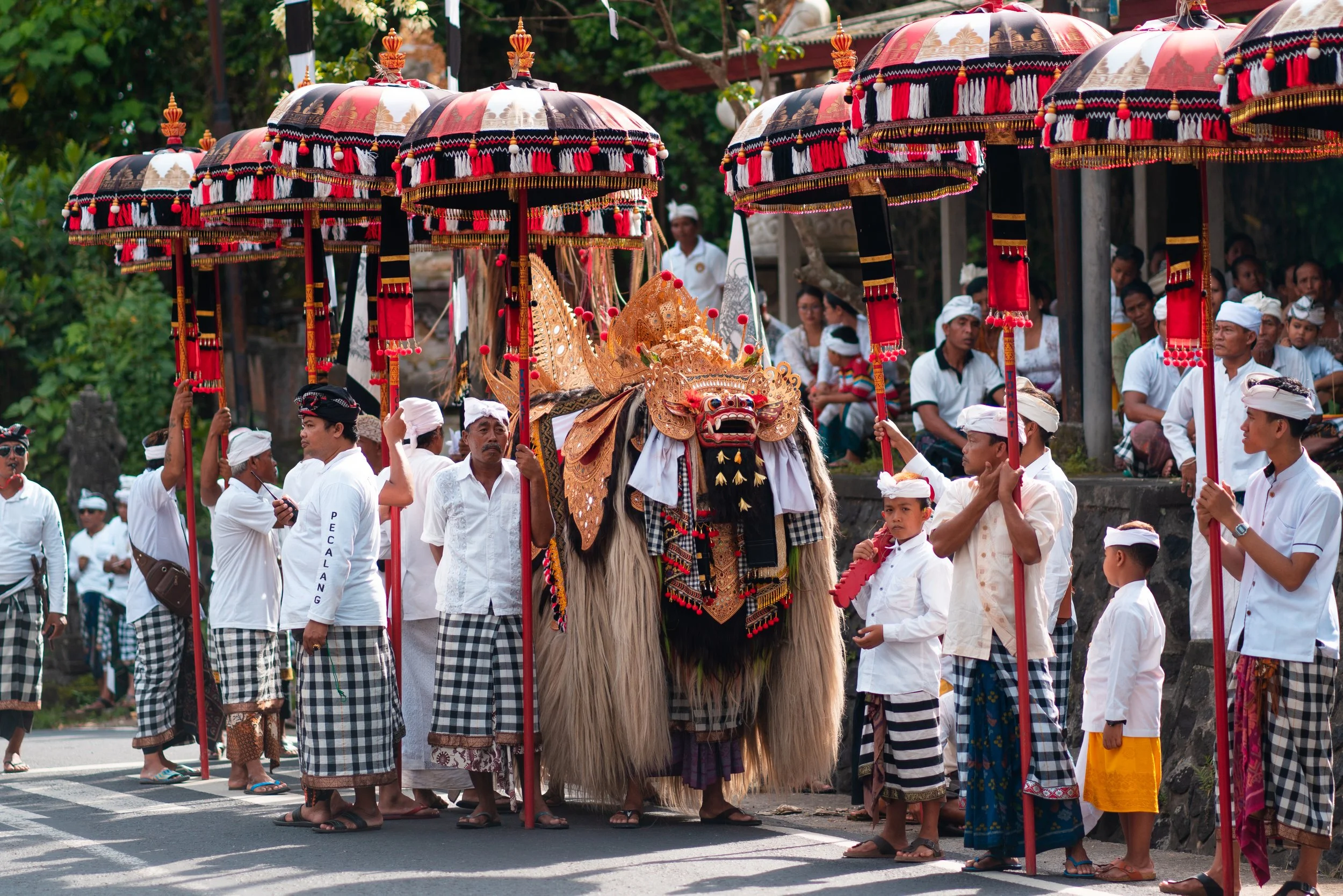
The island is small enough to cross in two hours but rich enough to occupy a lifetime of attention. It has been Hindu since the great Majapahit empire of Java fled here in the fifteenth century, bringing with it a culture of ceremony, art, architecture and the daily relationship between the spiritual and the practical that defines every aspect of Balinese life. The offerings placed at doorways each morning, the incense smoke rising from the temples, the gamelan music that begins before dawn in the village compounds, the extraordinary cremation ceremonies that can transform an entire village for days: all of it is alive, all of it is genuine and all of it is invisible to the visitor who moves only through the well-worn tourist circuit.
The private guide who knows Bali from the inside, who grew up within its cultural traditions and has spent years developing the local relationships that open doors the standard itinerary never finds, is the most important factor in the quality of any Bali experience. What follows is the version of Bali that guide reveals.
Ubud and the cultural heart of the island
Ubud is the cultural capital of Bali and the right base for understanding the island beyond its beaches. Surrounded by the rice terraces of the Tegallalang valley, the artisan villages of the surrounding hills and the extraordinary temple architecture of a region where every village has its own ceremonial calendar and its own artistic tradition, Ubud rewards those who move slowly through it and go beyond the obvious.
The morning market in the centre of Ubud, which operates from four until eight in the morning and is almost entirely local rather than tourist-facing, is one of the finest introductions to Balinese daily life available anywhere on the island. The produce, the dried spices, the pre-made offerings and the specific ingredients of Balinese cooking that you will not find in any supermarket or tourist shop, are all there in the dark and the smoke and the sound of a market that has been happening in the same place in essentially the same form for generations. A guide who can explain what each ingredient is and what ceremony or dish it is used for transforms a market visit from a sensory experience into an educational one.
The galleries and craft workshops of the Ubud area, particularly in the villages of Mas, Celuk and Batuan, represent some of the finest traditional art and craft production in Southeast Asia. The woodcarvers of Mas, the goldsmiths and silversmiths of Celuk and the wayang shadow puppet makers of Batuan are working in traditions that have been passed down within families for generations, and a private visit to the workshops, watching the work being made and understanding the symbolic vocabulary of each craft, is one of the most genuinely educational and most beautiful experiences Bali offers. The difference between buying a piece of Balinese craft from a shop and buying it from the person who made it, in the workshop where it was made, after a conversation about what it means, is the entire experience.
E-bike through the rice terraces with a private picnic lunch
The rice terraces of central Bali, the subak irrigation system that has been managing the water of the volcanic slopes for over a thousand years and that was recognised by UNESCO as a cultural landscape in 2012, are one of the most extraordinary agricultural achievements in Asia. They are also one of the most photographed tourist sites on the island, which means the standard experience of them, arriving by car at the Tegallalang viewpoint and photographing them alongside several hundred other visitors, is not the one that reveals what makes them genuinely extraordinary.
A private e-bike journey through the terraces, leaving early in the morning before the day trippers arrive and moving through the working agricultural landscape at a pace that allows you to stop, look and understand what you are seeing, is completely different. The e-bike gives you enough assistance on the uphill sections to cover real ground without exhaustion, while moving slowly enough to notice the details: the water channels carved into the hillside, the small shrines at the corners of the fields where offerings are placed before each planting, the farmers working in the lower terraces in the early morning light, the specific quality of green that the rice produces at each stage of its growth.
The ride ends at a location chosen for its view rather than its accessibility, a private picnic lunch set up on a terrace overlooking the valley, with Balinese food prepared that morning and the entire landscape of the rice fields below you and no other visitors in sight. It is one of the simplest and most completely pleasurable experiences available anywhere in Bali and one that requires nothing more than the right guide and the willingness to start early.

Beach hiking to an unknown spot
Bali's southern coastline, below the cliffs of the Bukit Peninsula, contains a series of beaches that are accessible only on foot, along coastal paths that the tour operators do not use because they cannot be reached by vehicle. These beaches, sheltered in coves between the limestone cliffs, with water of extraordinary clarity and almost complete solitude even in the middle of the high season, represent a Bali that is genuinely unknown to the vast majority of the island's visitors.
A private coastal hike along the cliff paths of the Bukit, moving through scrub vegetation and past the Hindu shrines that local fishermen have maintained on the headlands for generations, arriving at a beach that has no name on any tourist map and no other visitors, is one of the most unexpectedly rewarding experiences Bali offers. The hike itself is not demanding, typically between one and two hours depending on the specific route and conditions, but it requires a guide who knows the paths and the tides and can choose the right beach on the right day based on both.
The arrival at the beach, with the limestone cliffs on both sides and the Indian Ocean in front of you and nothing else, followed by appetizers and cold drinks set up by your guide on the sand, with the afternoon light beginning to change on the water, is one of those moments that defines what private travel in Bali actually means. Not access to a luxury pool or a celebrity chef's restaurant, but access to a piece of the island that simply does not exist on the public itinerary.

Mount Batur at sunrise
Mount Batur is an active volcano in the highlands of northeast Bali, rising to 1,717 metres above a caldera lake of extraordinary beauty, and the sunrise hike to its summit is one of the most rewarding physical experiences available on the island. The approach begins before dawn, typically around two in the morning, with a drive through the darkness to the trailhead and a two-hour climb through volcanic scrub and across the ancient lava fields of previous eruptions to the summit, arriving as the sky begins to lighten over the mountains of East Java on the horizon.
The sunrise from the summit of Batur is extraordinary in a way that is difficult to convey in photographs. The caldera lake, Lake Batur, lies far below, still dark as the sky above it turns orange and then gold. The surrounding mountains of Bali, Agung to the east still wreathed in cloud, the coast visible in both directions as the light strengthens, the smell of volcanic sulphur rising from the vents on the upper crater rim, the specific silence of a mountain summit at the moment that the sun appears: all of it combines into an experience of the island that the beach and the temple and the rice terrace, extraordinary as they are, cannot replicate.
The right way to do Batur is with a private guide who knows the mountain, who can find the paths that avoid the organised tour groups and who can time the ascent correctly so that you reach the summit in the twenty minutes before sunrise rather than arriving either too early to wait in the cold or too late to see the sky change. The descent, in the full morning light with the entire caldera visible and the lake catching the sun below, is a completely different experience from the climb and in many ways the finer of the two.

The temple ceremonies: being present rather than observing
Bali has more active religious ceremonies per square kilometre than almost any place on earth. The Balinese Hindu calendar, which runs on a 210-day cycle rather than the solar year, means that there is almost no day on which some ceremony is not happening somewhere on the island, from the intimate family offerings of a house temple anniversary to the extraordinary public spectacle of a village-wide cremation or the annual temple festival of a major regional pura.
The difference between attending a Balinese ceremony as a visitor and attending one as a guest makes the entire experience. The former involves standing at the edge of the temple forecourt with other tourists, camera raised, watching something that you cannot understand and that the participants have accepted as the price of tourism. The latter involves arriving with a guide who has a genuine relationship with the family or community hosting the ceremony, wearing the appropriate temple clothing, participating in the ritual rather than observing it and being introduced to the people whose ceremony it is.
The standard Balinese temple dress, the sarong and sash that every visitor must wear to enter a temple, is not a costume requirement. It is a mark of respect for a living religious tradition and wearing it with genuine intention rather than tourist compliance changes the nature of the entire interaction. A guide who understands this distinction, and who can bring you into the ceremony rather than past it, is the most important factor in experiencing the spiritual life of Bali with any real depth.

The food: Bali eaten properly
Balinese cuisine is one of the most distinctive and most underrated in Southeast Asia, built on a spice palette of galangal, turmeric, lemongrass, kaffir lime and the extraordinary bumbu base paste that underpins almost every dish, and expressed in preparations that range from the extraordinary ceremonial dish of babi guling, spit-roasted suckling pig cooked over coconut husk fires, to the simplicity of nasi campur, the mixed rice plate that is the daily food of the Balinese people and that varies by village and by season in ways that reveal the specific agricultural culture of each part of the island.
A private morning in the Ubud market followed by a Balinese cooking class, working with ingredients bought an hour earlier and understanding the specific technique of each preparation from a cook who has been making these dishes since childhood, is the experience that most permanently changes the way you understand the island. The cooking class that reveals the food rather than performing it, that teaches the bumbu from scratch and explains why the specific combination of spices in a Balinese dish reflects the specific geography and agricultural history of the village where the recipe originated, is transformative in the way that only genuinely educational experiences are.

How to experience Bali privately
Bali is one of the most over-touristed destinations in Asia and the gap between the standard visitor experience and the private one is wider here than almost anywhere. The rice terrace that is extraordinary in the early morning and exhausting by ten o'clock. The temple ceremony that is genuinely moving when you are welcomed into it and alienating when you are kept outside it. The beach that is entirely private because you walked to it and entirely crowded because it is on the map.
Everything that makes Bali genuinely extraordinary is available to those who arrive with the right guide, the right timing and the right intention. The island rewards those who go slowly, who start early, who ask questions and who are willing to be led away from the obvious by someone who knows where the real Bali is. That version of the island is still there, still intact, still as extraordinary as it has always been. It simply requires the willingness to look for it properly.
Ready to start planning your Indonesia journey? Explore our Indonesia destination page for more on regions, experiences and the best time to visit. When you are ready, get in touch and we will begin designing your journey around you.