
Northern Thailand Privately: Chiang Mai, Chiang Rai and the Elephant Sanctuaries
Where the temples get quieter, the air gets cooler and Thailand reveals an entirely different version of itself.

Most visitors to Thailand spend their time in Bangkok and the southern islands and leave without ever going north. This is understandable and it is also a significant mistake. The north of Thailand, the highland region centred on Chiang Mai and Chiang Rai that stretches toward the borders of Myanmar and Laos, is the part of the country where the culture runs deepest, where the relationship between Buddhism and daily life is most visible and most genuine, where the food has a completely different character from the dishes the world associates with Thai cuisine and where the landscape, forested mountains and river valleys and the extraordinary light of the northern dry season, is entirely its own.
Chiang Mai is Thailand's second city and one of the most rewarding in Southeast Asia for the traveller who arrives with genuine curiosity. Chiang Rai, two hours further north, is smaller and less visited and contains some of the most extraordinary temple architecture in the country. The Golden Triangle, where the borders of Thailand, Laos and Myanmar converge above the Mekong River, adds a dimension of frontier landscape and river culture that the southern resorts cannot offer. And the ethical elephant sanctuaries of the northern highlands, where animals rescued from the logging and entertainment industries live in conditions that allow something close to natural behaviour, offer the most genuinely moving wildlife encounter available anywhere in Thailand.
A private northern Thailand journey is a different proposition from the rest of the country. It is slower, more focused on culture and landscape than on beaches and nightlife, and it rewards those who take the time to understand what they are looking at rather than simply photographing it. It is also the part of Thailand that a good private guide changes most completely.
Chiang Mai: the city that rewards those who go slowly
Chiang Mai was founded in 1296 as the capital of the Lanna Kingdom and has been one of the most important cultural centres in mainland Southeast Asia for seven centuries. The old city, enclosed within a moat and the remains of its ancient walls, contains over thirty temples within its square kilometre, more religious buildings per square metre than almost any other city in Asia, and the temptation to visit as many as possible in a single day is one that should be firmly resisted. Temple fatigue is real and it arrives faster in Chiang Mai than almost anywhere, particularly for visitors who have already been to Bangkok or Chiang Rai.
The right approach to Chiang Mai's temple culture is selective and unhurried. Doi Suthep, the temple on the mountain above the city that has been the spiritual heart of the Lanna Kingdom since the fourteenth century, deserves a very early morning visit, arriving before dawn to watch the monks collecting alms in the streets below the temple in near-complete silence, in a ritual that has been observed every day for centuries regardless of who is watching. The forest temple of Wat Palad on the mountain road below Doi Suthep, a moss-covered complex of shrines and streams set into the hillside that most visitors drive past without stopping, is one of the finest and most atmospheric religious sites in northern Thailand and entirely unlike the gold-and-red temples of the city. For the very active, the three-hour hike from the forest temple through the national park to Doi Suthep is one of the finest walks available in the region.
The Sunday Walking Market on Wualai Road, where the street transforms into a kilometre-long market of craft stalls, street food vendors and local musicians, is one of the best markets in Thailand and the right way to spend a Sunday evening in the city. The quality of the northern Thai crafts here, the lacquerware, the silverwork, the hand-woven textiles from the hill tribes of the surrounding mountains, is significantly higher than in the souvenir markets of Bangkok and the atmosphere is genuinely local rather than tourist-facing.
Studio Na, the creative space in the old city that brings together Thai designers, artists and makers in a context that reflects the contemporary creative culture of the north, is the kind of place that appears on no standard itinerary and that reveals the side of Chiang Mai that exists alongside but entirely distinct from the temple culture.

The cooking class: the most transformative experience in Thailand
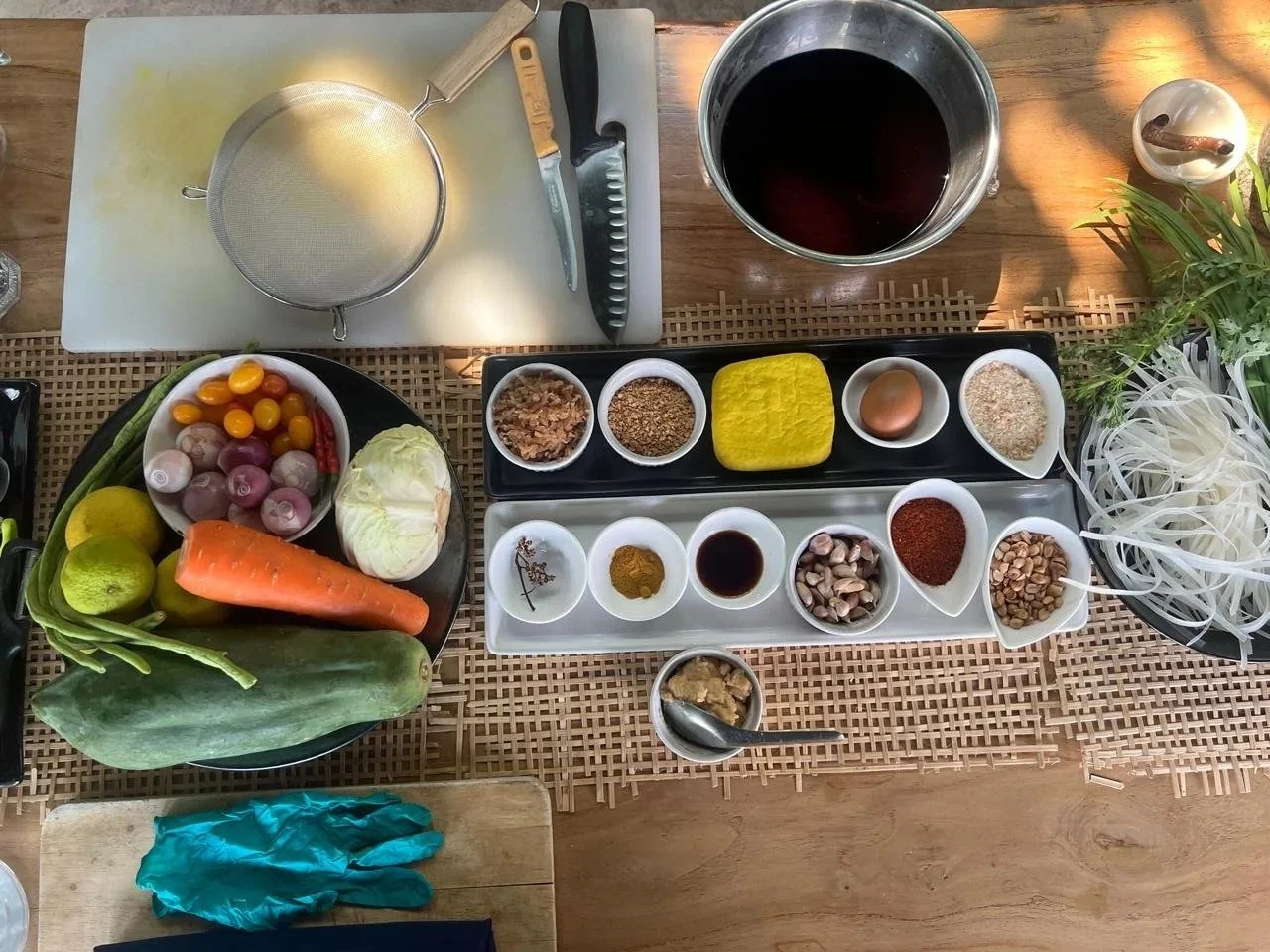
There is a cooking class thirty minutes outside Chiang Mai, at a family property surrounded by the ingredients it uses, that is one of the most genuinely transformative travel experiences available anywhere in Southeast Asia. This is not a modest claim and it is not made lightly. The experience of learning Thai cooking from someone who has grown up with this cuisine, in a kitchen where the herbs are cut from the garden that morning and the technique has been developed over years of genuine practice rather than adapted for tourist consumption, changes permanently the way you understand Thai food.
Northern Thai cuisine is not the same as the Thai food served in restaurants outside Thailand. The flavours are more complex, the heat is different, the use of specific pastes and fermented ingredients reflects a culinary tradition shaped by the highland cultures of the Burmese and Lao borders rather than the coastal cuisine of the south. Understanding the balance of the five flavours, sweet, sour, salty, bitter and spicy, that underpins all Thai cooking, and learning to taste and adjust each dish rather than simply following a recipe, gives the cooking class a depth that goes well beyond the dishes produced.
The same guide who runs the cooking class in the finest version of this experience can extend the journey into a private food tour of the local market, a waterfall picnic in the hills above Chiang Mai or a private chef's table dinner at the property. Each of these experiences builds on the same foundation of genuine local knowledge and genuine passion for the food culture of the north.
The ethical elephant encounter
The question of how to experience elephants in Thailand is one of the most important decisions a traveller to the north can make and one that requires more careful thought than most travel decisions. Thailand has a long and complicated history with the Asian elephant, an animal that has been central to Thai culture, religion and economy for centuries and that has been exploited, in the logging industry and in the tourist entertainment industry, in ways that have caused significant harm to individual animals and to the population as a whole.
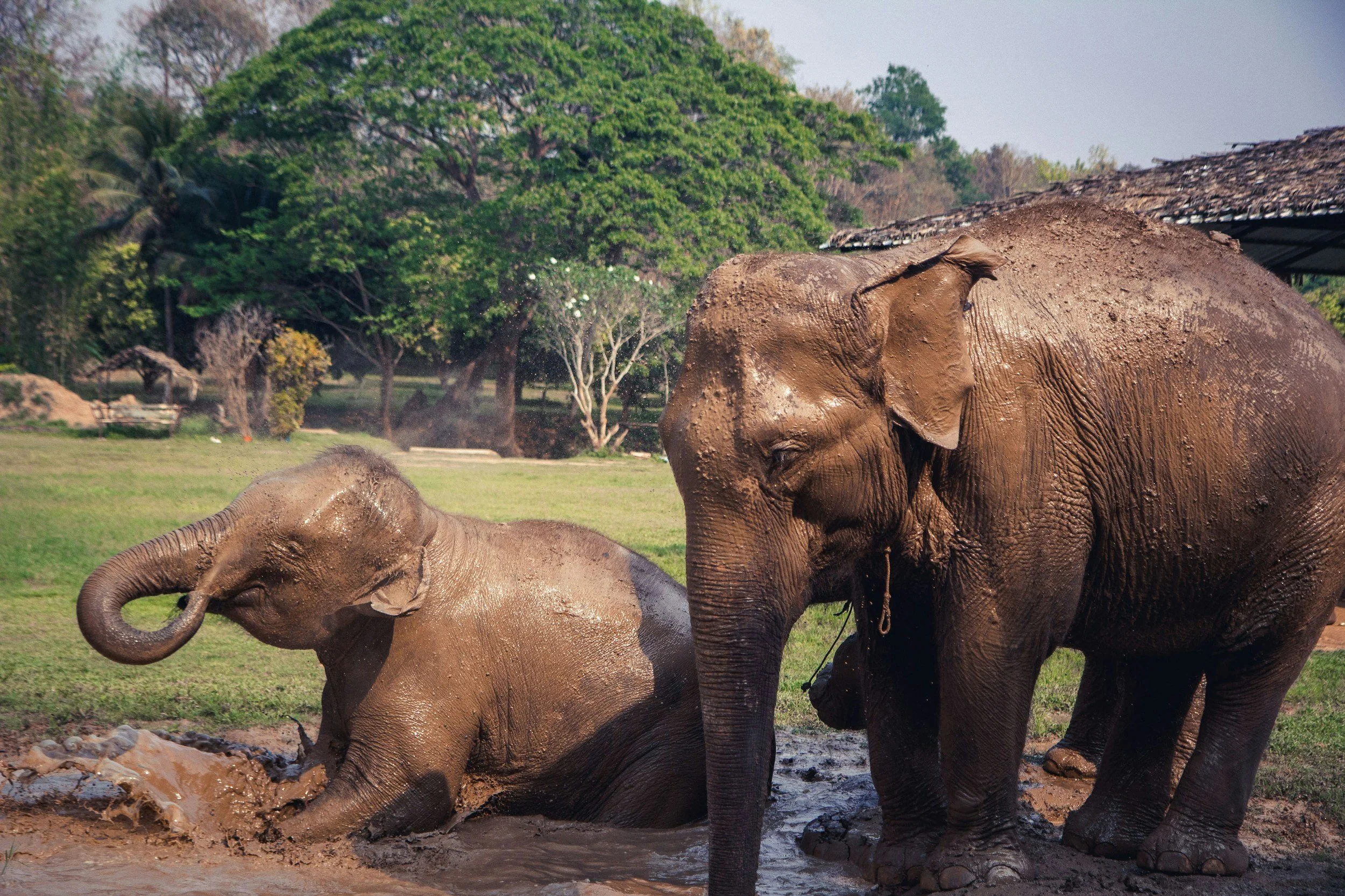
The ethical elephant sanctuaries of the northern highlands, concentrated in the area around Chiang Mai and Chiang Rai, represent a genuine alternative to the elephant riding camps and performance venues that still operate in the region. At the right sanctuary, elephants are not trained to perform any behaviour for visitors. They are not ridden. They are not made to paint pictures or play football or stand on their hind legs. They move through the sanctuary at their own pace, in their own social groups, engaging in the foraging, mud bathing and social behaviour that reflects something close to their natural state.
The experience of walking alongside these animals, feeding them and watching their behaviour with a mahout who has a genuine long-term relationship with each individual elephant and can interpret what you are seeing, is one of the most moving wildlife encounters available anywhere in Asia. The animals are large enough to be genuinely impressive and gentle enough, when well treated, to allow a proximity that reveals individual personality and intelligence in a way that watching animals in the wild cannot always provide.
Choosing the right sanctuary requires specific knowledge. The language of ethical elephant tourism has been widely adopted by operators who have not changed their fundamental practices, and the difference between a sanctuary that genuinely prioritises animal welfare and one that uses the vocabulary without the substance is not always visible from a website. A private guide who has long-standing relationships with the best operators in the region and who understands the specific practices that define genuinely ethical elephant tourism is the essential filter between a meaningful experience and a disappointing one.
Chiang Rai: the temples that stop you in your tracks
Chiang Rai is a smaller, quieter and less internationally visited city than Chiang Mai and it contains, in the opinion of almost everyone who goes, the most visually extraordinary temples in Thailand. This is not a statement about the historical significance of the temples, though several are genuinely important, but about their immediate visual impact and the way they use architecture, surface, colour and symbolism to create spaces of genuine artistic power.
Wat Rong Khun, the White Temple, is a contemporary work of religious architecture that has been under continuous construction since 1997 and will not be completed within the lifetime of its creator, the Thai artist Chalermchai Kositpipat. The entire surface of the temple is covered in white plaster embedded with mirror glass, so that the building shimmers in the sunlight in a way that is unlike any other structure you have seen. The bridge leading to the main temple passes over a sea of reaching hands, a Buddhist image of the cycle of rebirth that is both beautiful and genuinely unsettling. The interior contains murals that combine traditional Buddhist imagery with contemporary cultural references in a way that is controversial among traditionalists and completely captivating to almost everyone who encounters them.
Wat Rong Suea Ten, the Blue Temple, offers a completely different experience in a different register. Where the White Temple is sharp and brilliant in the sunlight, the Blue Temple draws you into a deep, cool interior of midnight blue and gold that has a contemplative quality entirely its own. The naga serpents of the exterior, the murals of the interior and the extraordinary central Buddha image combine into a space of genuine spiritual power that most visitors experience in near-silence regardless of how many people are present.
The Black House, Baan Dam, the compound created by the Thai artist Thawan Duchanee over forty years and left as a museum after his death, is the counterpoint to both temples. Dark wood, animal bones, snake skins and the aesthetics of death and transformation fill the compound in a way that reflects a completely different engagement with Buddhist philosophy from the light and gold of the temples. It is disturbing and extraordinary in equal measure and it gives Chiang Rai a cultural complexity that makes it one of the most genuinely surprising destinations in the north.
Two nights in Chiang Rai is the right amount of time. The temples deserve a full day, with early starts at each to experience them before the tour groups arrive. The night bazaar and the clock tower in the city centre are worth an evening. The surrounding highland landscape, with the hill tribe villages and the tea plantations of the Doi Mae Salong ridge, is worth a morning drive for those who want to understand the geography and the culture of the frontier region.

The Golden Triangle and the Mekong
The Golden Triangle, the point where the borders of Thailand, Laos and Myanmar converge above the confluence of the Ruak and Mekong rivers, is one of those places whose historical reputation, as the world's most productive opium-growing region for much of the twentieth century, adds a layer of meaning to a landscape that is already extraordinary.
The view from the Thai side, across the Mekong to the Lao and Burmese shores, with the river moving slowly between the three countries and the forested hills rising in every direction, is one of the finest river views in mainland Southeast Asia. A private boat on the Mekong, moving along the river between the three frontier landscapes with a guide who can explain the specific history of this region and what the opium economy meant for the hill tribe communities who lived through it, is one of the most genuinely informative experiences the north offers.
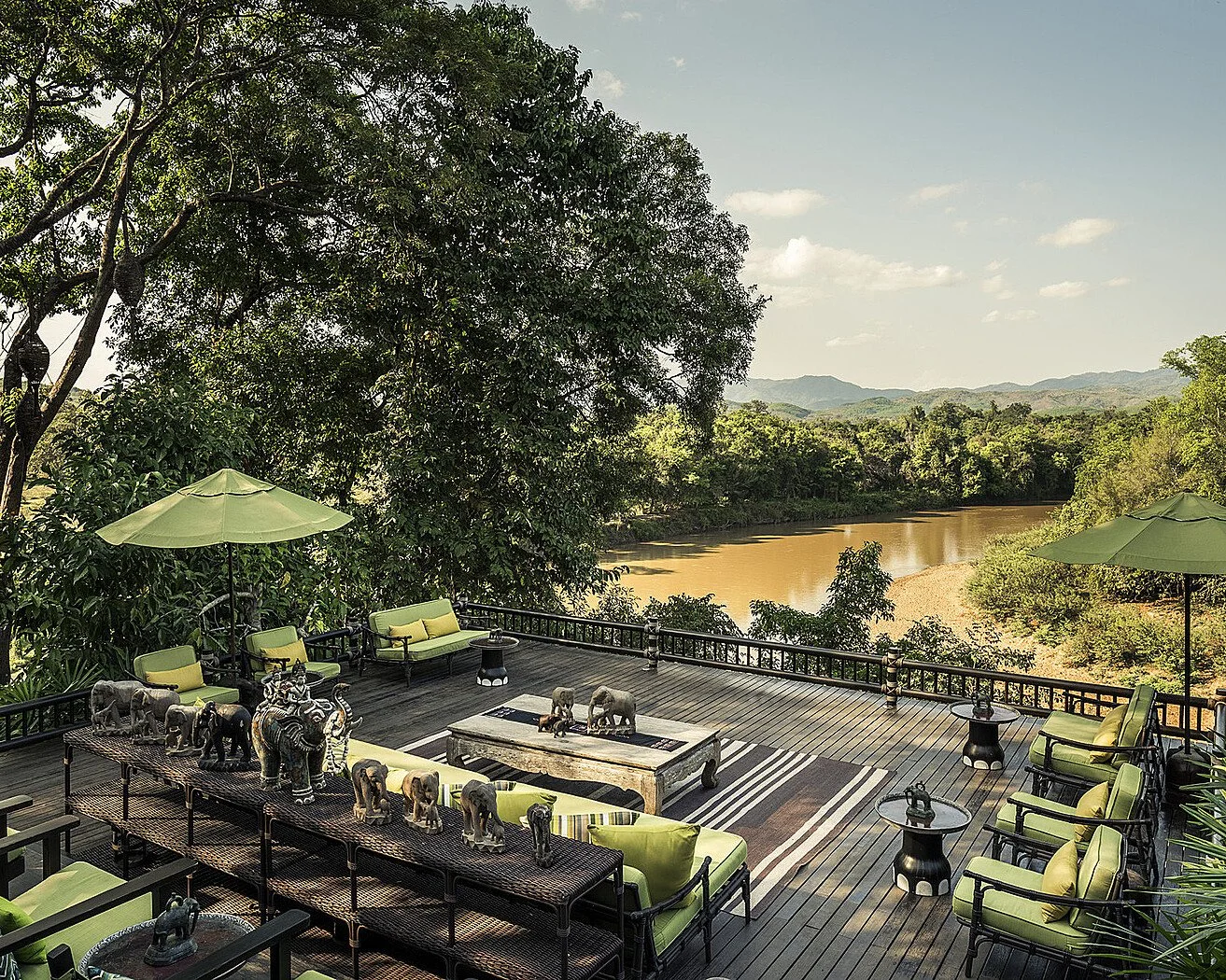
The elephant camps and luxury tented properties of the Golden Triangle area offer a base that combines the frontier landscape with some of the finest accommodation in northern Thailand. The signature arrival by private boat along the river at the best of these properties is one of those small details that changes the character of the entire experience.
How to plan a northern Thailand journey
The north of Thailand deserves more time than most visitors give it. A minimum of five nights between Chiang Mai and Chiang Rai, with a night or two at the Golden Triangle, allows the journey to breathe rather than rush. The cooking class, the elephant encounter, the temple circuit of Chiang Rai and the Doi Suthep morning can all be experienced properly within this window without the feeling of having been moved through a checklist.
The air quality in Chiang Mai deteriorates significantly after mid-March, when the agricultural burning season begins in the surrounding hills and the visibility and air quality drop in ways that affect both the experience and the health of visitors. Planning a northern Thailand journey between November and the middle of March ensures the finest conditions across every experience.
The private guide is the most important single decision in a northern Thailand journey. The difference between a guide who has spent years building genuine relationships with the elephant sanctuaries, the temple communities and the cooking class operators who best represent the culture of the north and a guide who moves through the same circuit with less investment is the entire quality of the experience. This is the part of Thailand where that difference is most felt.
Ready to start planning your Thailand journey? Explore our Thailand destination page for more on regions, experiences and the best time to visit. When you are ready, get in touch and we will begin designing your journey around you.