
Cartagena: Where the Caribbean Meets Colonial Latin America
A walled city of five hundred years of history, salt air and the best seafood on the continent.

There are cities that announce themselves the moment you arrive and cities that reveal themselves slowly. Cartagena is the first kind. The moment you pass through the Puerta del Reloj, the great clock gate that has guarded the entrance to the old walled city since the seventeenth century, and find yourself on a cobblestone street flanked by colonial mansions with bougainvillea cascading from carved wooden balconies, you understand immediately why this city has been capturing travellers for centuries. It is one of the most beautiful cities in the Americas and it knows it, carrying its beauty with a particular Caribbean ease that makes even its most dramatic architectural gestures feel warm rather than formal.
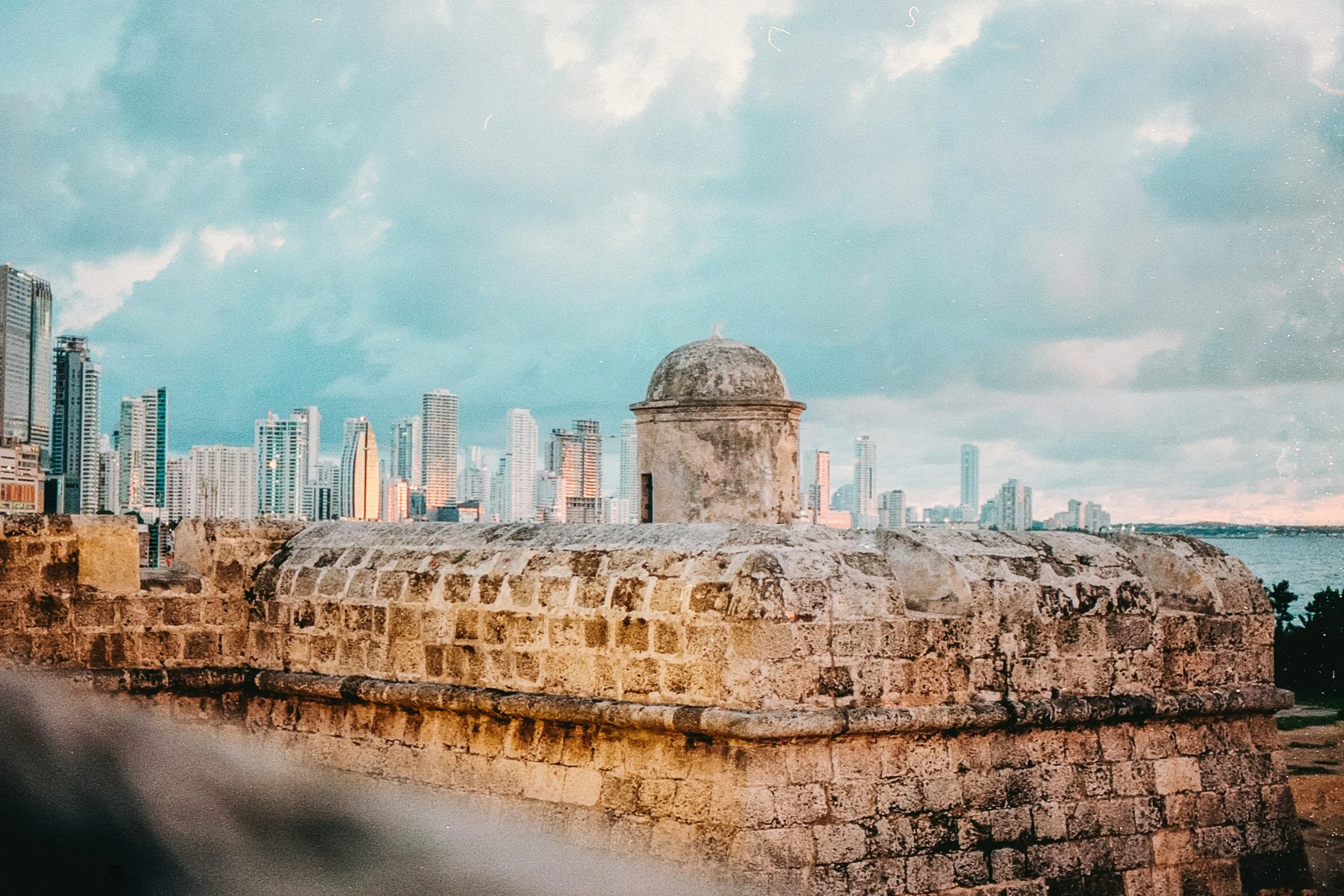
Cartagena was founded in 1533 and became one of the three most important ports in the Spanish New World, the gateway through which the gold and silver of South America passed on its way to the courts of Europe. The walls that surround the old city, Las Murallas, were built to protect that wealth from the pirates and rival colonial powers that coveted it. They worked. And the city they protected is still almost entirely intact, a UNESCO World Heritage Site of churches, convents, plazas and palaces that tells five centuries of Caribbean history in stone and colour.
The old city: the two faces of Cartagena
The walled city of Cartagena divides naturally into two historic districts, El Centro and San Diego, each with its own character and its own best experiences.
El Centro is the grander of the two, the district of the great institutional buildings, the Plaza de Bolívar with its cathedral and the Palace of the Inquisition facing each other across the square, the Convent of San Pedro Claver founded by the Jesuits in the early seventeenth century and the oldest church in the city at the Plaza de Santo Domingo. A private walking tour through El Centro with a guide who can explain the history layered into each building, what the Plaza de Bolívar was used for across different centuries and what the Palace of the Inquisition actually did to the people brought before it, transforms what might otherwise be a beautiful but superficial walk into something that stays with you.
San Diego, the quieter and slightly more residential district of the old city, is where the finest boutique hotels occupy restored colonial mansions and where the streets become narrow enough that the overhanging balconies almost touch overhead. The atmosphere here in the evenings, when the light turns gold and the music drifts from the open doors of the restaurants on the Plaza de Santo Domingo, is as close to perfect as a city evening gets anywhere in Latin America.

Getsemaní: the neighbourhood that changed everything
Just outside the walls, the neighbourhood of Getsemaní has undergone one of the most remarkable transformations in urban Latin America over the past fifteen years. Once a neighbourhood of genuine danger that visitors were warned away from, it is now one of the most interesting and most creative places in Cartagena, its walls covered in the extraordinary political murals that have made it famous internationally and its streets lined with restaurants, bars and cultural spaces that reflect a community that has taken control of its own story.
The murals of Getsemaní are not decorative. They are the work of artists who have been using the walls of the neighbourhood to comment on its history, on the displacement of its community by rising property prices, on the political history of Colombia and on the particular complexity of a neighbourhood that has gone from being feared to being gentrified within a single generation. A private tour of Getsemaní with a guide who understands the stories behind the murals and who has relationships in the community is one of the finest cultural experiences Cartagena offers and one that no standard tour itinerary includes.
The Cocina de Pepina, tucked down a side street in Getsemaní, is one of the best places in Cartagena to eat traditional Colombian and Caribbean cooking, with a chalkboard menu of dishes like ajíes rellenos and sopa Caribe that reflect the food culture of the coast rather than the internationally influenced menus of the old city restaurants.

The food: Caribbean cooking at its finest
Cartagena's food culture is built on the extraordinary richness of the Caribbean coast, on the African culinary traditions that arrived with the enslaved people who were brought here through this port for two centuries, on the Spanish colonial ingredients that mixed with indigenous and African cooking to create something entirely its own.
The restaurants of the old city represent two generations of Cartagena's food scene. The older establishments, places like La Vitrola in its four-hundred-year-old colonial house where the Caribbean seafood and the Old Havana atmosphere have been drawing visitors for decades, sit alongside a newer generation of chefs who are using Colombian ingredients in more experimental ways.
Celele in Getsemaní is the most interesting of the newer generation, where chefs Sebastián Pinzón and Jaime Rodríguez have been championing experimental cooking built on the lost and found recipes of the Caribbean coast, using indigenous ingredients and cooking techniques in ways that feel both deeply Colombian and genuinely original. It is the restaurant that the city's own serious food lovers talk about with the most enthusiasm.
La Cevicheria, small and well hidden in the old city, is the place for seafood prepared with a Mediterranean and Caribbean hybrid sensibility, the octopus in peanut sauce and the Peruvian ceviche both outstanding in a restaurant where the outdoor tables and the intimate atmosphere reflect the best of what eating in the old city can feel like.

The Islas del Rosario and the bay
The Rosario Islands, a group of thirty coral islands declared a national park in 1977 that lie about an hour by private boat from Cartagena, are one of the most beautiful natural environments on the Caribbean coast. The waters around them are extraordinarily clear, the coral reefs are intact and the bioluminescent plankton that appears in the bay of Cholon on moonless nights, turning the dark water into something that glows blue from within, is one of the most extraordinary natural spectacles available anywhere in Colombia.
A private boat from Cartagena to the Rosario Islands, bypassing the crowded public ferry and moving through Bocachica, the seventeenth-century Spanish fortification that guards the entrance to the bay, with a stop for snorkelling in the clear water and lunch aboard, is one of the finest days available from the city.
The private schooner sunset cruise in the bay of Cartagena, sailing for three hours as the light changes on the walls of the old city and the first lights of the evening begin to appear on the waterfront, is one of the most classically beautiful experiences the city offers. The combination of the old city seen from the water and the quality of the Caribbean light at the end of the day is genuinely extraordinary.

San Felipe de Barajas and the fortifications
The Castillo de San Felipe de Barajas, the great Spanish fortress built in 1536 on a hill overlooking the city, is one of the most impressive examples of Spanish colonial military architecture in the Americas. Its genius is in the design of its tunnel system, a labyrinth of underground passages that allowed defenders to hear the footsteps of approaching enemies and to move supplies and troops around the fortress without exposing them to fire. A private visit with a guide who can explain the military logic of the construction and walk you through the tunnel system transforms what might otherwise be a photogenic but opaque monument into something genuinely comprehended.
Salsa, rum and the Cartagena night
Cartagena after dark has a particular quality that few cities in Latin America can match. The combination of the Caribbean heat, the extraordinary setting of the old city and the deep Colombian music culture creates evenings of genuine atmosphere.
Club Havana is the city's most celebrated music venue, a Cuban jazz club and salsa space where the live music begins late and continues until the early hours. For those who want to dance before they arrive, a private salsa class in the afternoon in one of the restored colonial houses of the old city, with a professional teacher who understands both the technical and the cultural dimensions of Colombian salsa, is the right preparation.
The cocktail lounges of the old city are exceptional by any international standard. Alquímico, the multi-level bar near the Plaza de San Pedro, is one of the best cocktail bars in Latin America, a space that moves from an intimate ground-floor bar through increasingly open levels to a rooftop that looks out over the old city. The rum and cigar tasting in a privately owned sixteenth-century colonial mansion, with a sommelier who can explain the Colombian rum tradition and the specific character of spirits aged in different regions of the country, is one of the most specifically Cartagenero experiences available and one that reflects the particular pleasure of a city that has been doing hospitality seriously for five centuries.
How to experience Cartagena privately
Cartagena is one of those cities where the difference between a standard visit and an extraordinary one is almost entirely about access and relationships. The private colonial house where the Caribbean Creole cooking class takes place in a kitchen that has been producing this food for generations. The guide who grew up in Getsemaní and can take you to a mural that tells a story no international visitor would find independently. The boat captain who knows which bay in the Rosario Islands is producing the best snorkelling on any given day and where the bioluminescence will be brightest that night.
Cartagena is one of the most beautiful cities in Latin America and one of the most richly layered. It rewards those who arrive with genuine curiosity and the right person to guide them through it.
Ready to start planning your Colombia journey? Explore our Colombia destination page for more on regions, experiences and the best time to visit. When you are ready, get in touch and we will begin designing your journey around you.