
Cherry Blossom Season in Japan: The Private Traveller's Guide to Sakura
Ten days of bloom. A lifetime of planning it right.
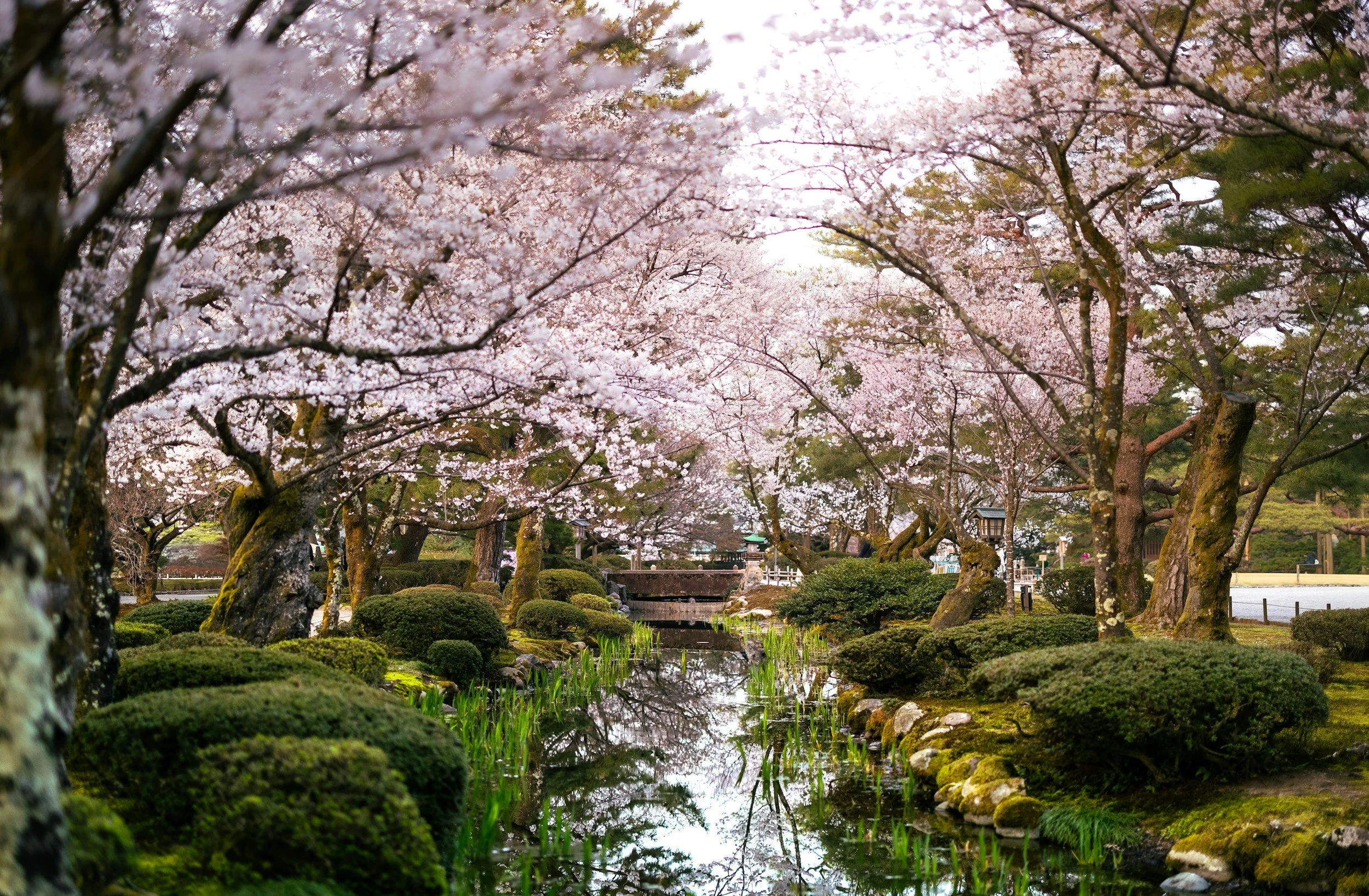
There is a concept in Japanese culture called mono no aware, the bittersweet awareness of impermanence, the particular beauty of things precisely because they do not last. No experience in Japan embodies this more completely than cherry blossom season. The sakura blooms for approximately ten days in each location before the petals fall, and the entire country stops to acknowledge it. Parks fill with families eating beneath the trees. Office workers hold hanami picnics on blue tarps with convenience store bento and cans of beer. Temples that have stood for a thousand years are reflected in pools of fallen petals. And the traveller who has planned the journey correctly, who knows which gardens peak when and how to follow the blossom as it travels north across the country, experiences something that genuinely cannot be replicated at any other time of year or in any other place on earth.
Japan's cherry blossom season is one of the most searched travel experiences in the world and also one of the most frequently misunderstood. Most visitors arrive in Tokyo around the end of March, spend three or four days in the city and consider themselves to have experienced sakura. What they have experienced is a fragment of something much larger, much more varied and much more extraordinary. Planning cherry blossom season in Japan properly, the way a private journey allows you to plan it, is one of the most satisfying pieces of travel design available anywhere.
Understanding the sakura forecast
Japan's Meteorological Corporation has been issuing an annual cherry blossom forecast since 1955, tracking the progress of the bloom from the southernmost islands of Kyushu northward through Honshu and eventually to Hokkaido, where the season ends in late April or early May. The front moves approximately 20 kilometres north per day in ideal conditions, though temperature variations mean that the forecast changes regularly and experienced guides monitor it daily during the season.
The average peak bloom dates in the main cities give a general framework: Fukuoka in the south typically peaks in late March, Tokyo and Kyoto follow in late March to early April, Nikko and the Tohoku region in mid to late April, and Hokkaido in late April to early May. But these are averages, and the actual peak in any given year can vary by up to two weeks in either direction depending on the winter temperatures that precede the bloom.
Planning a cherry blossom journey around these averages means accepting significant uncertainty. Planning it privately, with a guide and a local network that monitors the forecast in real time and can adjust the itinerary as the season develops, means arriving at each location at or close to the actual peak. That distinction, between the average and the reality, is where the private cherry blossom experience separates itself entirely from the standard tour.
Tokyo: the urban sakura experience
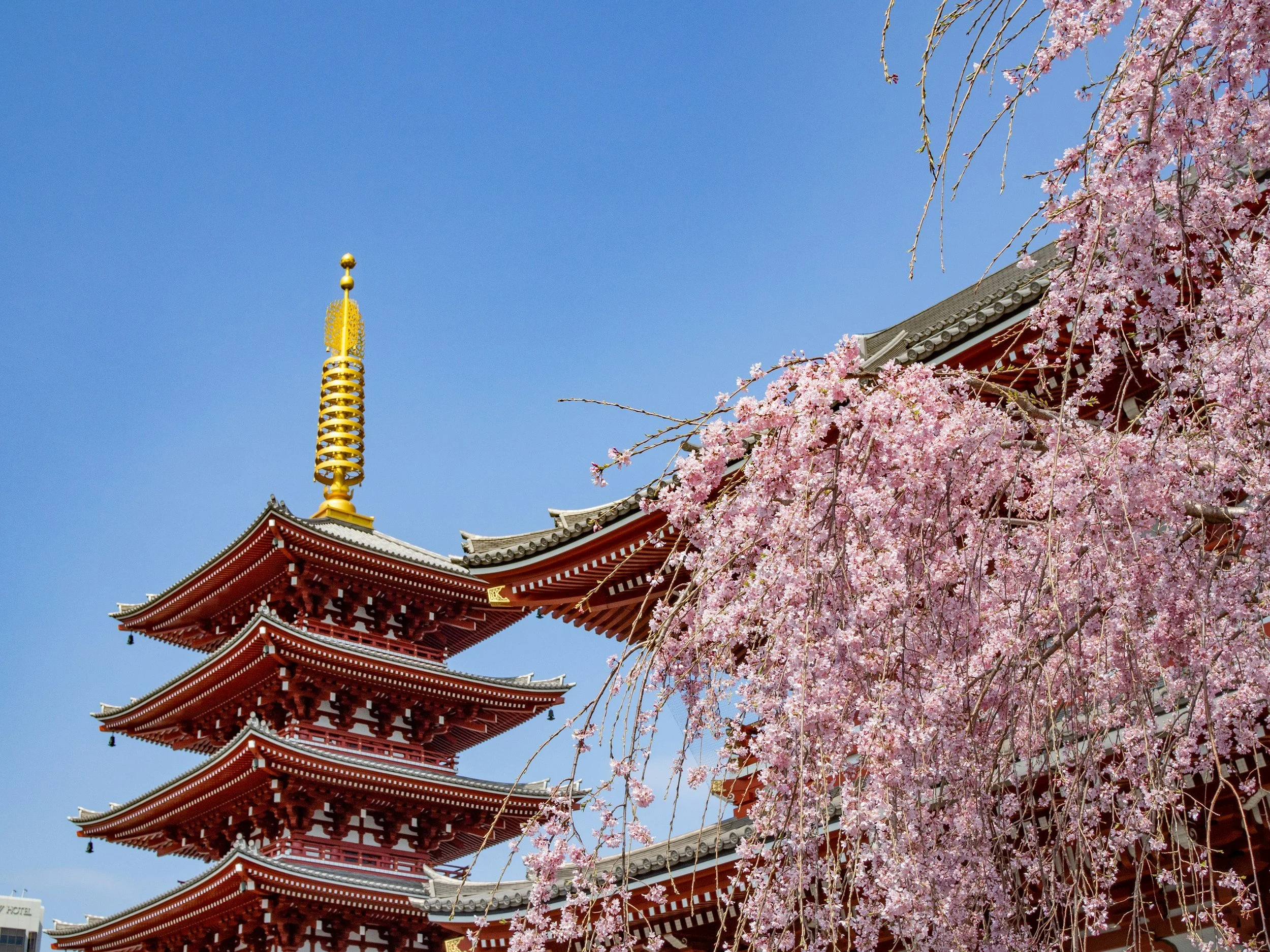
Tokyo in cherry blossom season is one of the great spectacles of the modern world and it plays out across dozens of locations simultaneously, each with its own character and its own best moment.
Shinjuku Gyoen is the finest cherry blossom park in the city, a former imperial garden of sixty-five acres that contains over a thousand cherry trees of seventeen different varieties, meaning the bloom extends across nearly three weeks rather than the standard ten days. A private early-morning visit before the park opens to the public, walking the long avenue of weeping cherries in silence with the first light filtering through the canopy, is one of the finest experiences Tokyo offers at any time of year and is genuinely extraordinary during blossom season.
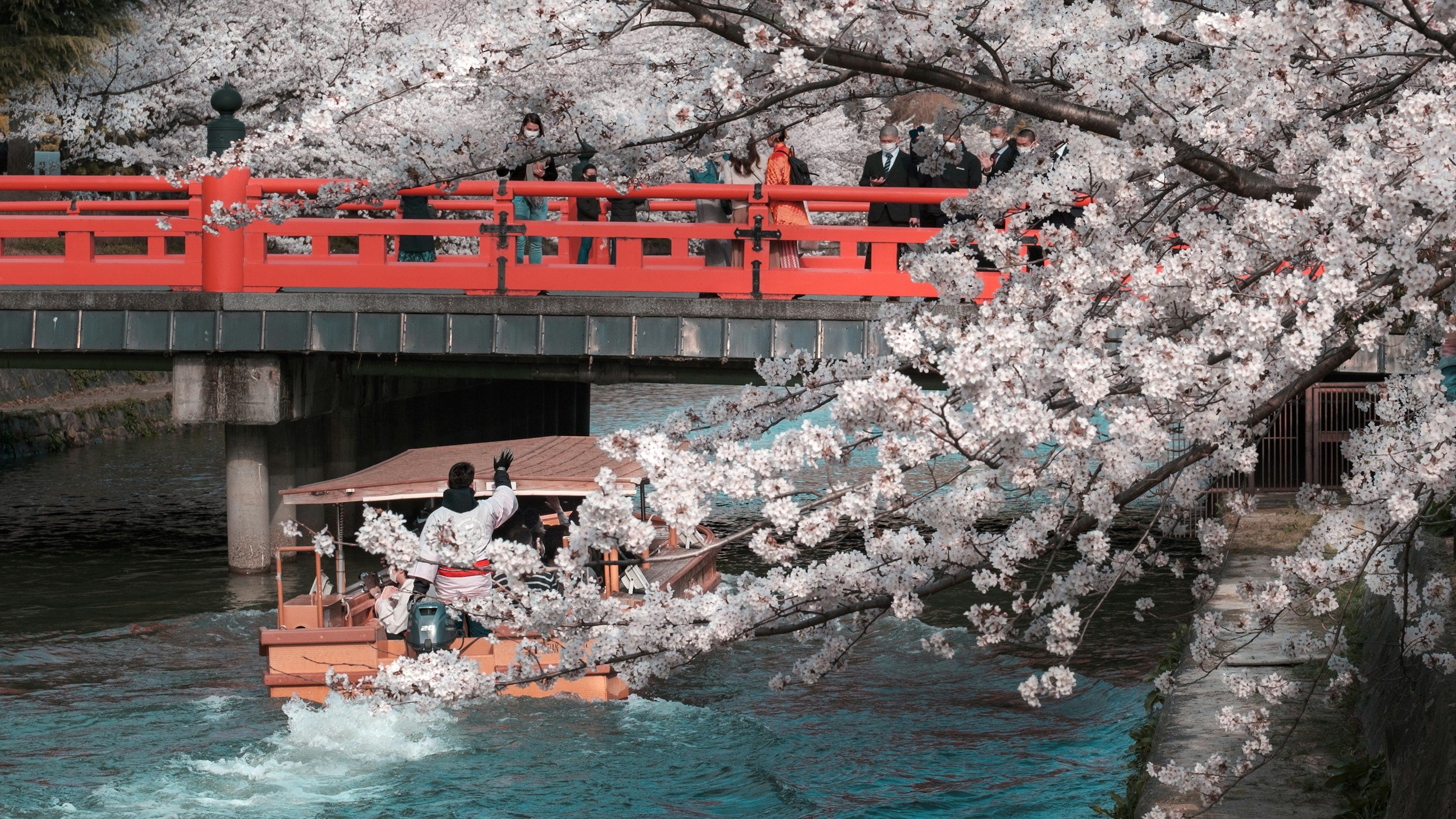
Chidorigafuchi, the moat at the northwest corner of the Imperial Palace, is where Tokyo's most famous and most photographed sakura images are made: the row-boats drifting beneath branches that arch over the green water, petals falling onto the surface. The right time is at or just after peak bloom, in the early morning before the paddle boats open and the queues form, when the moat is still and the reflections are perfect.
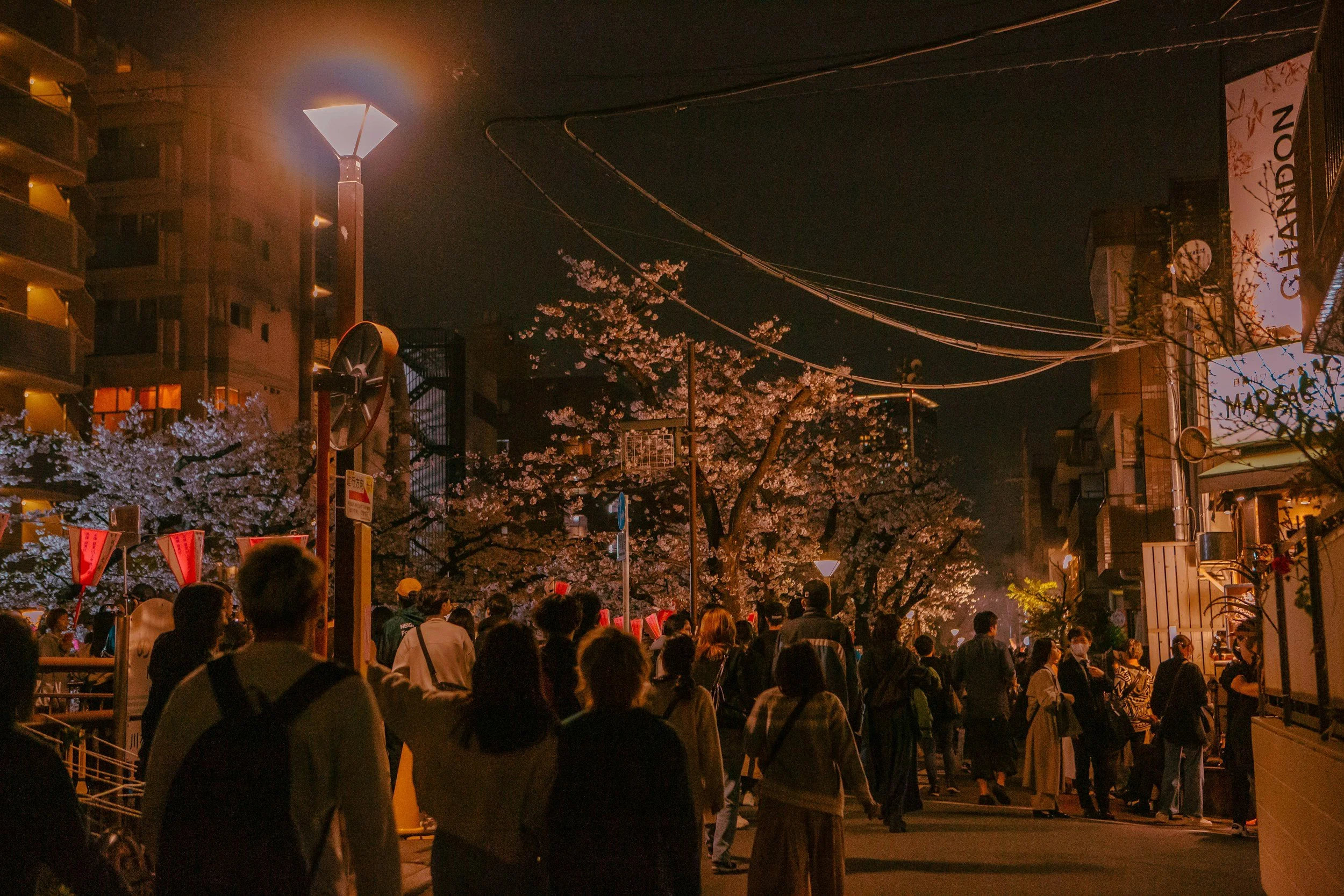
Nakameguro, the canal-side neighbourhood in central Tokyo whose narrow waterway is lined with cherry trees for two kilometres, has become the city's most fashionable blossom destination over the past decade. The combination of the canal, the trees and the restaurants and bars that open their windows onto the water during blossom season gives it an atmosphere that is entirely specific to this neighbourhood and entirely specific to this ten-day window. An evening walk along the canal as the lanterns come on and the petals drift into the dark water is one of the most quintessentially Tokyo experiences of the year.
Kyoto: the spiritual dimension of sakura
If Tokyo offers the urban spectacle of cherry blossom, Kyoto offers its spiritual dimension. The city's extraordinary concentration of temples, shrines, gardens and preserved historic districts means that every blossom location in Kyoto is layered with history and cultural significance in a way that is impossible in a modern city.
Maruyama Park, Kyoto's most celebrated blossom location, is dominated by a single enormous weeping cherry, the shidarezakura, which is illuminated at night during the season and is one of the most iconic images in Japan. The park itself fills with hanami crowds during peak bloom and the atmosphere is joyful and communal in a way that reflects exactly what cherry blossom season means to the Japanese. A private guide who can navigate the crowd and explain the significance of the tree and the park within Kyoto's cultural history transforms the experience from spectacle to understanding.
The Philosopher's Path, the stone walkway that runs alongside the canal between Ginkakuji and Nanzenji temples, is lined with around five hundred cherry trees and is one of the finest walks in Japan at any time of year. During blossom season it becomes almost unbearably beautiful. The right approach is to walk it in the early morning, ideally on a weekday, moving north toward Ginkakuji as the light comes through the trees and the petals drift onto the water below.
Hirano Shrine in northwest Kyoto, far from the main tourist circuits, has one of the oldest cherry orchards in the city, with trees that are hundreds of years old and varieties that have not changed since the Heian period. The nighttime illuminations at Hirano, where the ancient trees are lit from below and the atmosphere is intimate and slightly otherworldly, is one of the finest blossom experiences Kyoto offers and almost none of the visitors who arrive on standard tours ever find it.
Beyond Tokyo and Kyoto: following the blossom
The greatest mistake in planning a cherry blossom journey to Japan is limiting it to the two most famous cities. The bloom travels north for six weeks and each destination along the route offers something that cannot be found in the one before.
Yoshino in Nara Prefecture is arguably the most extraordinary cherry blossom location in Japan and the one with the longest history of sakura viewing, a tradition that stretches back over a thousand years to the Heian aristocracy who made pilgrimages to see the thirty thousand trees that cover the mountain in four distinct bands of bloom. The mountain turns pink from valley floor to summit as the blossom progresses upward, and the combination of the ancient temples, the mountain mist and the extraordinary density of the trees makes Yoshino unlike any other blossom location in the country. It requires a half-day from Kyoto and a guide who knows which trails give the best views of the mountain in full bloom.
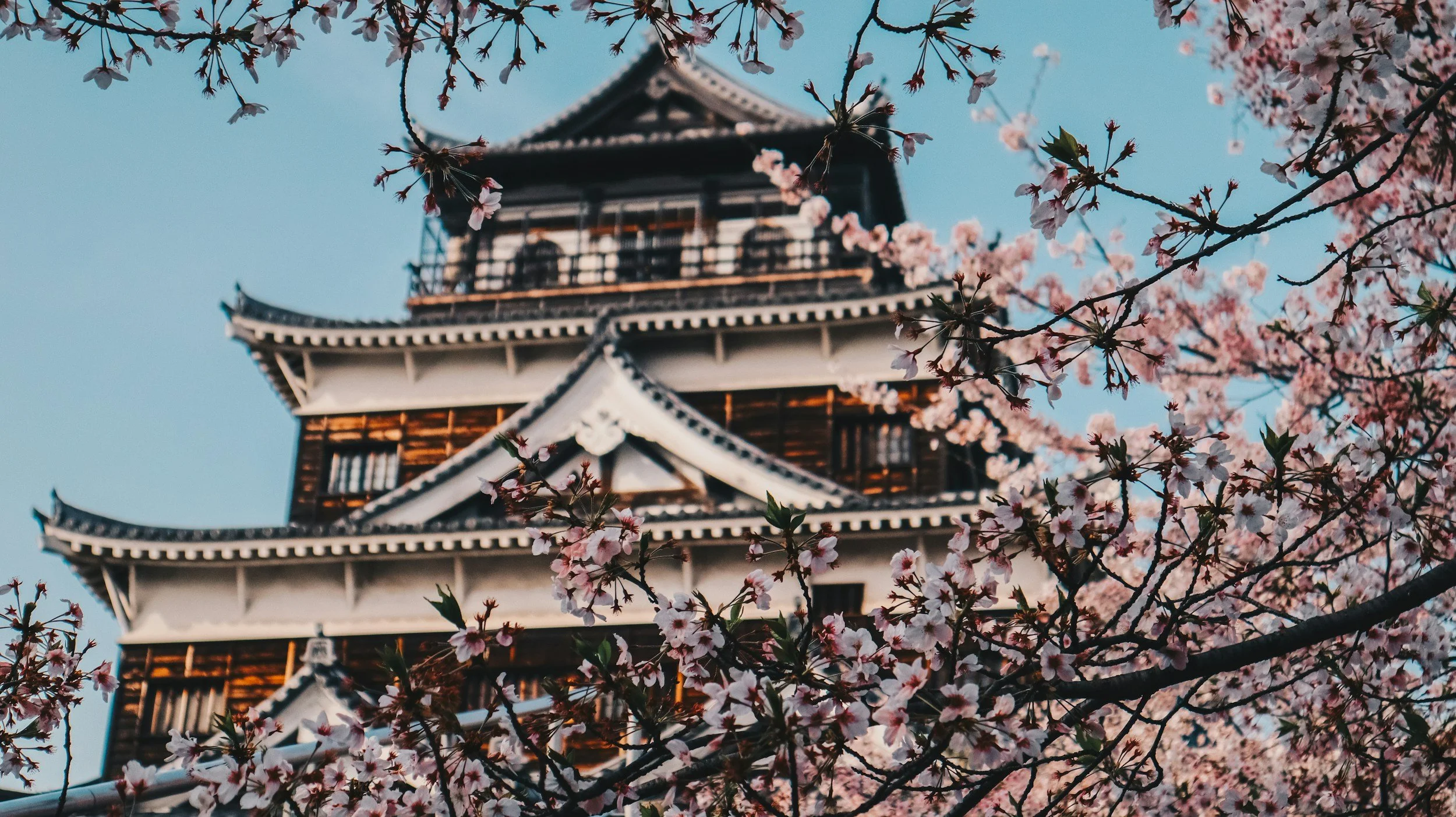
Hirosaki Castle in Aomori, in the far north of Honshu, is the finest castle blossom experience in Japan. The moats surrounding the castle are lined with over 2,500 cherry trees and during peak bloom the combination of the castle towers, the reflected trees in the water and the carpet of fallen petals that covers the moat surface in the final days of the bloom is one of the most extraordinary natural spectacles in the country. It blooms in late April, two to three weeks after Tokyo, which means a well-designed itinerary can include both.
Hokkaido, Japan's northernmost main island, blooms last, typically in late April, and the blossom here has a completely different character from the rest of the country. The parks of Sapporo, particularly Maruyama Park and the grounds of Hokkaido University, and the lakeside of Lake Onuma near Hakodate offer a blossom experience that feels less crowded, more spacious and framed by the particular quality of northern light that is different from anything in Honshu.
How to plan the perfect private sakura journey
The fundamental challenge of planning a cherry blossom journey to Japan is the mismatch between the booking window and the forecast accuracy. International flights and hotel reservations must be made months in advance, at a time when no forecast exists for the specific dates you will be there. The bloom itself will only be accurately predicted within two to three weeks of your arrival.
The answer is a private itinerary designed with maximum flexibility built in. Rather than fixed arrival dates at each city, a private cherry blossom journey is structured around a general framework that can be adjusted as the forecast sharpens in the weeks before travel. The accommodation choices, made at the best boutique properties and ryokans months in advance, are selected partly on the basis of their proximity to the finest blossom locations so that the journey between hotel and the best garden of the moment is as short as possible.
A guide who has been monitoring the blossom in their specific city for years, who has seen it peak early and peak late and knows how to read the early signs in the weeks before the bloom, is the most valuable asset a cherry blossom traveller can have. The knowledge of which microclimate in a large park blooms three days before the main trees, which south-facing slope reaches peak before the crowds have discovered it is happening, which evening illumination is worth the detour: all of this exists only in the experience of someone who has been paying close attention to this specific season in this specific place for a very long time.
Cherry blossom season in Japan is one of those travel experiences that reveals the full value of doing it properly. The difference between arriving at the right place at the right moment, with the right person beside you, and arriving two days late to petals on the ground, is the entire experience.
Ready to start planning your Japan journey? Explore our Japan destination page for more on regions, experiences and the best time to visit. When you are ready, get in touch and we will begin designing your journey around you.