Turkey and Uzbekistan: Two Silk Road Civilisations, One Extraordinary Journey
Imperial cities. Turquoise domes. A route that connected the world for a thousand years.
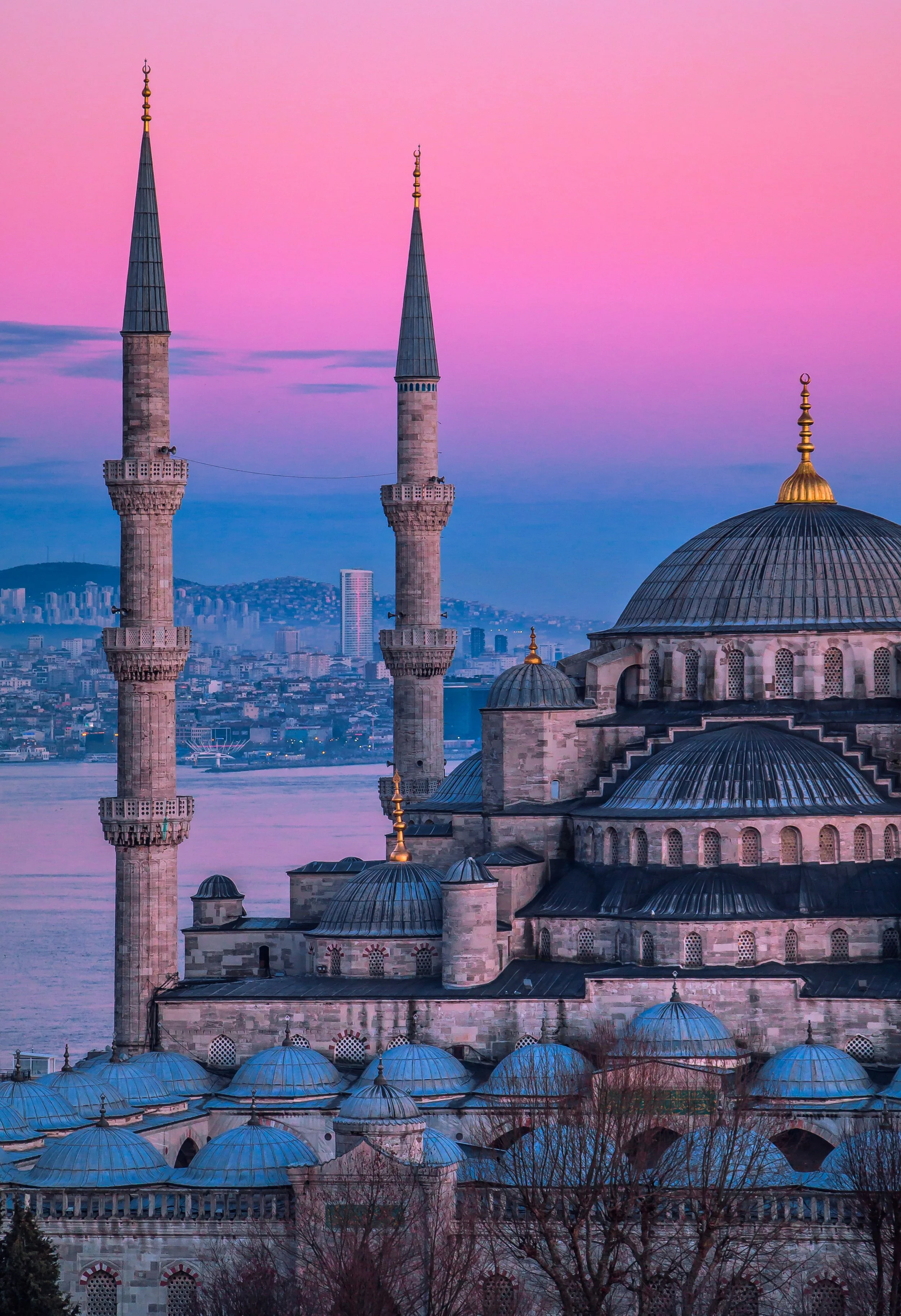
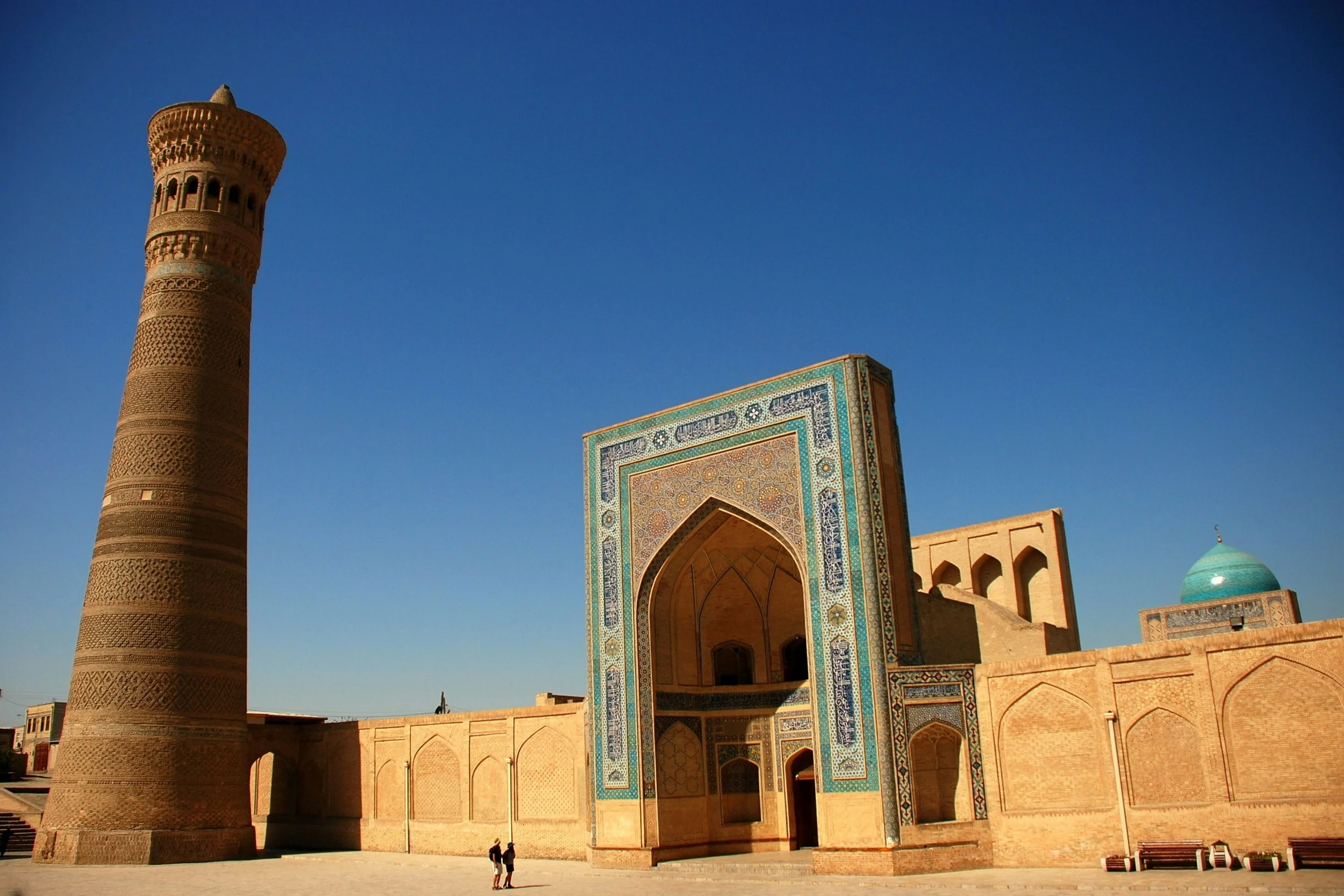
There is a journey that most travelers have never considered but that, once understood, feels almost inevitable. It begins in Istanbul, Turkey, the city where East and West have faced each other across the Bosphorus for millennia, moves through the volcanic landscapes of Cappadocia in the heart of Anatolia, and ends in the ancient Silk Road cities of Uzbekistan, where three soaring mosaic-covered madrasas arranged around a single square in Samarkand still stop visitors in their tracks. It is a journey through the Islamic world at its most architecturally ambitious, through the places where the great trade routes of the ancient world left their most enduring marks, and through two countries that share a cultural and spiritual heritage that most of the world is only beginning to rediscover.
This is one of the most extraordinary multi-country itineraries we design. Here is why it works, and what to expect from each chapter.
Istanbul: where the journey begins
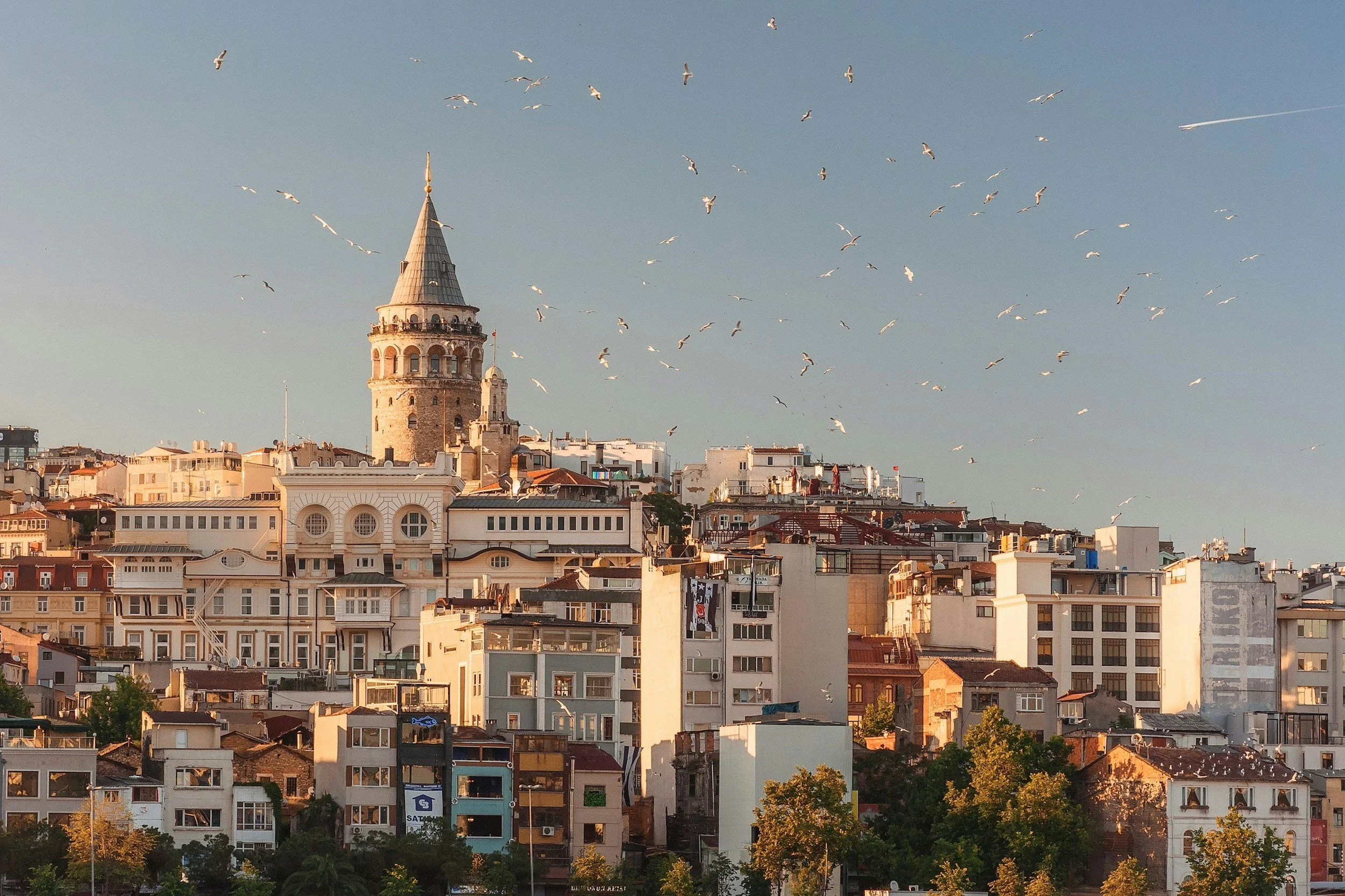
Every journey along the Silk Road has a western gateway, and for centuries that gateway was Constantinople, the city we now call Istanbul. It was here that Byzantine merchants traded with Arab and Persian caravans, here that the Ottoman sultans accumulated the wealth and influence that would eventually carry their empire east toward Central Asia, and here that the physical evidence of those centuries of cultural exchange is most legible in a single concentrated urban space.
Istanbul rewards those who arrive with the right guide and the right amount of time. The morning begins early, before the crowds, at Hagia Sophia, built in 537 CE by Emperor Justinian as the world's largest cathedral for nearly a thousand years, converted to a mosque when the Ottomans took Constantinople in 1453 and now carrying both Byzantine mosaics and Ottoman calligraphy within the same extraordinary space. The Topkapi Palace, primary residence of the Ottoman sultans for four hundred years, holds within its treasury some of the most extraordinary Islamic artefacts in the world, many of them acquired through the very trade routes that Uzbekistan's cities were built upon.
The Spice Bazaar, still trading in saffron, sumac and spices that arrived from the east along the same overland routes for centuries, is the most direct sensory connection between Istanbul and the Silk Road it served. Standing among its towers of spice with a guide who can trace the provenance of what surrounds you, the connection between this city and the distant domes of Samarkand becomes tangible rather than abstract.
For a deeper understanding of Istanbul across all three of its great eras, from Byzantine to Ottoman to modern, read our full guide to experiencing Istanbul privately.
Cappadocia: the landscape at the heart of Anatolia
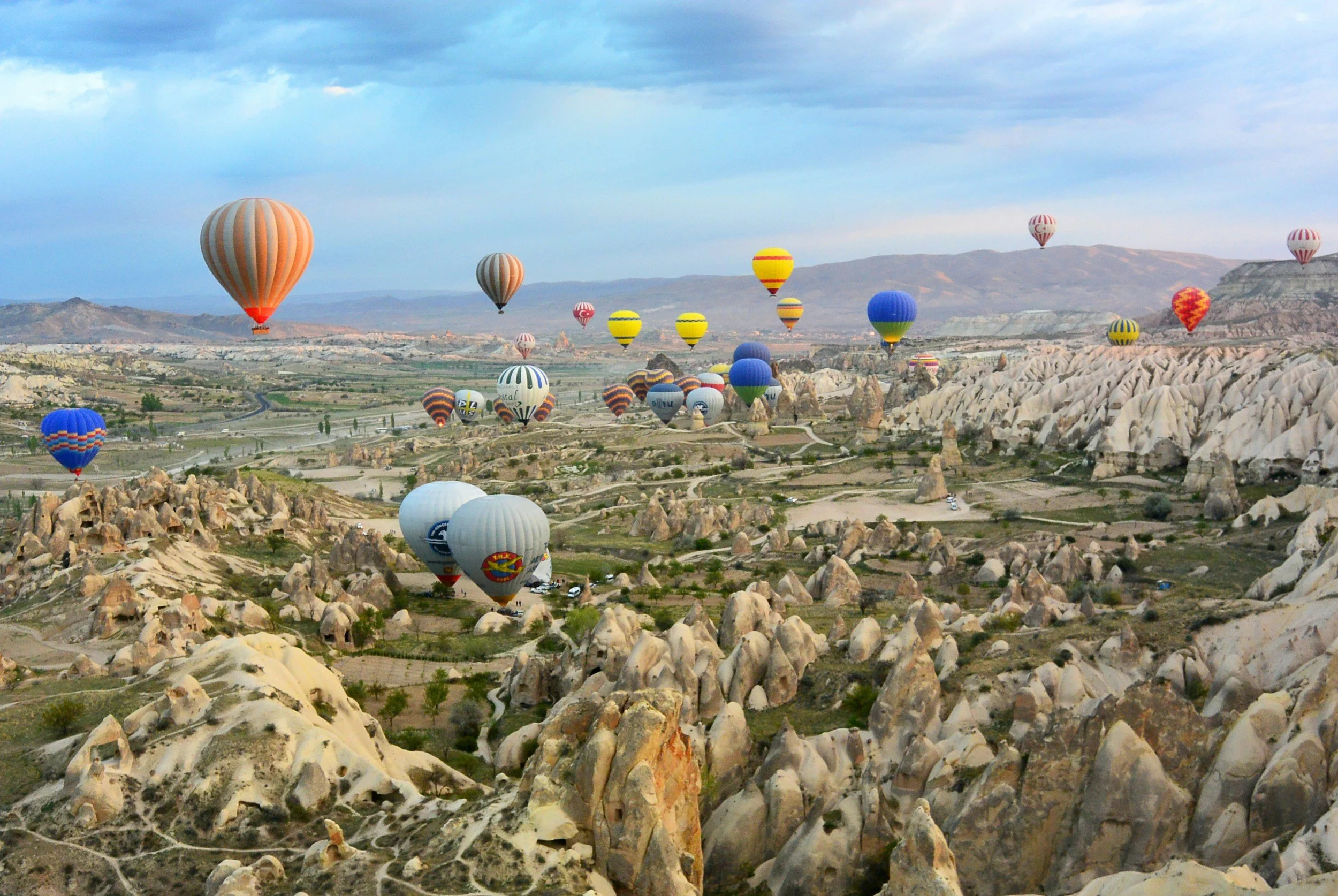
From Istanbul the journey moves into the interior of Turkey, to a region that feels entirely unlike anywhere else on earth. Cappadocia is where millions of years of volcanic activity have created towers, valleys and cave formations that early Christian communities carved into churches, monasteries and underground cities of extraordinary complexity. It is also where the Silk Road caravans rested, where the caravanserais that punctuated the trade routes between the Mediterranean and Central Asia were most concentrated, and where the landscape itself carries a quality of strangeness and beauty that stays with visitors long after they have left.
The Göreme Open Air Museum, a UNESCO World Heritage Site, is a collection of Byzantine rock churches adorned with frescoes of exceptional quality, the artistic achievement of communities who lived and worshipped underground while the trade routes above them brought the wealth of the world through their region. The underground cities of Derinkuyu and Kaymakli, carved to depths of up to eight storeys beneath the surface, reveal a civilisation of extraordinary ingenuity. Walking through their tunnels and chambers, understanding how entire communities sheltered here from invasion while life continued on the surface, is one of those experiences that genuinely adjusts your sense of what human beings are capable of.
A sunrise hot air balloon flight over the valleys of Cappadocia is, quite simply, one of the great travel experiences available anywhere in the world. The light on the fairy chimneys and the Rose Valley at that hour, from above, before the day warms and the crowds arrive, is genuinely unlike anything else. It is also a moment that directly echoes the journeys made by merchants and travellers crossing Anatolia by camel caravan, looking out across the same landscape from the passes above the valleys.
Uzbekistan: the Silk Road at its most extraordinary
Uzbekistan sits at the midpoint between Istanbul and Beijing, a geographical fact that explains everything about its history, its architecture and the cultural layering that makes it so compelling to visit. The cities it built along the Silk Road, Samarkand, Bukhara, Khiva and Tashkent, are among the most historically significant on earth, and yet they remain remarkably free of the mass tourism that has overwhelmed comparable destinations elsewhere.
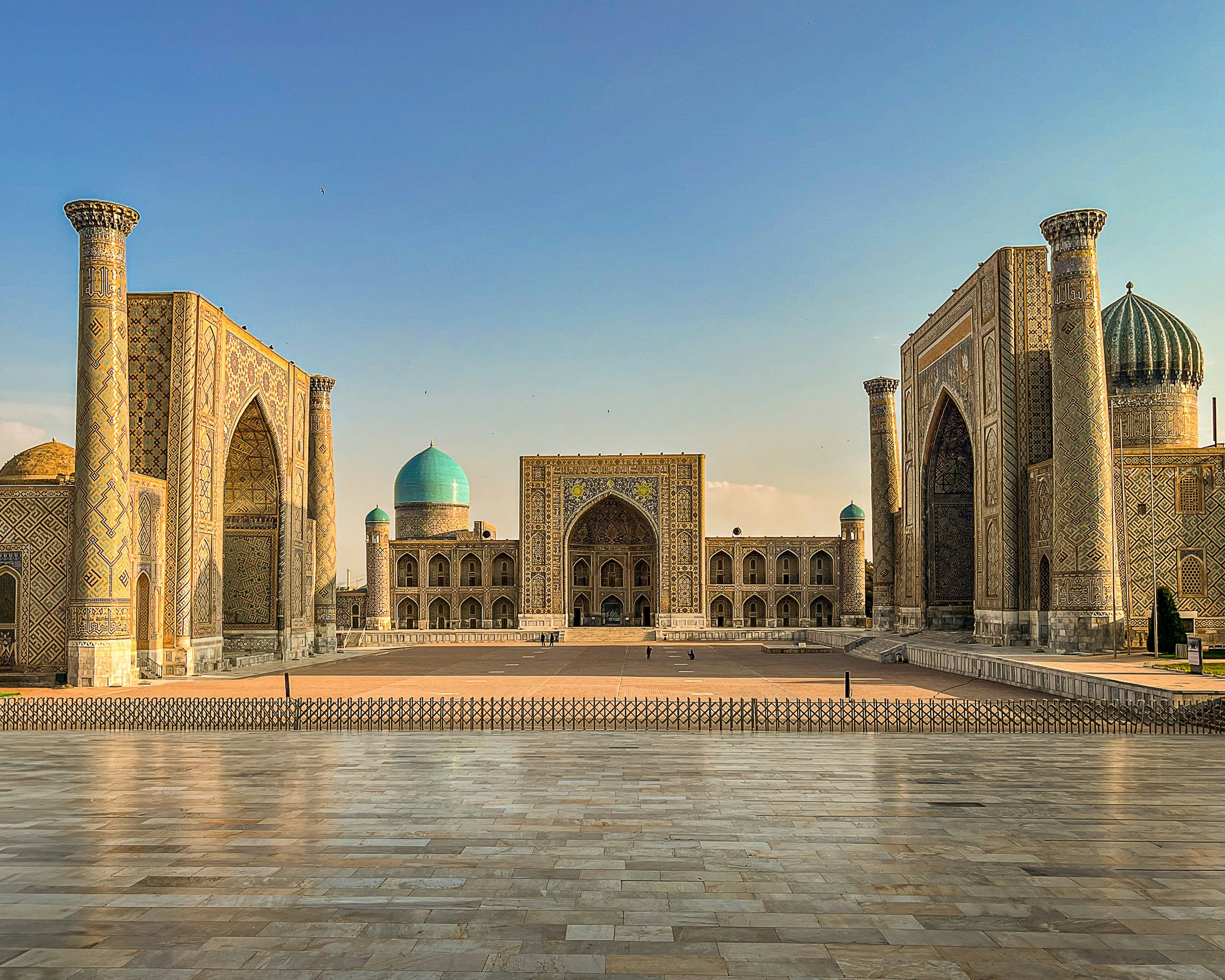
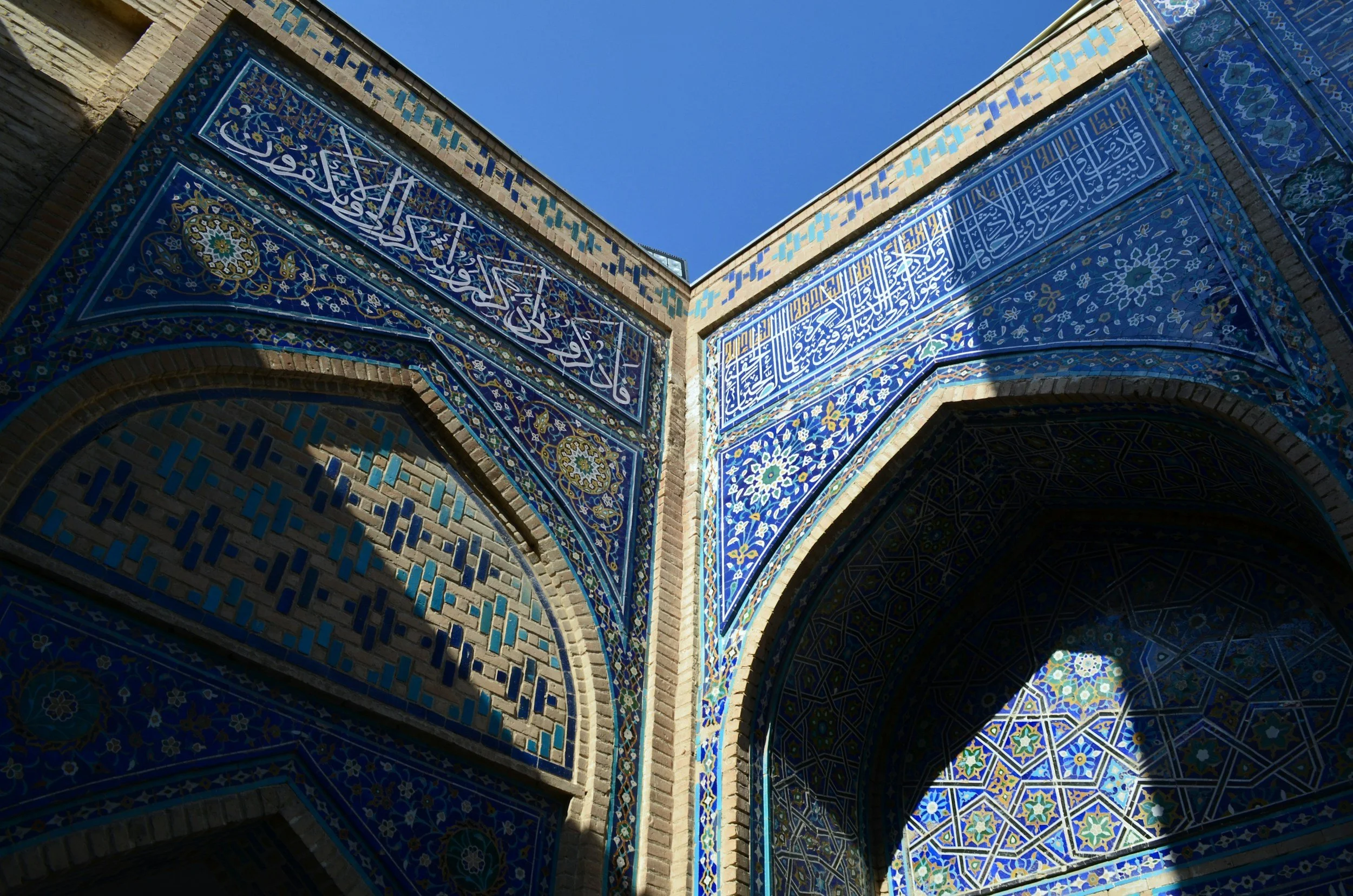
Standing in front of the Registan in Samarkand, three soaring mosaic-covered madrasas arranged around a single plaza, it is difficult to believe that this place exists, that it survived the centuries, and that most of the world has yet to discover it properly. The tilework is the same deep turquoise that runs through the entire Silk Road aesthetic, from the domes of Cappadocia's Byzantine churches to the Iznik tiles of Istanbul's Rüstem Pasha Mosque, a visual continuity that makes the connection between the three destinations of this journey feel not just historical but physically present.
Bukhara is the most atmospheric of the Uzbek cities, a medieval Silk Road town that has been trading and teaching for over two thousand years. The Ark Fortress, the Kalon Minaret, and the extraordinary Lyabi-Khauz pool at the centre of the old city create a setting that feels genuinely timeless. An evening at Lyabi-Khauz, with the reflection of the minaret in the still water and the sound of the old city settling around you, is one of the most memorable dinners we know of anywhere in Central Asia.
Khiva, the furthest of the four cities and the most completely preserved, feels like walking into a medieval Islamic city that was simply sealed at a particular moment in history and never substantially changed. Its walled inner city, Itchan Kala, contains an almost impossible concentration of mosques, madrasas, minarets and palaces within an area small enough to explore entirely on foot. There is nowhere else quite like it.
The culinary thread that connects this journey is also worth noting. Turkish plov, the rice dish that is central to any serious Ottoman meal, shares its ancestry with the Uzbek plov that is the national dish of Uzbekistan, cooked in vast kazan pots over open fires in the bazaars of Samarkand and Bukhara. Sitting down to a bowl of freshly made plov in a family home in the Fergana Valley, understanding that you are eating something that has been cooked in essentially the same way along the Silk Road for centuries, is one of those moments that transforms a journey from something visited into something genuinely understood.
For a complete guide to planning your Uzbekistan journey, including the best time to visit, what to see in each city and how to experience it privately, read our full Uzbekistan travel guide.
How to combine Turkey and Uzbekistan in a single journey
The most natural shape for this journey is two weeks minimum, ideally fourteen to sixteen days. Three to four days in Istanbul, two days in Cappadocia, then a direct flight from Istanbul or Ankara to Tashkent and seven to eight days across Uzbekistan's four main cities. The direct flight from Istanbul to Tashkent takes approximately four hours, making the transition between the two countries straightforward and the sense of journey continuous rather than interrupted.
Spring (April to June) and autumn (September to October) are the optimal seasons for both destinations simultaneously. Both Turkey and Uzbekistan are at their most beautiful and most comfortable in these windows, and combining the two in a single journey means the seasonal logic works perfectly across the entire itinerary.
A private guide in each country, rather than a single guide attempting to cover both, is the right approach. The depth of knowledge required to do justice to Istanbul's three civilisations on one hand and Uzbekistan's Silk Road heritage on the other is genuinely specialist, and the difference between a generalist and an expert in each place is the difference between understanding and simply observing.
Explore our full Turkey destination page and Uzbekistan destination page for more on experiences, regions and how to plan each part of the journey. When you are ready to start combining them, get in touch and we will begin designing your itinerary from the first conversation.