
Uzbekistan Travel Guide: Everything You Need to Know Before You Go
Ancient cities, turquoise domes, and the world's greatest surviving Silk Road, experienced privately.
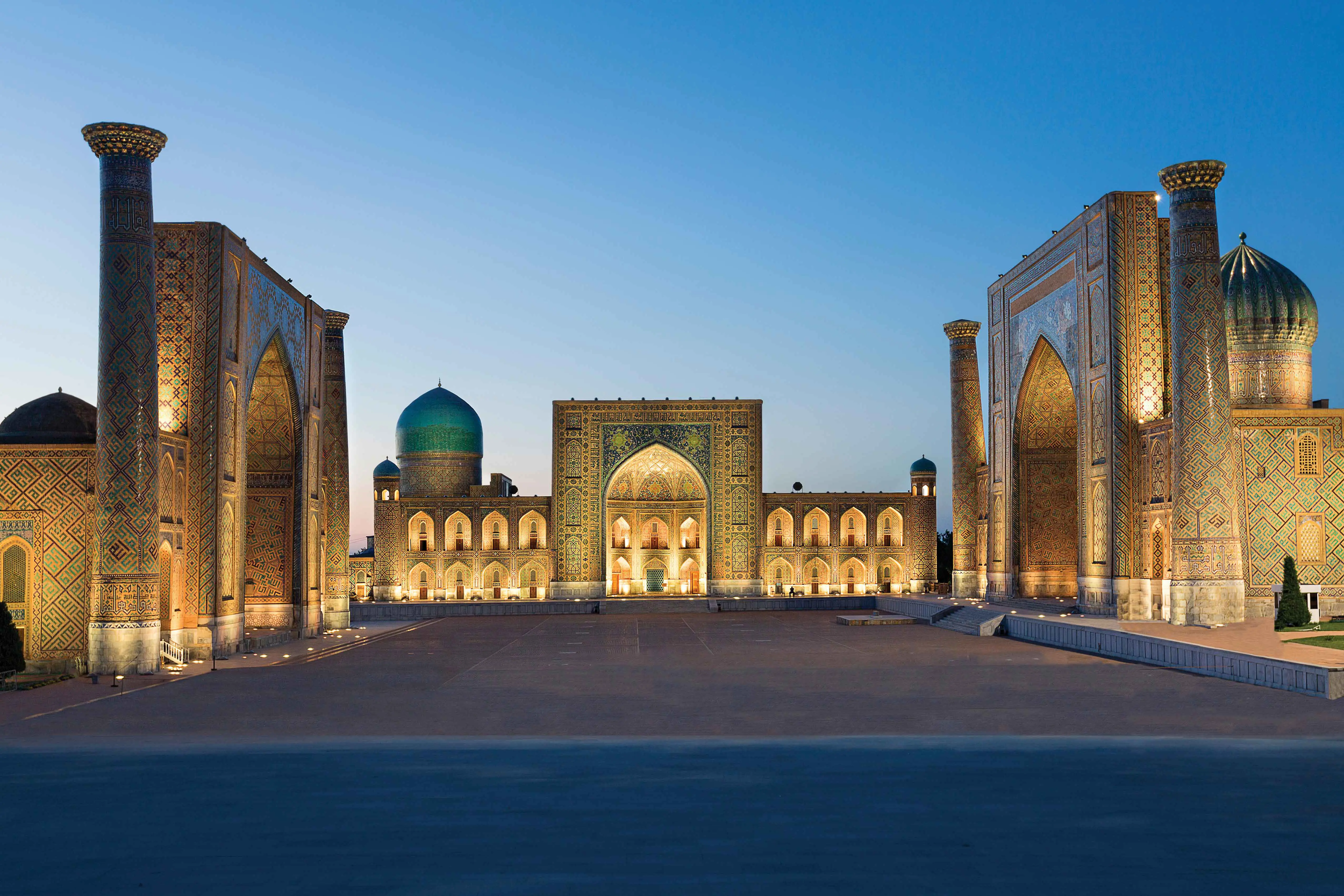
Few destinations in the world stop you in your tracks quite like Uzbekistan. Standing in front of the Registan, three soaring, mosaic-covered madrasas arranged around a single square in Samarkand, it is difficult to believe that this place exists, that it survived the centuries, and that most of the world has yet to discover it properly.
Uzbekistan sits at the heart of the ancient Silk Road, the network of trade routes that for over a thousand years connected China to the Mediterranean. The cities it left behind, Samarkand, Bukhara, Khiva, and Tashkent, are among the most historically significant on earth, and yet they remain remarkably free of the mass tourism that has overwhelmed comparable destinations elsewhere. For the discerning traveler, this is a rare and genuinely extraordinary opportunity.
We know this not just from research, but from experience. We have designed and accompanied private journeys through Uzbekistan's Silk Road cities, watched clients fall silent in front of the Shahi Zinda necropolis at dusk, and sat with local families learning to make plov the way it has been made for centuries. What follows is everything we have learned, and everything you need to know before you go.
Where is Uzbekistan?
Uzbekistan is a landlocked country in Central Asia. It sits roughly at the midpoint between Istanbul and Beijing, a geographical fact that explains everything about its history, its architecture, and the extraordinary cultural layering that makes it so compelling to visit.
Its four main cities, Tashkent, Samarkand, Bukhara and Khiva, each have distinct characters and are connected by a combination of high-speed trains and scenic road journeys that are themselves part of the experience.
When is the best time to visit Uzbekistan?
The ideal time to visit is spring (April to June) or autumn (September to October), and of the two, autumn is our preference for a first journey.
In September and October, the temperatures are warm but manageable — typically mid-20s°C (mid-70s°F) during the day — the light on the tilework in the late afternoon is extraordinary, and the cities feel alive without being overwhelming. The harvest season also brings the bazaars to their most vibrant, with pomegranates, dried fruits, nuts and spices piled high across every market stall.
We have accompanied private groups departing in late September and the conditions are close to perfect: comfortable enough to walk the cities at any hour, cool enough to linger over an outdoor dinner at Bukhara's Lyabi-Khauz pool as the evening light fades.
Spring (April to June) is equally beautiful, apricot and cherry trees bloom across the Fergana Valley, temperatures are pleasant, and Samarkand in particular has a freshness that summer erases. This is the best window for those combining Uzbekistan with the mountains or the Fergana Valley.
Summer (July to August) can be intensely hot, particularly in Bukhara and Khiva which sit close to the Kyzylkum Desert. Early morning visits to monuments are manageable, but midday exploration is genuinely uncomfortable and best avoided unless your itinerary is specifically designed around it.
Winter (December to February) is cold but atmospheric, significantly fewer visitors, a deeply local feel, and the possibility of snow-dusted domes and minarets in Samarkand, which is genuinely spectacular for those who seek it.
How to get to Uzbekistan
The main entry point is Tashkent International Airport, which has direct connections from Istanbul (Turkish Airlines), Dubai (flydubai and Emirates), London (Uzbekistan Airways), Frankfurt, and several other European hubs.
For US citizens, no visa is required for stays of up to 30 days — one of Uzbekistan's most traveler-friendly recent changes. Many other nationalities are also visa-free or eligible for a simple e-visa. We always verify current entry requirements for your specific passport before travel.
Getting around Uzbekistan
One of the great pleasures of a private Uzbekistan journey is the variety of ways you move between cities, each one an experience in itself.
The Afrosiyob high-speed train connects Tashkent, Samarkand and Bukhara in VIP class, a genuinely excellent way to travel, with comfortable seats, good service and journey times of around two and a half hours between each city. Arriving in Samarkand by train, with the city's minarets visible on the horizon as you pull in, is a moment our clients consistently mention.
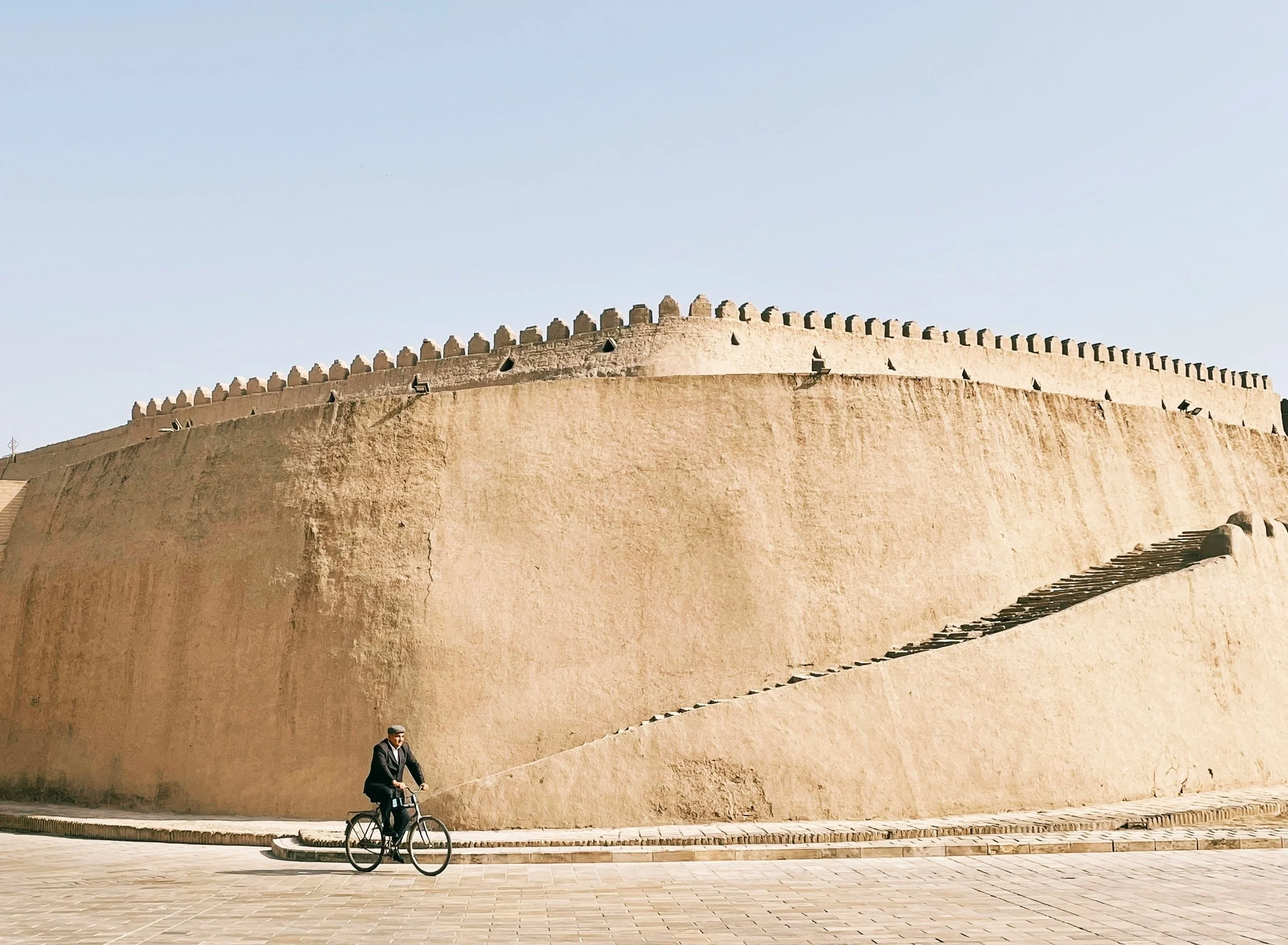
The Bukhara to Khiva leg is currently a scenic road journey of approximately eight hours through the vast Kyzylkum Desert, a crossing that has no direct train connection at present, though new rail links are in development. Far from being a hardship, this desert drive has become one of the most memorable parts of any Uzbekistan journey for our clients: endless sandy landscapes, the silence of Central Asia's interior, and the extraordinary feeling of arriving at Khiva's ancient walls after crossing a desert the Silk Road caravans once crossed before you. We always ensure private transfers with comfortable vehicles and plan the journey with stops along the way.
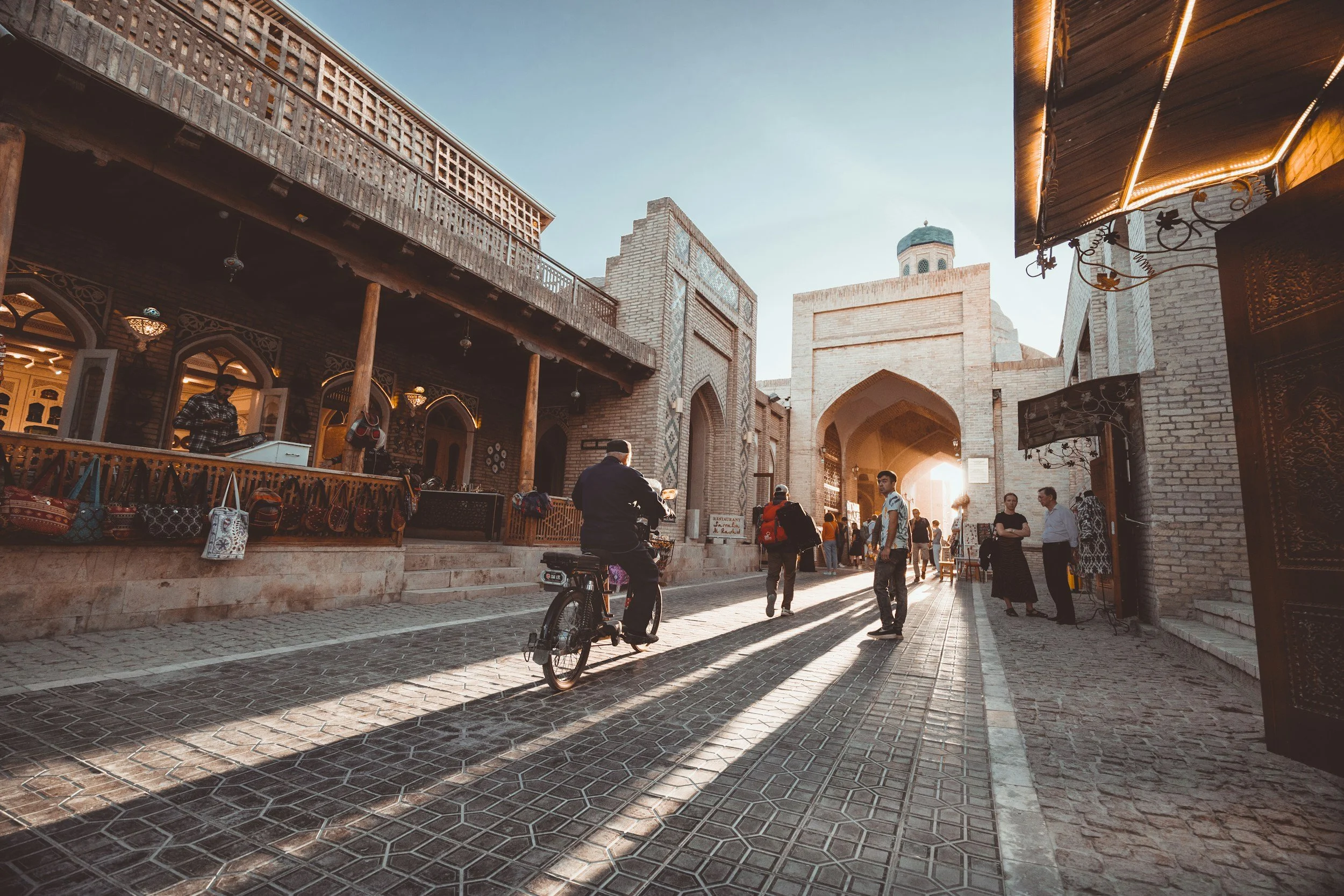
The four cities: what to expect
Tashkent: the capital that surprises
Most travelers treat Tashkent as a transit point. We treat it as a destination in its own right, and our clients are consistently glad we do.
Begin at the Hazrati Imom Complex, one of Central Asia's most important Islamic sites, where ancient manuscripts and soaring architecture create a surprisingly moving introduction to Uzbekistan's spiritual depth. Continue to Independence Square and the Soviet-era boulevards that give Tashkent its distinctive, wide-open character.
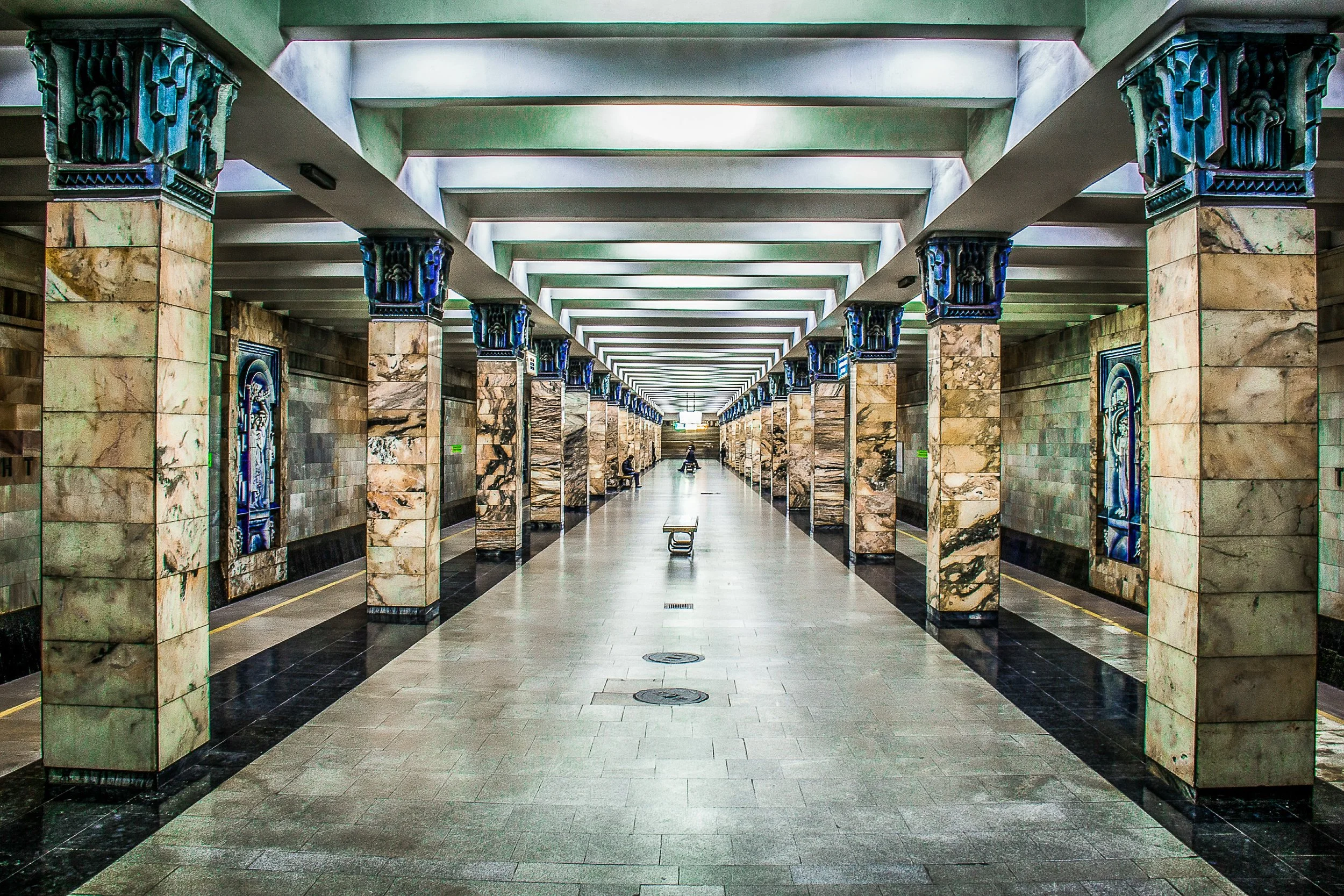
But the highlight of any Tashkent day is the combination of Chorsu Bazaar and the city's extraordinary Soviet-era metro stations, a half-day experience that combines food, history and local life in a way that nothing else in Uzbekistan replicates. At Chorsu, one of Central Asia's great traditional markets, you move between mounds of dried apricots, walnuts, saffron, and handmade ceramics surrounded by the sounds and smells of daily Uzbek life. The metro stations, each one designed as a palace, with marble columns, ornate mosaics, and elaborate chandeliers, are among the most beautiful in the world and remain almost entirely unvisited by foreign travelers.
End the day at Besh Qozon, where Tashkent locals gather to eat the city's most celebrated plov, a rich, fragrant rice dish cooked in vast cauldrons over open flame. Eating here, surrounded by local families rather than tourists, is one of those rare travel moments that stays with you.
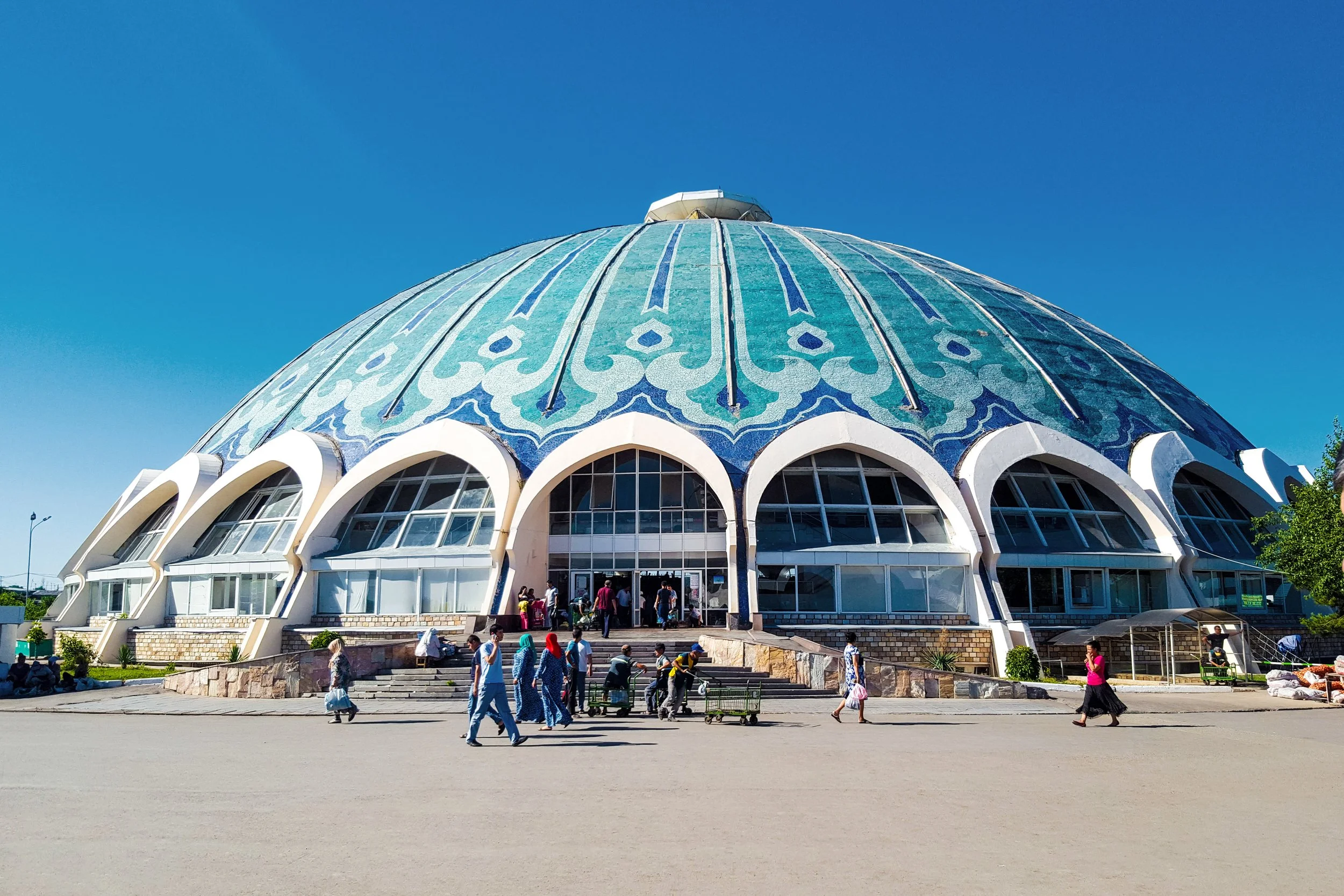
Samarkand: the city that defines the Silk Road
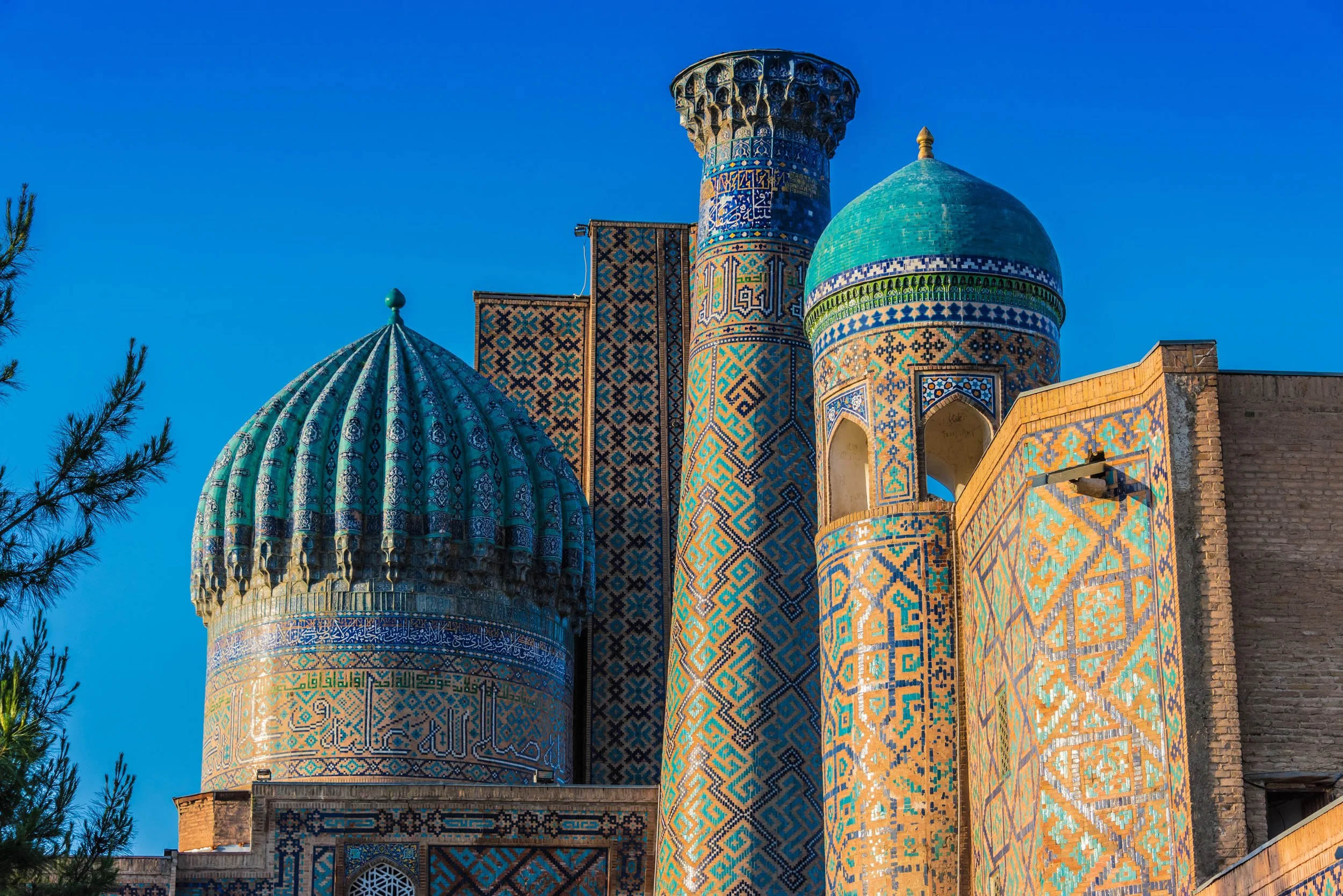
If Uzbekistan has one unmissable sight, it is the Registan, and no photograph prepares you for standing in front of it. Three madrasas from the 15th and 17th centuries, each covered in turquoise, gold and cobalt tilework of extraordinary intricacy, arranged around a single square that was once the commercial and intellectual heart of Timur's empire. It is, by most measures, the most beautiful public space in Central Asia.
A private guide makes all the difference here. The stories behind each madrasa, the astronomical knowledge embedded in the tilework, the political calculations behind each commission, the craftsmen whose names were never recorded, transform the experience from sightseeing into something genuinely immersive.
Beyond the Registan, Samarkand rewards those who look further. The Shahi Zinda necropolis, a street of mausoleums whose tilework rivals anything in the city, climbing a hillside above the ancient ruins of Afrosiyob, is best visited at dusk when the light turns the blue tiles gold. The Gur-e-Amir mausoleum, where Timur himself is buried beneath an extraordinary ribbed dome, is intimate and deeply atmospheric. The Ulugbek Observatory, built by Timur's astronomer grandson in the 15th century, offers a remarkable window into the scientific ambition of medieval Central Asia.
For those who want to go deeper, the Konigil Silk Paper Centre demonstrates the traditional production of Samarkand's famous handmade paper, a craft practiced here since the Silk Road era, in a way that connects the city's living traditions to its ancient past.
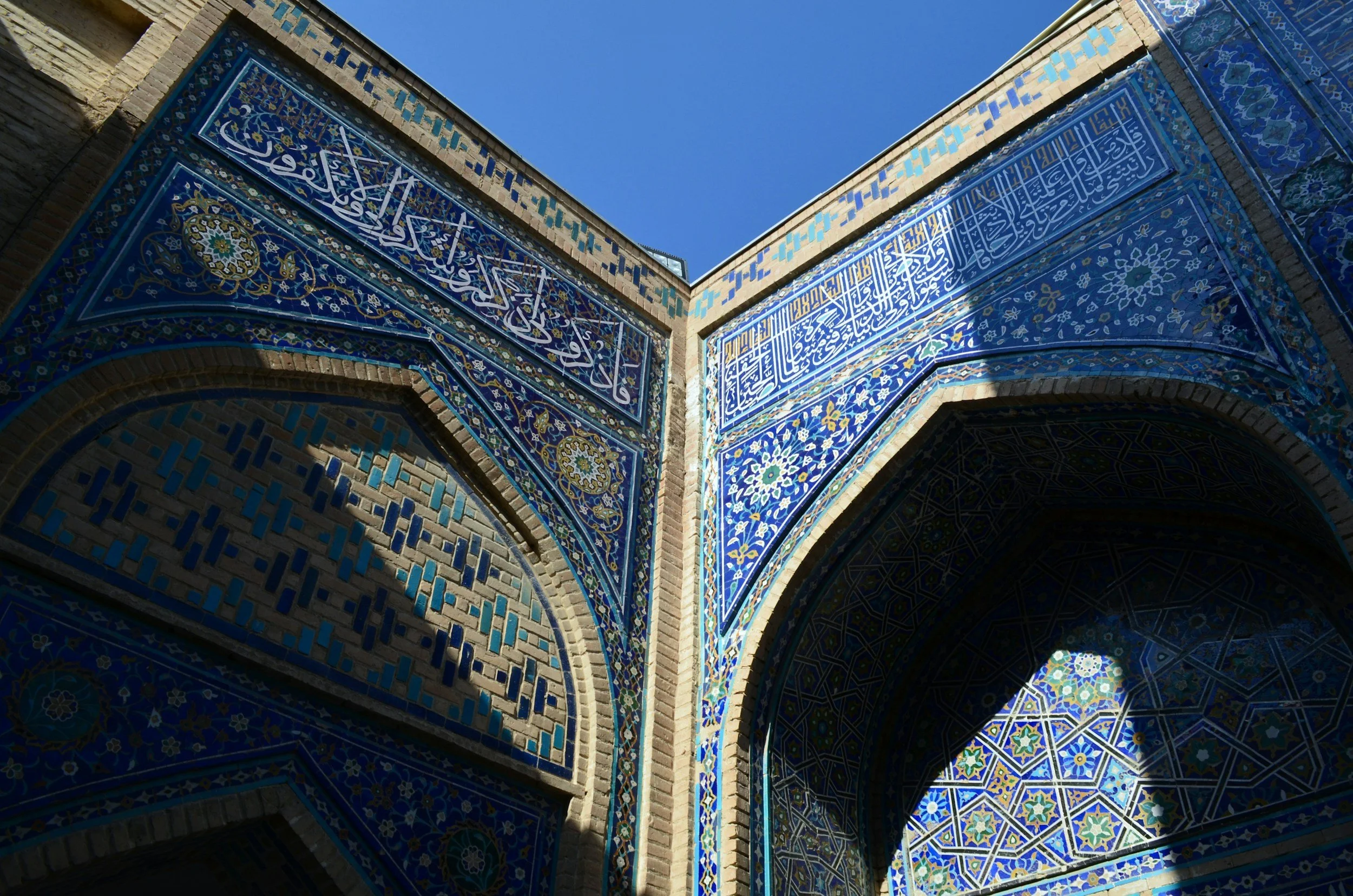
Bukhara: the most atmospheric city on the Silk Road
If Samarkand is Uzbekistan's most dramatic city, Bukhara is its most atmospheric. Walking through the old town at dusk, past the Kalyan Minaret, which has stood for nine centuries and was so impressive that Genghis Khan, having conquered the city, reportedly ordered it spared, it is easy to feel that relatively little has changed since the medieval caravans last passed through.
The highlights are numerous. The Ark Citadel, which served as the seat of Bukhara's rulers for over a thousand years, offers a sweeping introduction to the city's royal and spiritual history. The Samanid Mausoleum, built in the 10th century and considered one of the finest examples of early Islamic architecture in the world, is small, quiet, and extraordinary. The Lyabi-Khauz, a pool surrounded by ancient mulberry trees and historic buildings, is the perfect place to end a long day.
Two experiences set a Bukhara visit apart at the private luxury level. The first is a Persian miniature art workshop with a professional local artist, a hands-on session in a centuries-old craft, working with authentic pigments and fine brushes, that produces something to take home and a genuine connection to the city's artistic heritage. The second is an evening plov cooking demonstration with a local Uzbek family, arriving at a private home, learning to prepare Uzbekistan's national dish from scratch, and sharing dinner together in a way that no restaurant experience can replicate.
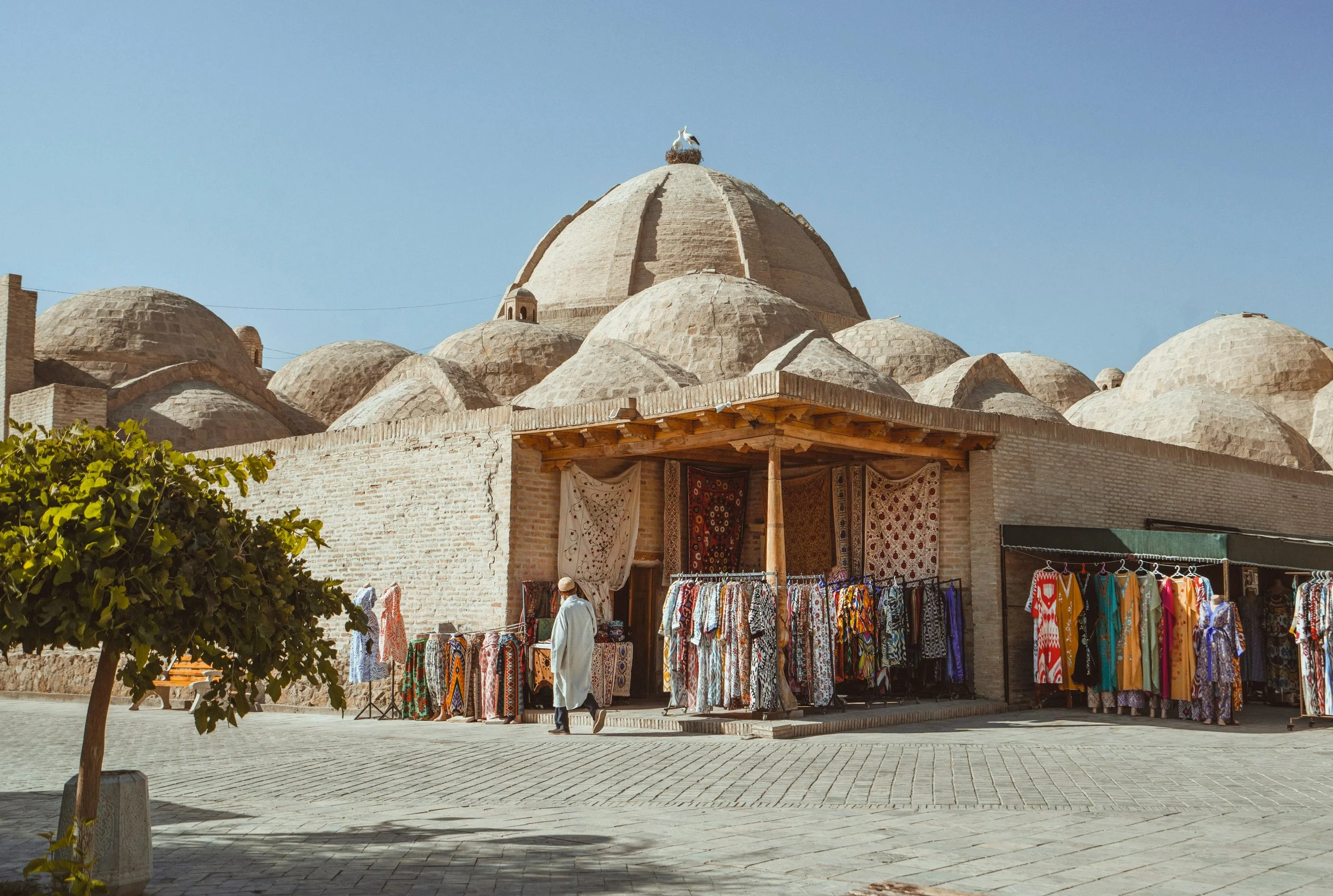
Khiva: a perfectly preserved medieval city
Khiva is the final stop on any Silk Road journey, and for many travelers, the most affecting. The walled inner city of Itchan Kala, a UNESCO World Heritage Site, is the most intact ancient city in Central Asia: a dense, labyrinthine ensemble of mosques, minarets, madrasas and palaces that feels, more than anywhere else in Uzbekistan, like stepping directly into the medieval world.
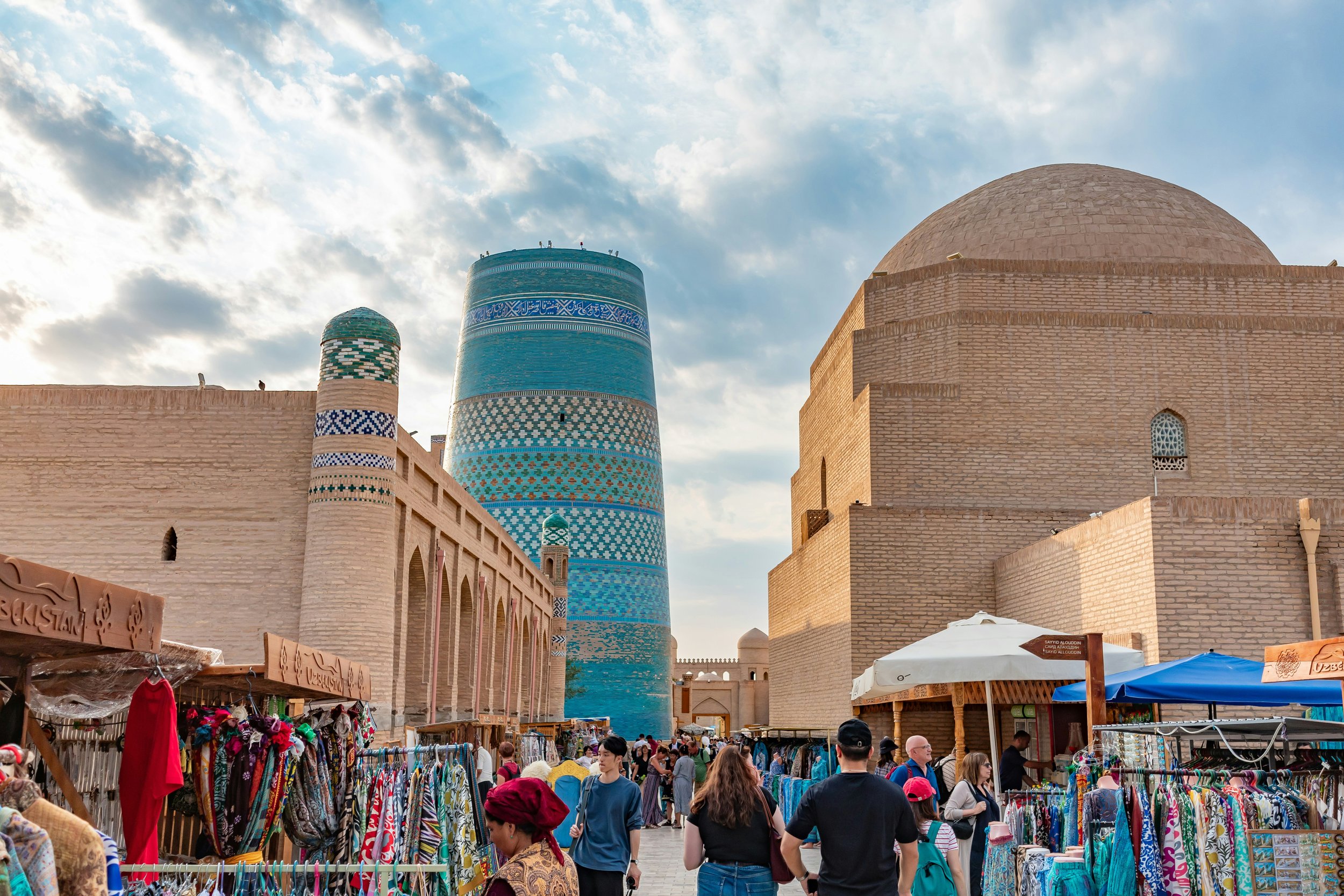
The Kalta Minor minaret, begun in the 19th century and left unfinished at the death of the Khan who commissioned it, its lower section covered in brilliant turquoise tiles, is one of Uzbekistan's most distinctive images. The Juma Mosque, supported by 218 carved wooden columns each brought from a different location, is unlike any other building in the country.
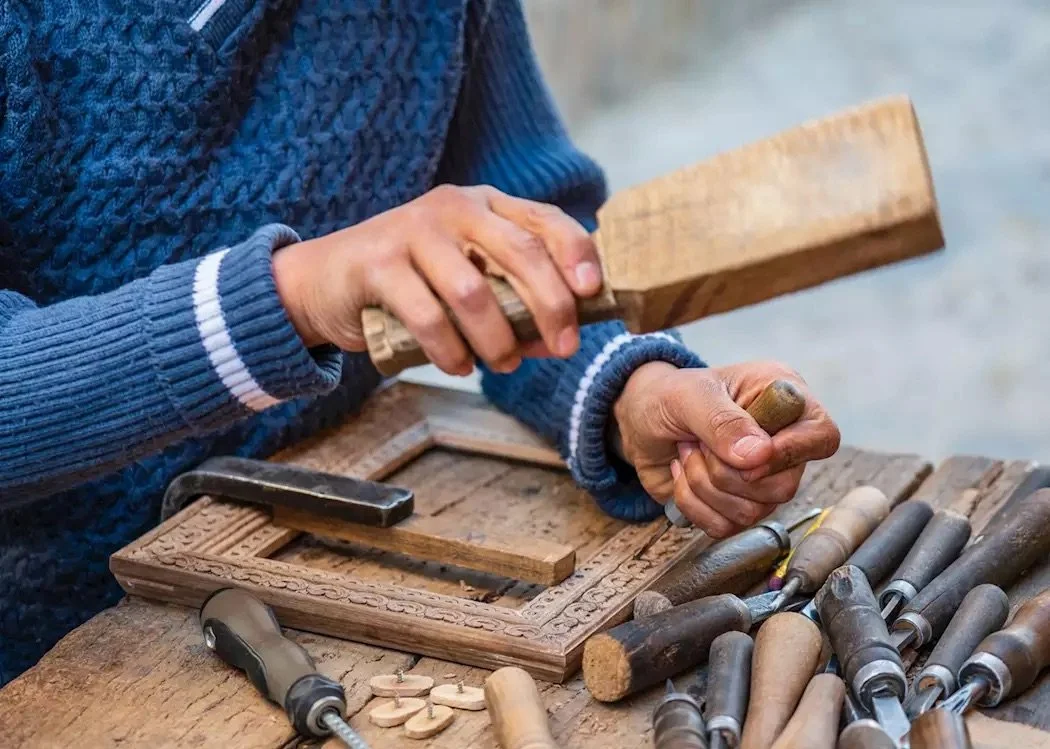
A wood carving workshop with local artisans in Khiva is an experience we always recommend, the craft here is among the finest in Central Asia, and working alongside a master craftsman for even a short session produces both a meaningful souvenir and a lasting memory.
The journey to Khiva, eight hours across the Kyzylkum Desert from Bukhara, is long, but arriving at the ancient walls as the sun drops toward the desert horizon is a moment that justifies every kilometer of the drive.
How many days do you need?
We recommend 8 to 10 days as the ideal duration for a first Uzbekistan journey, enough time to experience all four cities at a genuine pace without rushing.
A typical private itinerary flows as follows: two days in Tashkent for arrival and cultural orientation, two days in Samarkand for the major sites plus deeper exploration, two days in Bukhara for the old town and immersive experiences, one day in Khiva for the walled city, and a final day either returning via Tashkent or flying home directly.
Explore our sample Uzbekistan itinerary for a detailed day-by-day example of how a private journey through the Silk Road cities can look.
For those who want to go further, Uzbekistan pairs naturally with Tajikistan (the Pamir Highway, the ancient city of Penjakent), Kyrgyzstan (nomadic culture, alpine lakes, mountain landscapes), or for the truly adventurous, Turkmenistan and the surreal Darvaza gas crater. We design all of these as fully tailor-made private journeys.
What is a private tour of Uzbekistan actually like?
The difference between visiting Uzbekistan independently and experiencing it through a private guided journey is significant, more so here than in most destinations.
English is not widely spoken outside the major tourist sites. Logistics between cities, particularly the Bukhara to Khiva desert crossing, require planning and reliable private vehicles. And the depth of what you experience at each site depends almost entirely on the quality of your guide: the difference between standing in front of the Registan reading a plaque and having an expert explain the astronomical knowledge encoded in the tilework is the difference between seeing something and understanding it.
The private experiences we arrange, the plov dinner with a local family in Bukhara, the miniature art workshop, the wood carving session in Khiva, the early morning access to the Registan before the crowds arrive, are simply not available to independent travelers. These are the moments our clients describe when they come home.
Practical information
Visa: US, UK, EU, Canadian and Australian passport holders do not require a visa for stays of up to 30 days. Many other nationalities are visa-free or eligible for a simple e-visa.
Currency: The Uzbekistani Som (UZS). US dollars are widely accepted in hotels and for larger transactions. ATMs are available in all major cities.
Language: Uzbek is the official language; Russian is widely spoken. English is available in hotels and at major tourist sites but limited elsewhere, another reason private guided travel makes such a difference.
Safety: Uzbekistan is considered one of the safest countries in Central Asia. Crime rates are low, cities are walkable, and travelers are treated with genuine hospitality. No significant safety concerns for visitors.
Getting around: High-speed Afrosiyob trains connect Tashkent, Samarkand and Bukhara in VIP class (approximately 2.5 hours each). Khiva requires a private transfer from Bukhara (approximately 8 hours through the Kyzylkum Desert, a journey worth embracing rather than avoiding).
Tipping: Expected at restaurants and for guides. A tip of $10–20 per day for a private guide is appropriate and genuinely appreciated.
Ready to plan your Uzbekistan journey?
Uzbekistan is one of the world's great undiscovered luxury destinations, and the window in which it remains this way will not stay open indefinitely. The infrastructure is improving, international awareness is growing, and the travelers who go now will experience something genuinely rare.
Our travel designers have first-hand knowledge of Uzbekistan's cities, guides and experiences, and design every itinerary as a fully tailor-made private journey, built around your interests, pace and travel style.
Explore our Uzbekistan destination page or get in touch to start planning your private Silk Road journey.