
Seoul Privately: The City That Changes How You Think About Asia
A city of ten million people that feels, somehow, like it was designed for you personally.
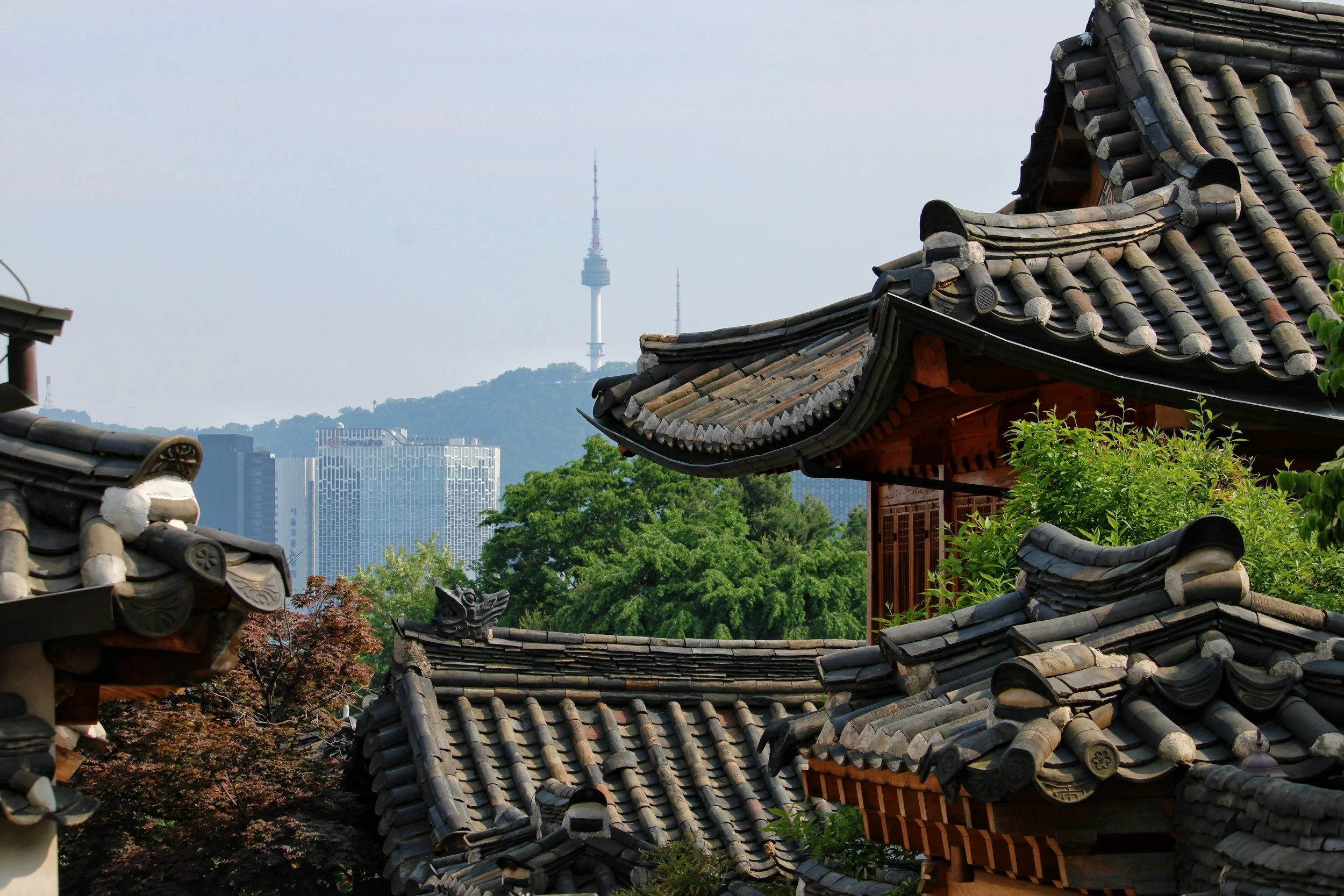
There are cities you visit and cities that change you. Seoul is the second kind. It is a place that people arrive at with certain expectations, shaped by what they have read or watched or listened to, and leave with something they did not anticipate: a genuine affection for a city that got under their skin before they fully understood how it happened. It is one of the most technologically sophisticated cities in the world and also one of the warmest. It has more Michelin-starred restaurants than Paris and also street food markets where the same families have been cooking the same dishes for three generations. It contains palaces that are a thousand years old and design studios that are inventing the aesthetic language of tomorrow. And it does all of this with a grace and an ease that makes almost every other major city feel, by comparison, slightly effortful.
Seoul is the kind of city that serious travelers talk about the way they talk about Kyoto or Lisbon or Oaxaca: as a place that rewards those who arrive with genuine curiosity and leave with the feeling that they only scratched the surface. A private journey through Seoul is the best way to understand why.
Why Seoul is different from every other Asian capital
The easiest way to understand Seoul is to understand what it has been through. In 1950, at the start of the Korean War, the city was almost completely destroyed. In the decades that followed it rebuilt itself with a speed and a determination that is almost without precedent in modern urban history, producing the economic miracle that transformed South Korea from one of the poorest countries in Asia to one of the wealthiest within a single generation. The city that exists today, with its extraordinary infrastructure, its world-class cultural institutions and its extraordinary food scene, was built almost entirely within living memory.
That history explains something essential about Seoul and about Koreans more generally. There is a reason that one of the first things a Korean asks after hello is whether you have eaten. It is not small talk. It is a reflection of a culture shaped by collective memory, by the knowledge of what it means to go without, and by a deep instinct to care for the people in front of them. To eat in Seoul, to really eat, is to understand something about the people who built this city that no museum or monument can quite convey.
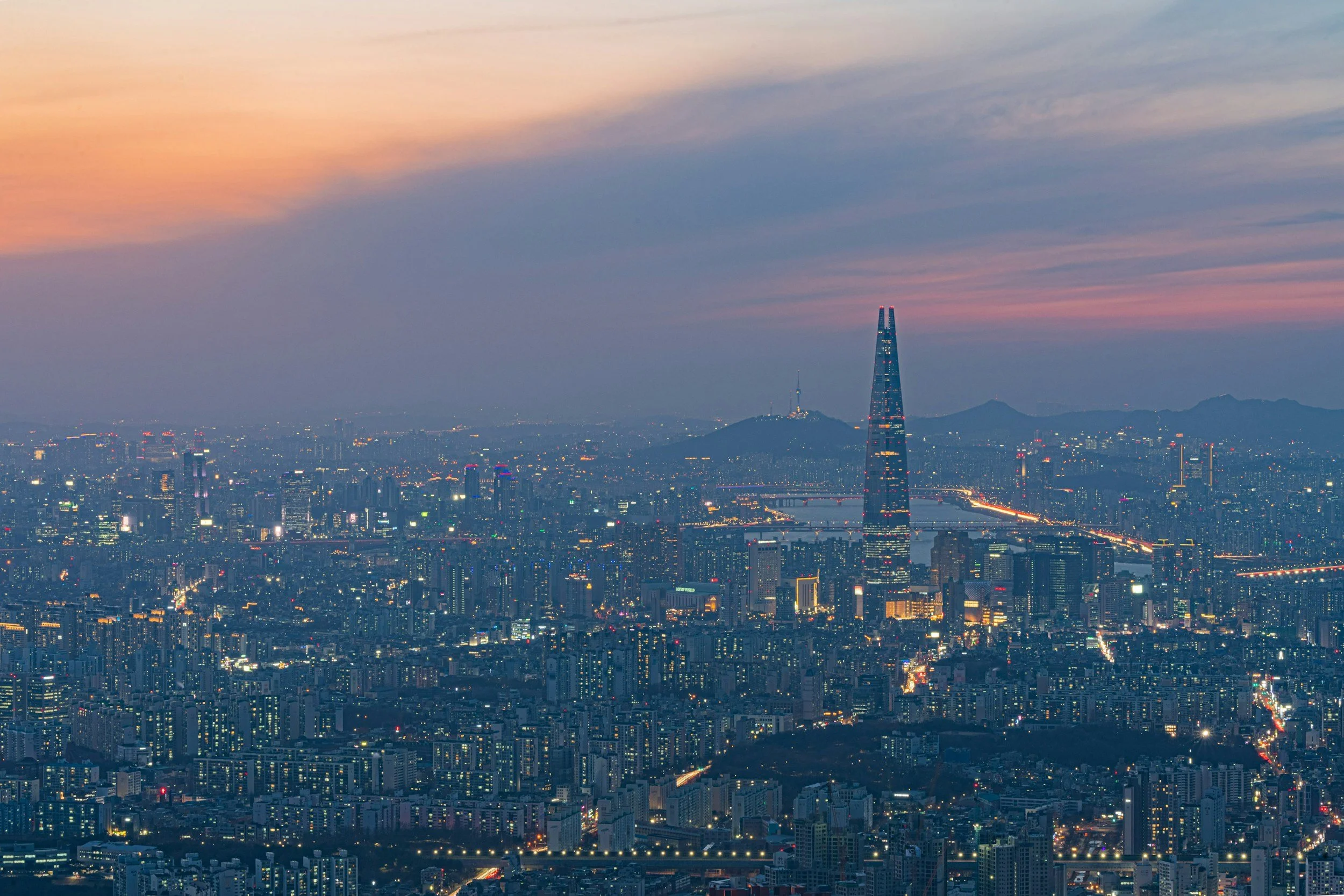
The neighbourhoods: a city of distinct worlds
Seoul is not one city. It is a collection of neighbourhoods, each with its own character and its own culture, connected by one of the finest metro systems in the world but best experienced on foot with a guide who knows where the edges of each district blur into something unexpected.
Bukchon Hanok Village, the hillside neighbourhood of traditional wooden houses between the two great palaces of Gyeongbokgung and Changdeokgung, is where most visitors begin their understanding of old Seoul. The hanok architecture, with its curved clay-tiled roofs and wooden lattice doors opening onto small courtyards, is genuinely beautiful and it is worth spending a morning walking the lanes and understanding what domestic life in the Joseon era looked like. It is crowded during the day, particularly at the most photographed corners, and the right approach is to arrive early, before the tour groups, and to move into the quieter residential lanes where the atmosphere is more genuine.
Insadong, just below Bukchon, is Seoul's traditional arts district, where galleries, antique dealers, calligraphy studios and teahouses occupy old buildings on lanes that run off the main street. It is the right place to begin understanding Korean art and craft traditions, and the weekend market is one of the better ones in the city.
Itaewon, on the south side of Namsan mountain, has transformed over the past decade from a somewhat chaotic neighbourhood of international restaurants and bars into one of the most interesting design and cultural districts in the city. The streets of Gyeongnidan-gil and Haebangchon have some of the finest independent restaurants in Seoul, and the alleyways between them reveal a neighbourhood that is still genuinely in the process of becoming itself.
Seongsu-dong is where Seoul is heading. A former industrial district on the north bank of the Han River that has been transformed, block by block, into the most concentrated expression of contemporary Korean creative culture in the city. The concept stores are serious, the coffee is excellent, the vintage boutiques are curated with genuine knowledge and the brick warehouse spaces that once housed factories now contain the studios of the designers, photographers and artists who are shaping the next chapter of Korean culture. A private afternoon in Seongsu-dong with a guide who knows the neighbourhood from the inside is the best single introduction to contemporary Seoul available anywhere.
Gangnam, south of the river, carries the weight of a famous song but is far more interesting than its reputation suggests. It is where the K-entertainment industry has its headquarters, where the finest beauty clinics in the world operate, where the luxury shopping is concentrated and where the restaurant scene has some of the most technically ambitious cooking in the city. The neighbourhood of Apgujeong, within Gangnam, is where Korean beauty culture reaches its most sophisticated expression and where a private visit to one of the major cosmetics houses or beauty concept stores gives a genuinely illuminating insight into one of South Korea's most remarkable industries.
The food: eating seriously in Seoul
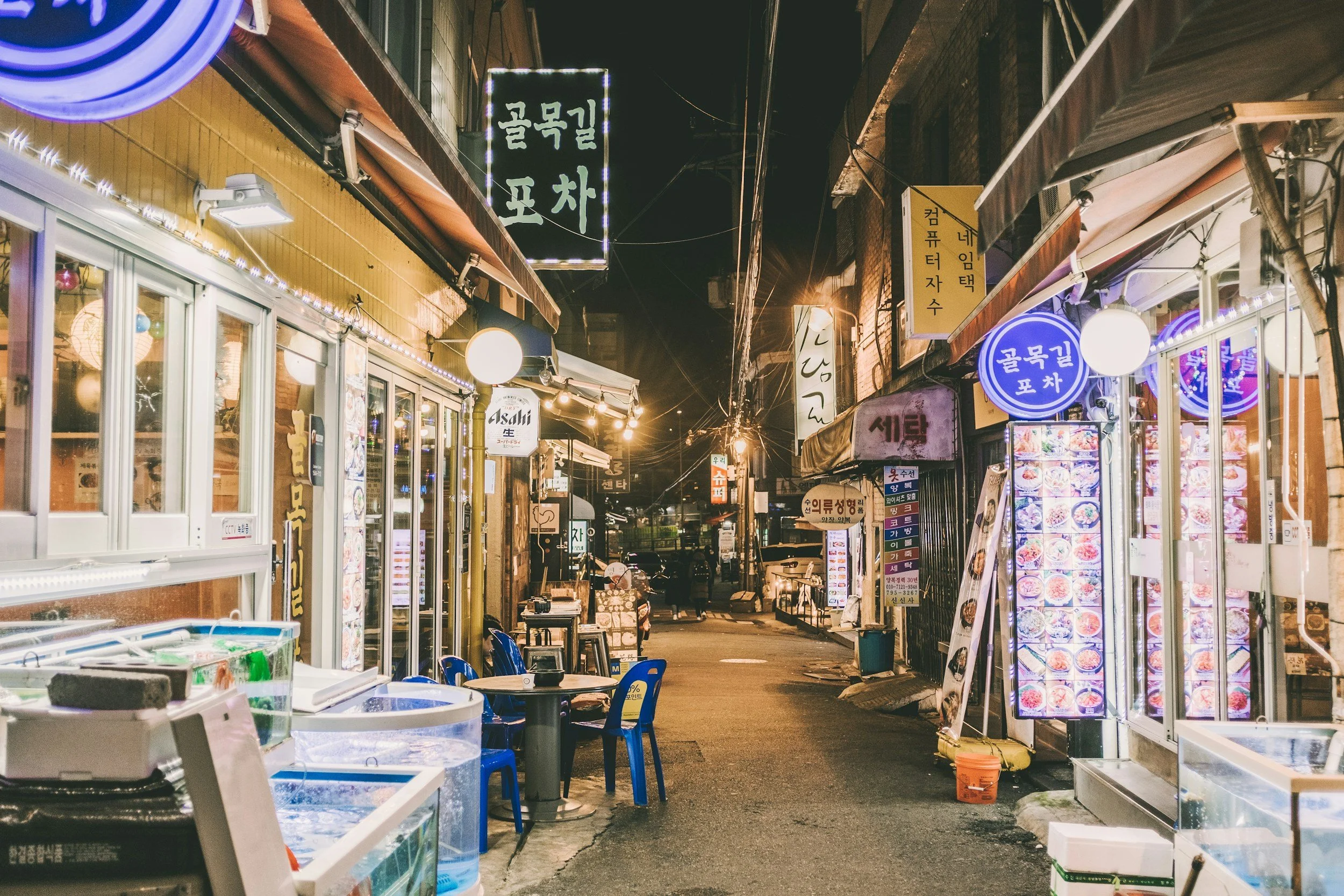
Seoul's food scene is one of the great ones and it operates at every level simultaneously, from the three-Michelin-starred tasting menus of Gaon and Jungsik, which serve contemporary Korean cuisine of extraordinary refinement, to the pojangmacha street stalls that appear at night across the city selling tteokbokki, spicy rice cakes, odeng fish cake skewers and Korean fried chicken that has no real equivalent anywhere else in the world.
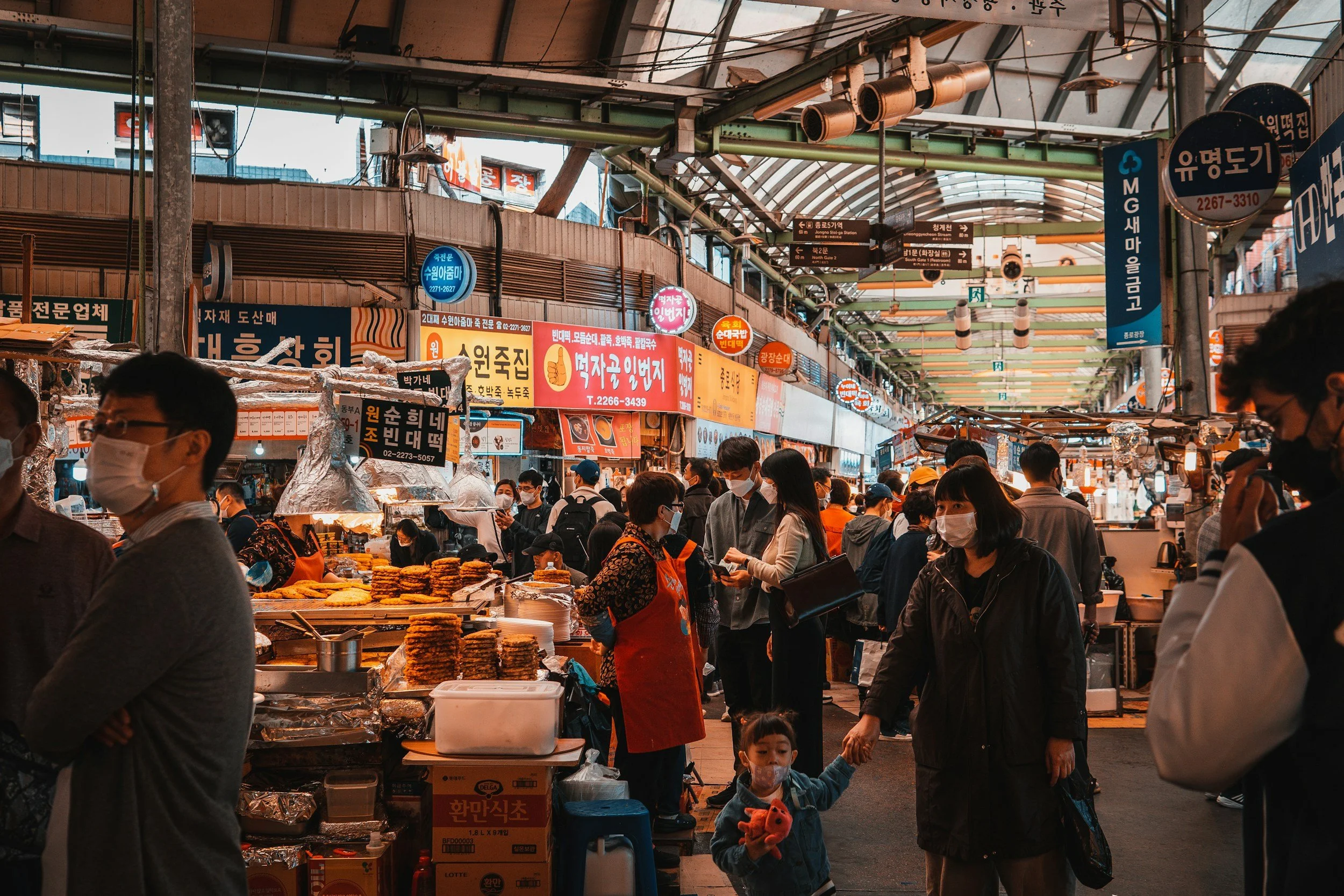
Gwangjang Market is the essential food experience of Seoul and one of the finest food markets in Asia. It is a covered labyrinth of stalls that has been operating since 1905, and the food it sells is as specific to this place as any cuisine gets. The bindaetteok, mung bean pancakes cooked on iron griddles, are made here with a technique unchanged for a century. The mayak gimbap, hand-rolled rice rolls so addictive they have been nicknamed narcotic, are sold by vendors who have been making them at the same stall for decades. The yukhoe beef tartare, dressed with sesame oil, Asian pear and egg yolk, is one of the finest things to eat in Korea and is eaten here at street level, standing at a plastic table with strangers, which is exactly the right way to eat it.
A private food tour of Seoul that moves through Gwangjang in the morning, into the neighbourhood restaurants of Seongsu-dong or Itaewon for lunch, and ends at a dinner reservation chosen for the quality of its seasonal Korean cooking rather than its profile is one of the finest days available anywhere in East Asia. The guide who knows the difference between what is celebrated internationally and what locals consider genuinely extraordinary makes all the difference.
The palaces: understanding old Seoul
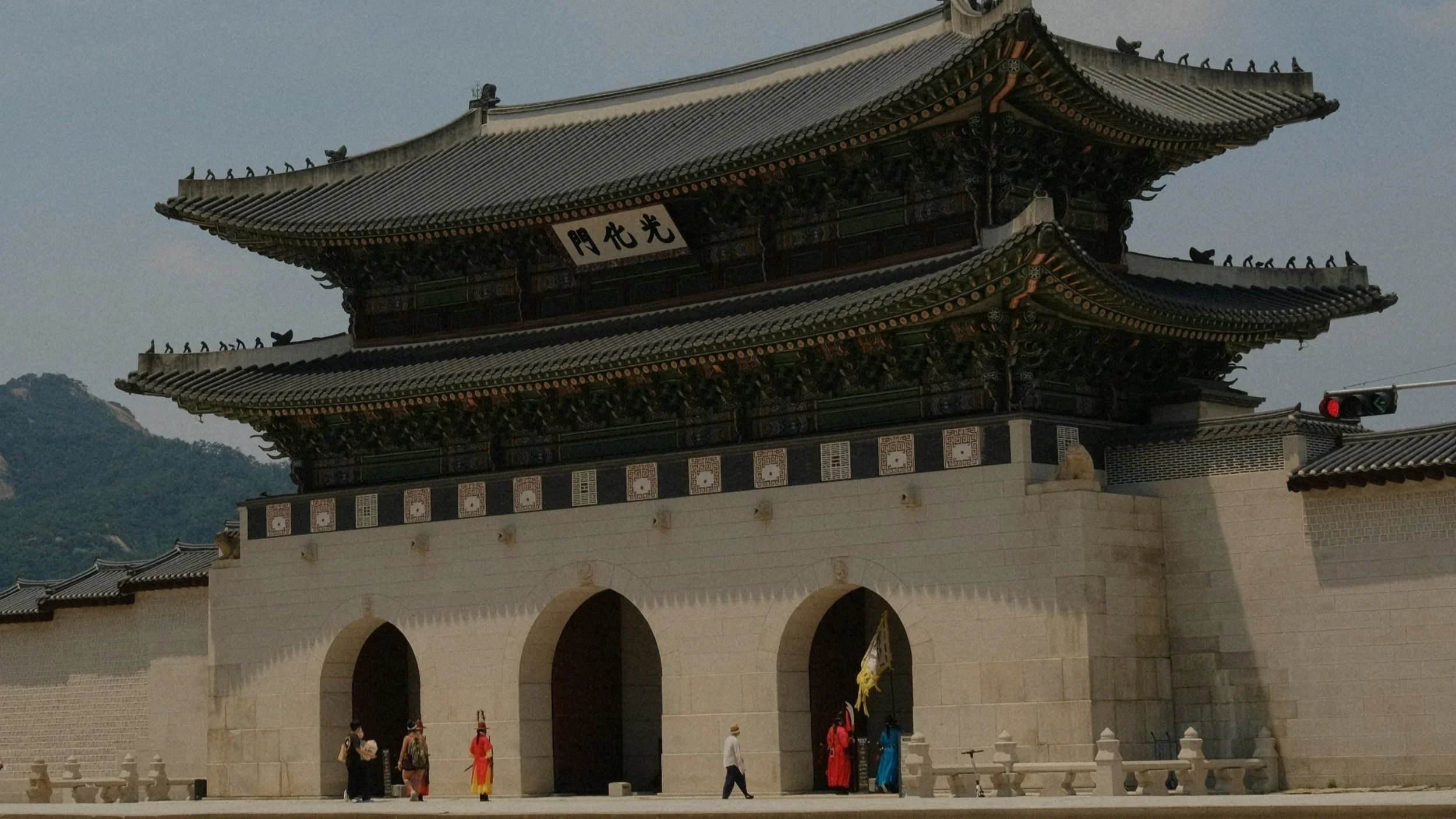
Seoul has five great Joseon-era palaces, of which Gyeongbokgung, the main palace of the Joseon dynasty built in 1395, is the most visited and the most impressive in scale. A private early-access visit before the gates open to the general public, with a guide who can explain the architectural and ceremonial logic of the palace complex, what each courtyard was used for and by whom, what the surviving murals and carved details reveal about the court culture of the Joseon era, transforms what might otherwise feel like a photogenic but superficially understood monument into something genuinely comprehended.
Changdeokgung, the second great palace, has a secret garden, Huwon, that can only be visited on a guided tour and that is one of the most beautiful spaces in Seoul: a forest garden of ponds, pavilions and ancient trees that the royal family used for leisure and that retains an atmosphere of extraordinary calm in the middle of a city of ten million people.
The contemporary culture: K-everything
South Korea's cultural export is the most remarkable soft power story of the twenty-first century. K-pop, K-drama, K-beauty and Korean cinema have reached audiences of hundreds of millions of people across the world and have driven a surge in visitors to Seoul that shows no sign of slowing. For the traveller who wants to understand the phenomenon from the inside rather than simply observe it from the outside, Seoul offers access that no other city can provide.
The entertainment company headquarters in Gangnam, the recording studios, the idol training facilities, the concept stores that serve as physical expressions of each label's aesthetic, the beauty laboratories where the formulations that are reshaping the global skincare industry are developed: all of this is accessible on a private K-culture experience with a guide who has genuine relationships in the industry. It is an experience that appeals equally to those who have been following Korean culture for years and to those who are encountering it for the first time and want to understand what they have been hearing about.
How to experience Seoul privately
Seoul is one of the most navigable cities in the world for the independent traveller. The metro is extraordinary, the signage is bilingual and the infrastructure is impeccable. What a private guide adds is something different from navigation. It is access to the restaurants with no English menu that serve the finest seasonal Korean cooking in the city. It is the hanok guesthouse run by a family who has been hosting guests for generations. It is the knowledge of which neighbourhood is peaking right now and which viewpoint over the city at which hour of the day is worth the detour. It is the conversation with the vendor at Gwangjang who has been making the same dish for thirty years and who, through a guide who can translate not just the words but the meaning behind them, becomes one of the most memorable people you meet on the entire journey.
Seoul changes how you think about Asia. A private Seoul experience changes how you think about travel.
Ready to start planning your South Korea journey?
Explore our South Korea destination page for more on regions, experiences and the best time to visit. When you are ready, get in touch and we will begin designing your journey around you.