
Day of the Dead in Oaxaca: What It Really Looks Like to Be There
Not a festival. Not a spectacle. One of the most profound human experiences available anywhere in the world.
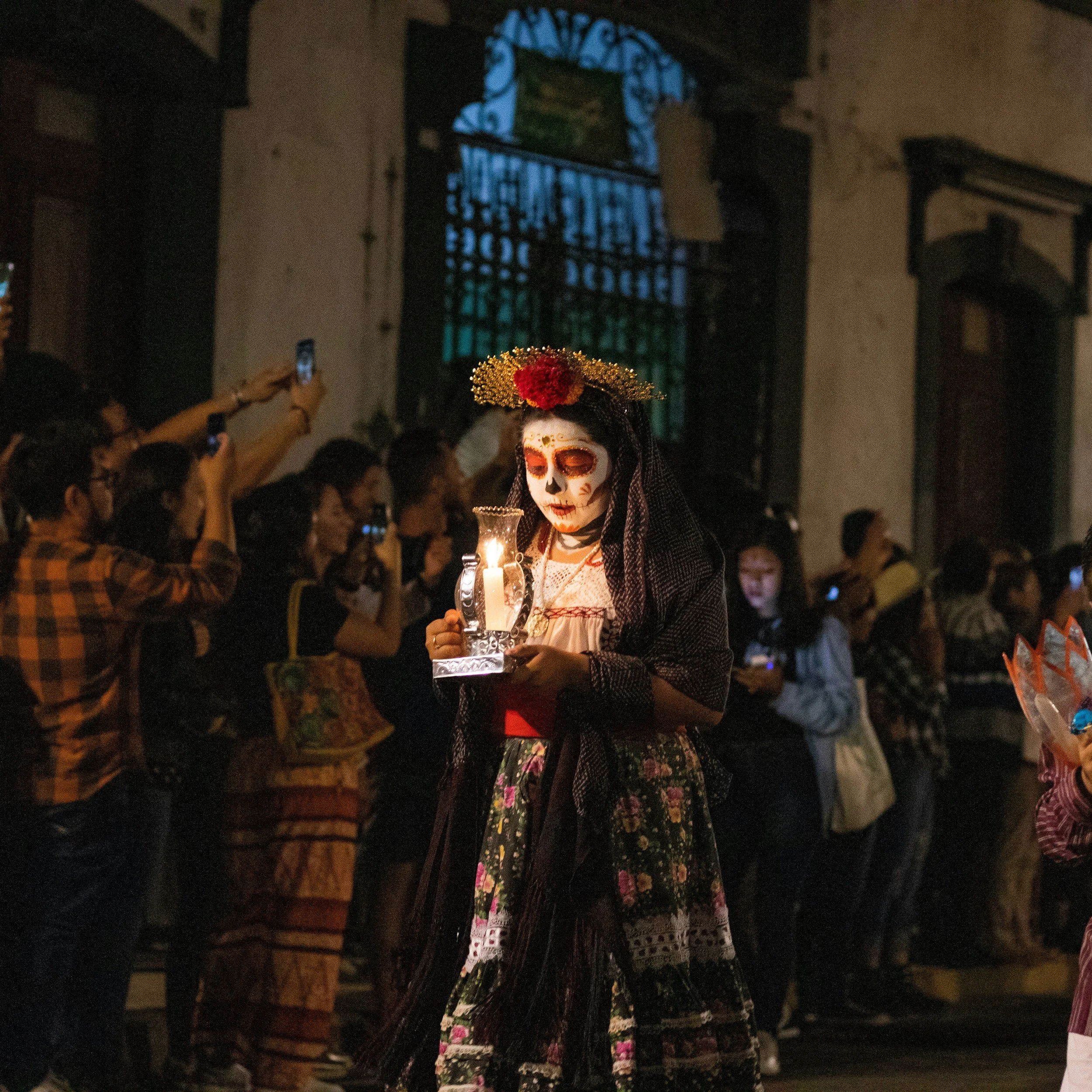
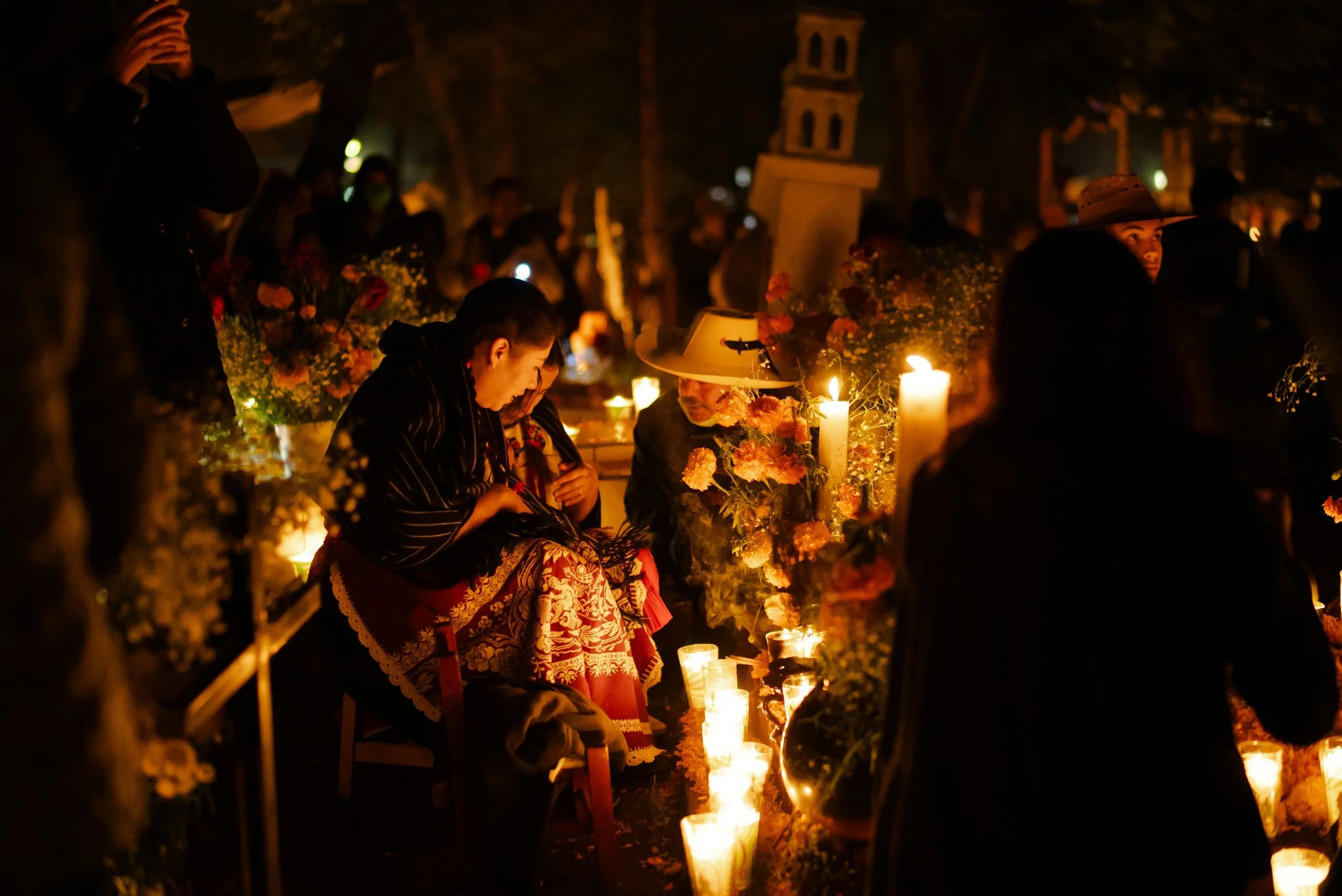
There is a moment, sometime after midnight on November 1st, when you are standing in the cemetery of Xoxocotlán and you understand that what you are witnessing is not a performance. The marigold petals laid in paths between the graves are not decoration. The families sitting beside the altars, some of them having been there since dusk, are not there for visitors. The mezcal poured onto the earth, the plates of mole and tamales left beside photographs of the dead, the candles that turn the entire cemetery into something that glows from within: all of it is entirely real, entirely sincere, and entirely unlike anything that exists in the world of organised tourism.
Day of the Dead in Oaxaca is one of those rare travel experiences that leaves a permanent mark. Not because it is visually extraordinary, though it is that too, but because it forces a genuine reckoning with how differently cultures can approach grief, memory and the relationship between the living and the dead. To be there properly, with a guide who can introduce you to families and explain the Zapotec traditions behind what you are witnessing, is to understand something about human beings that you could not have understood any other way.
What Day of the Dead actually is
The first thing to understand about Día de los Muertos is that it is not the Mexican version of Halloween. The two share a calendar proximity and nothing else. Day of the Dead is an ancient Mesoamerican tradition that predates the Spanish conquest by thousands of years, rooted in Zapotec and Aztec beliefs about death as a continuation of life rather than an ending. When the Spanish arrived in the sixteenth century, they could not eradicate it, so they overlaid it with the Catholic calendar, placing it on November 1st and 2nd to coincide with All Saints Day and All Souls Day. What survived is a remarkable synthesis: Catholic imagery woven into something far older and far more specific to the cultures of southern Mexico.
In Oaxaca, which has the highest concentration of indigenous communities in Mexico and the strongest unbroken connection to pre-Hispanic traditions, Day of the Dead retains a depth and authenticity that is harder to find in the more commercially visible celebrations of Mexico City or the tourist-facing events that have grown up in other regions. Oaxaca's celebration is built around the cemeteries, around the families, around the specific foods and flowers and rituals that belong to this place and these people. It is not staged. It is not curated for visitors. It simply happens, the way it has happened for centuries, and the extraordinary thing is that visitors are welcome to witness it with appropriate respect.
The ofrenda: understanding the altar
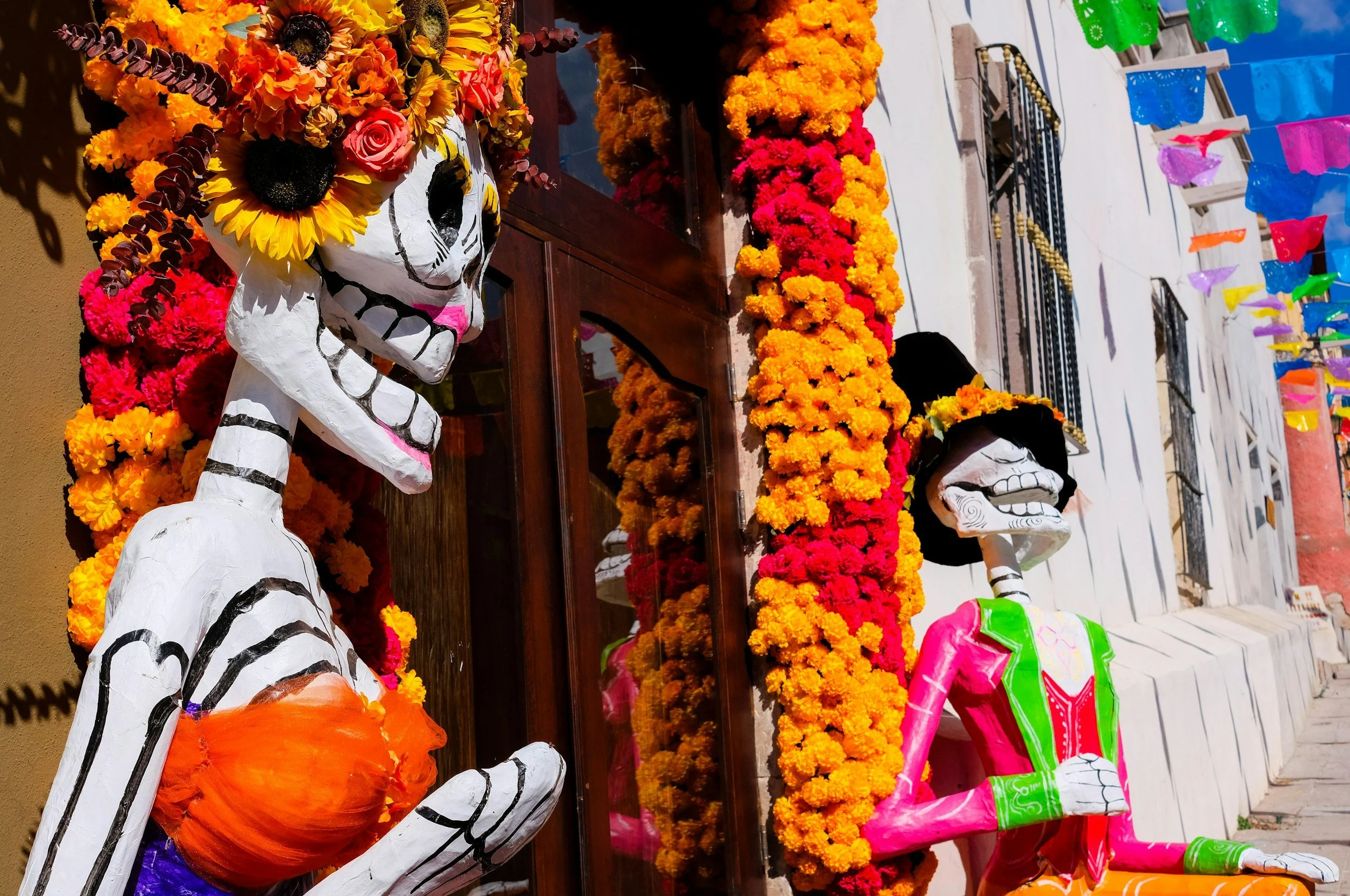
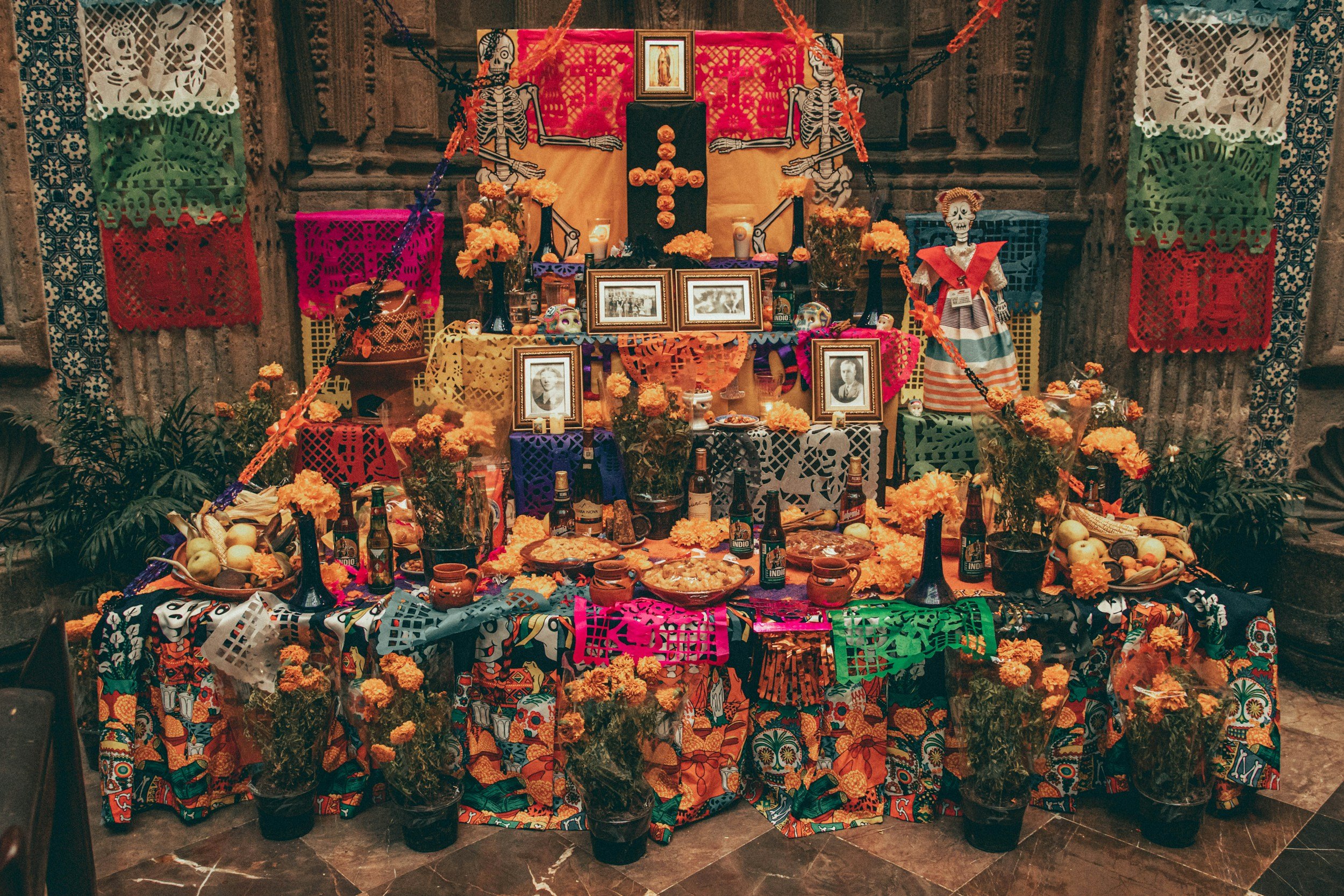
Before you go to the cemeteries, you need to understand the ofrenda. The ofrenda is the altar constructed in honour of the dead, built in homes and in the cemetery itself, and every element of it carries specific meaning.
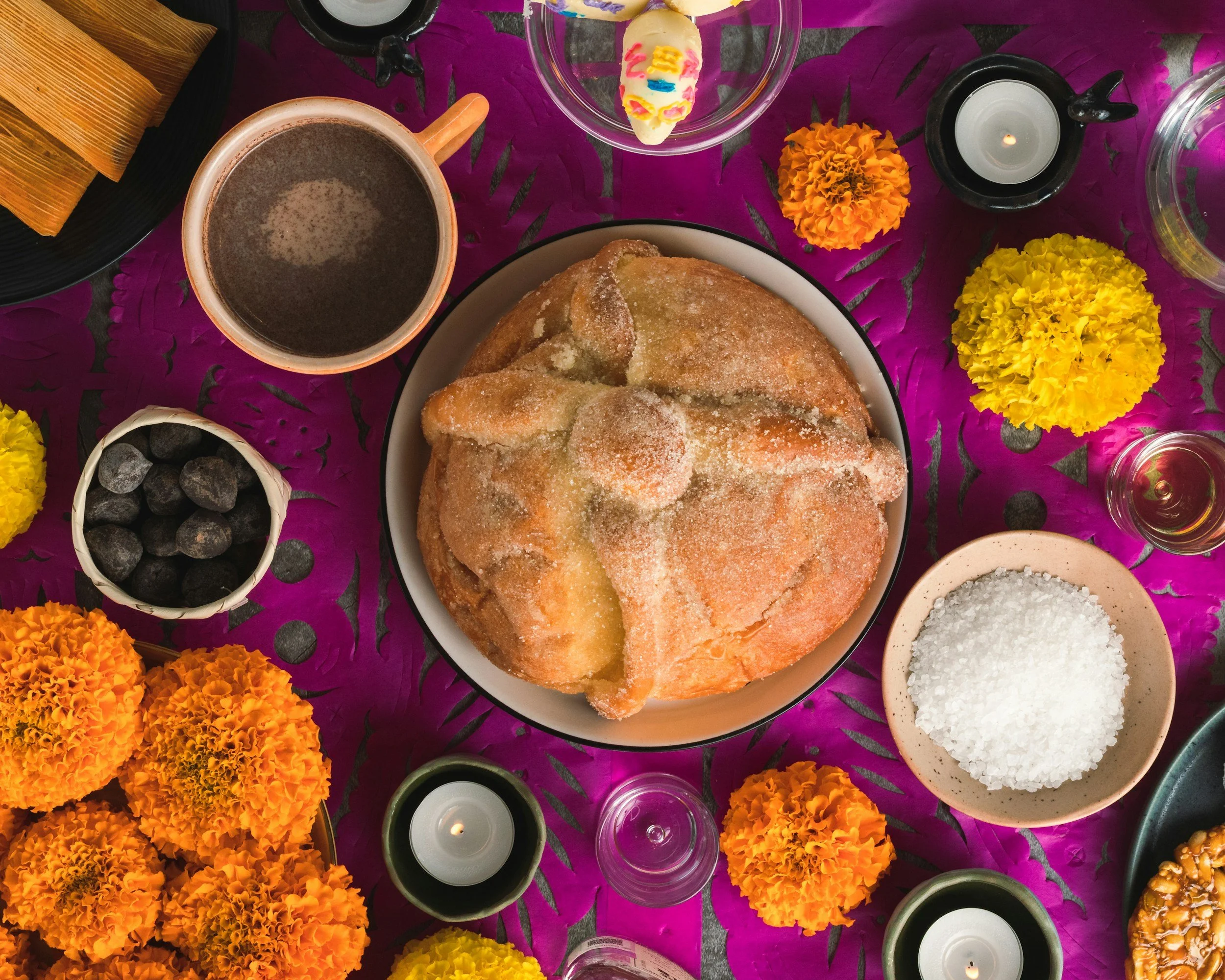
Cempasúchil, the bright orange marigold, is the flower of the dead in Mexican tradition. Its scent is believed to guide the spirits of the dead back to the world of the living during the two days when the boundary between the two worlds is open. The petals are laid in paths from the cemetery entrance to the individual graves, so the spirit knows where to go. The colour is extraordinary, and the smell, warm and slightly medicinal, becomes permanently associated with this experience in a way that makes it impossible to encounter a marigold anywhere in the world afterwards without being transported back.
The food placed on the ofrenda is the food the deceased loved in life. Mole negro, Oaxaca's most complex and celebrated sauce, slow-cooked over many hours with dozens of ingredients including chocolate and dried chillies, appears on almost every altar because it is the food that defines this place. Mezcal, the smoky agave spirit that is to Oaxaca what wine is to Burgundy, is poured for the dead the same way it is poured for the living. Bread of the dead, pan de muerto, sweet and shaped into skulls and bones, is baked specifically for this occasion. Photographs of the deceased are placed at the centre of the altar, surrounded by objects that defined them: tools, instruments, clothing, the things that made them who they were.
The ofrenda is not morbid. It is one of the most warm and intimate expressions of love and memory you will encounter anywhere.
The cemeteries: Xoxocotlán and Atzompa
The two cemeteries that draw the most visitors are Xoxocotlán, about twenty minutes from the centre of Oaxaca, and Santa María Atzompa, a smaller and quieter village cemetery that offers a more intimate experience with fewer international visitors.
Xoxocotlán on the night of November 1st is one of the most visually extraordinary things you will ever see. Thousands of candles burning across hundreds of graves, marigold altars of extraordinary complexity and beauty, families sitting together eating and drinking beside the graves of their loved ones, musicians moving through the cemetery playing the songs that the deceased loved. The atmosphere is not solemn in the western sense of that word. There is laughter. There are children running between the graves. There is genuine joy alongside the grief, because that is the point of the tradition: the dead are not gone, they have come back for two days, and you eat with them and drink with them and play their music for them and you celebrate the fact that they lived.
Atzompa is smaller and the families there tend to be less accustomed to international visitors, which means the experience is more private and more genuine. The altars are simpler and the atmosphere is quieter. For those who want to understand the tradition more deeply rather than experience its most spectacular visual expression, Atzompa is the right choice.
A private guide who has relationships in both communities, who can introduce you to specific families and explain the significance of what you are seeing in the moment that you are seeing it, changes the nature of the experience entirely. The difference between watching and being welcomed to witness is everything.

Oaxaca in the days before: the preparation
Day of the Dead in Oaxaca is not a single night. The preparation begins days before and the experience is richest for those who arrive early enough to see the city transforming around the celebration.
The markets of Oaxaca in the days leading up to November 1st are among the most extraordinary sensory experiences in Mexico. The Mercado de Abastos fills with mountains of cempasúchil flowers, towers of pan de muerto, candles in every size, copal incense, the dried chillies and chocolate and mole ingredients that families are buying to prepare the food for the altars. The copal smoke begins to fill the streets days before the celebration itself, and Oaxaca takes on a particular atmosphere that is different from any other time of year.
The artisan markets in the surrounding villages sell the clay skulls, the painted wooden figures and the handwoven textiles that form part of the altar decorations and that represent some of the finest craft traditions in Mexico. A private visit to one or two of the artisan villages, San Bartolo Coyotepec for black clay pottery, Teotitlán del Valle for hand-loomed rugs, is one of the best ways to understand the depth of the indigenous culture that underpins the entire celebration.
What to eat and drink during Day of the Dead
Oaxaca is one of the world's great food destinations at any time of year. During Day of the Dead it is exceptional. The specific foods of the celebration are prepared with particular care during this period and eating them in Oaxaca during these days is a completely different experience from encountering them anywhere else.
Mole negro is the centrepiece. Oaxaca is home to seven moles, each distinct in its character and complexity, and mole negro is the deepest and most complex of all of them, a sauce that can take three days to prepare and contains more than thirty ingredients including chocolate, several varieties of dried chilli, charred tomatoes, plantain, spices and nuts. Eaten with turkey or chicken, in the context of the celebration for which it was made, it is one of the most profound culinary experiences available in Mexico.
Mezcal deserves a private tasting during this period. The palenques around Oaxaca produce single-village, single-variety mezcals in small quantities that are never exported and that taste nothing like the bottles that reach international bars. A private visit to a palenque where the owner explains the agave plants, the stone tahona wheel used to crush them and the clay pot still used for distillation, followed by a tasting of the results, is one of the finest hours available anywhere in Oaxaca.
When to go and how to plan it
Day of the Dead falls on November 1st and 2nd, with the main cemetery vigils taking place on the night of November 1st. However the city is in preparation mode from October 29th or 30th and the energy builds significantly across the days before. Arriving on October 29th or 30th gives you time to explore the markets, visit the artisan villages, understand the context of what you are about to witness and settle into the rhythm of the city before the main nights.
Accommodation in Oaxaca during Day of the Dead books out completely, often six months in advance for the best boutique hotels. Planning should begin no later than April or May for November travel. It is also worth noting that the celebration is not concentrated into a single fixed event at a single location. It unfolds across the city, in the cemeteries, in the streets and in private homes simultaneously, which means a private guide who knows how to move between the different elements of the celebration according to what is happening in real time is genuinely essential rather than simply useful.
Day of the Dead in Oaxaca is one of those experiences that people who have been there describe consistently as one of the most important things they have ever done as a traveller. It is not comfortable in the way that most luxury travel is comfortable. It asks something of you. It requires presence and openness and a willingness to sit with something that cannot be fully understood from the outside. But it offers, in return, a window into the relationship between the living and the dead that is more honest and more beautiful than almost anything else travel has to offer.
Ready to plan your DAY OF THE DEAD JOURNEY IN MEXICO?
Explore our Mexico destination page for more on regions, experiences and the best time to visit. When you are ready, get in touch and we will begin designing your journey around you.