

Luxury Private Tours in CAMBODIA
The greatest temple complex on earth. A capital shaped by history. Islands almost nobody has found.
Our tailor-made private tours combine expert local guides, handpicked boutique stays and curated experiences, from Angkor Wat at sunrise and the royal palaces and sobering history of Phnom Penh to a private tented camp deep in the Cambodian wilderness and a beach escape on an island in the Gulf of Thailand that the rest of the world has yet to discover.
WHY VISIT CAMBODIA?
Cambodia is one of the most surprising destinations in Southeast Asia, a country that carries the weight of an extraordinary ancient civilisation and an equally extraordinary recent tragedy with a dignity and a warmth that consistently moves the travellers who arrive with genuine openness. The temples of Angkor, built by the Khmer Empire between the ninth and fifteenth centuries across a landscape of over four hundred square kilometres, represent one of the greatest architectural achievements in human history and one that still rewards hours of private exploration long after the famous images have become familiar. Beyond Angkor, Cambodia reveals itself gradually: in the street food and the silk markets of Phnom Penh, in the extraordinary biodiversity of the Cardamom Mountains, in the turquoise waters and empty beaches of the southern islands.
What makes Cambodia exceptional for the private traveller is the access that genuine local knowledge provides. The temple at dawn, before any other visitor has arrived and the silence of the forest is still intact. The Phnom Penh neighbourhood that carries the history of the Khmer Rouge in its architecture and its people in ways that no museum can replicate. The island beach that has no hotel on it and no other boat anchored offshore. Cambodia gives its greatest depth to those who arrive with the right person to open it.
Many travellers combine Cambodia with Vietnam for a broader Indochina journey, or with Thailand for those designing a comprehensive Southeast Asia circuit.
Explore our full Asia hub for more inspiring destinations.

Best Time to Visit CAMBODIA
November to February is the dry season and our most recommended window for a first Cambodia journey. Temperatures are warm rather than oppressive, humidity is low and the skies are clear. Angkor is at its finest during this period, the forest around the temples green and the early morning light on the stone extraordinary. The islands of the Gulf of Thailand are calm and the water clarity is at its peak.
March to May is the hot season, with temperatures across the lowlands reaching their highest point. Angkor at dawn remains manageable even in the heat and the advantage of this period is significantly fewer visitors across all sites. The islands remain excellent and the Cardamom Mountain forest is at its most accessible.
June to October is the wet season, with heavy afternoon rainfall across most of Cambodia. The landscape becomes extraordinarily lush and vivid and the moats and reservoirs of Angkor fill with water that reflects the temple towers in a way unique to this season. The Tonle Sap lake expands dramatically, flooding the surrounding forest and creating one of the most extraordinary freshwater ecosystems in Asia. Those who plan around the rain rather than trying to avoid it will find a Cambodia of genuine beauty and very few visitors.
October and November mark the transition from wet to dry season and offer some of the finest conditions of the year, with the landscape still green from the rains and the skies beginning to clear. The Water Festival in Phnom Penh, when the Tonle Sap river reverses its flow and the city celebrates on the waterfront for three days, is one of the most extraordinary cultural events in Southeast Asia and worth timing a visit around.
DISCOVER CAMBODIA’S REGIONS
From the extraordinary temples of Angkor and the layered history of Phnom Penh to the turquoise waters and empty beaches of Cambodia's southern islands, each region offers a completely distinct private journey.
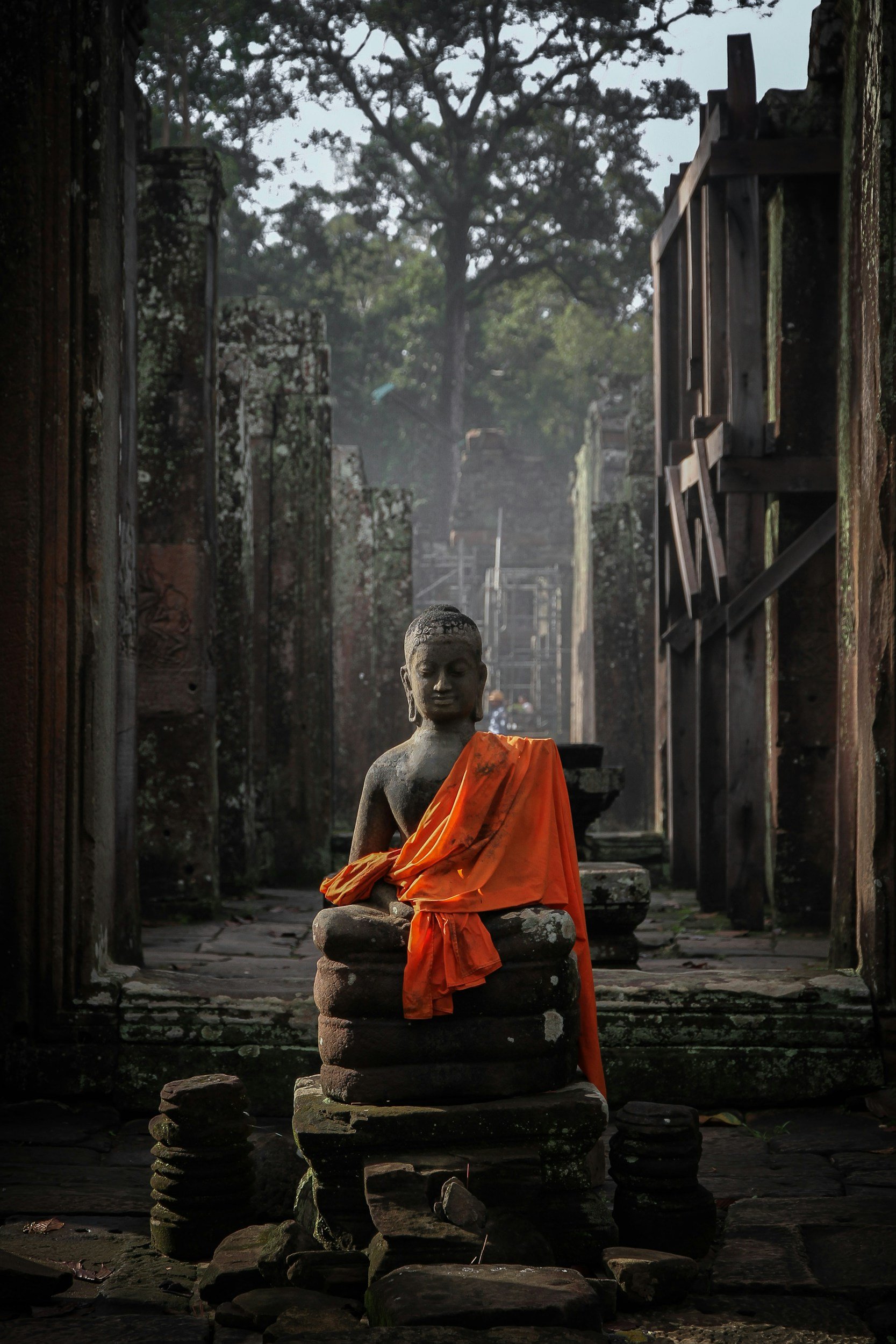
ANGKOR WAT AND THE TEMPLE COMPLEX
Angkor is the largest religious monument ever built and the centrepiece of a civilisation that once dominated mainland Southeast Asia. Experiencing it privately means arriving before dawn at Angkor Wat itself, then moving through the broader complex, the extraordinary faces of the Bayon, the jungle-consumed towers of Ta Prohm, the moated city of Angkor Thom, with a specialist guide who can explain the mythology and the history carved into every surface. The difference between understanding what you are looking at and simply photographing it is the entire experience.
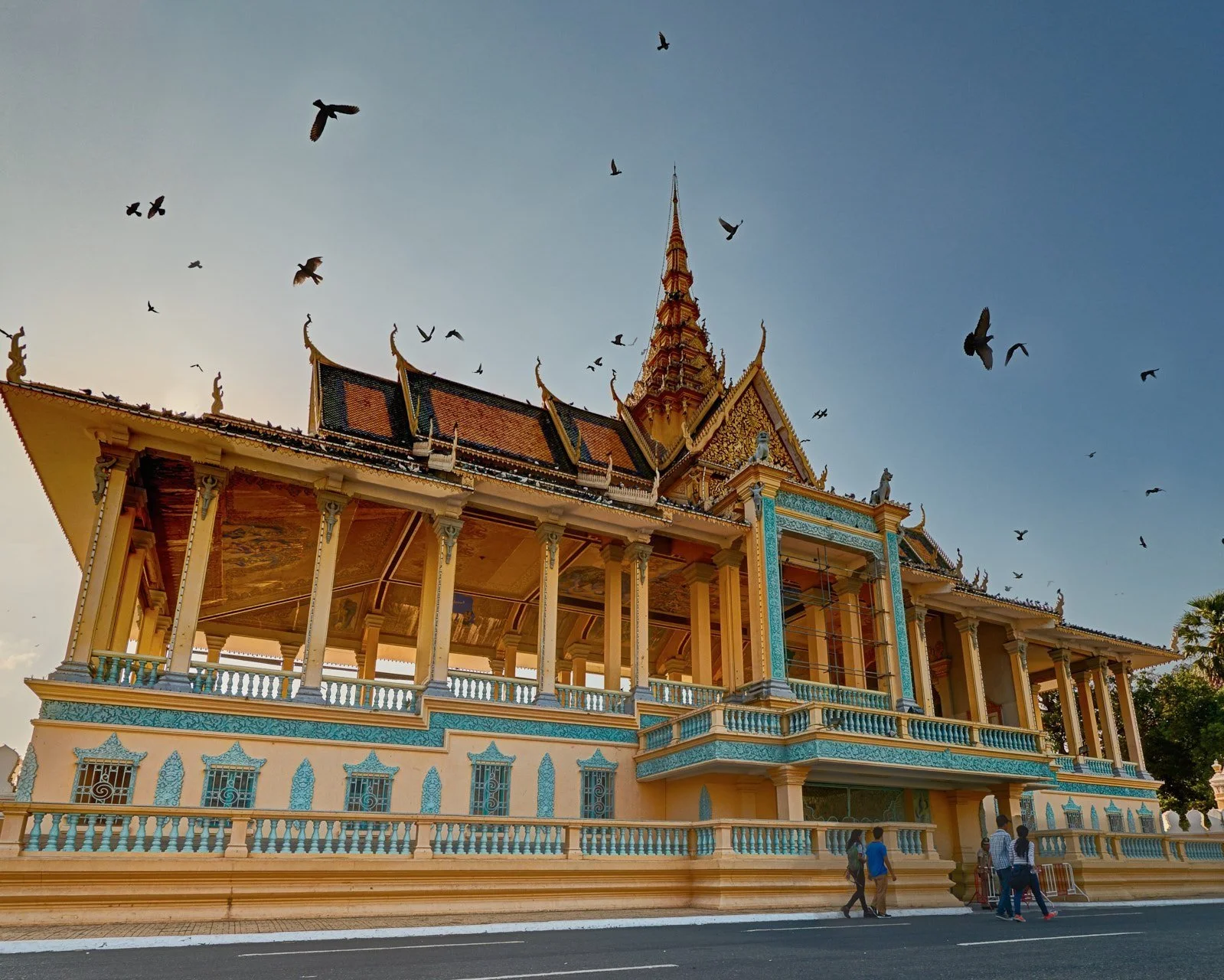
PHNOM PENH: THE CAPITAL ON THE RIVER
Phnom Penh sits at the confluence of the Mekong and the Tonle Sap rivers and carries more history per square kilometre than almost any other city in Southeast Asia. The Royal Palace and Silver Pagoda, the French colonial architecture of the riverside, the extraordinary National Museum and the sobering but essential Tuol Sleng Genocide Museum and Killing Fields: a private Phnom Penh experience moves through all of it with a guide who understands the full depth of a city that has survived the twentieth century's worst and emerged with its warmth intact.

THE ISLANDS: THE GULF OF THAILAND
Cambodia's southern coastline and the islands of the Gulf of Thailand, Koh Rong, Koh Rong Samloem and the smaller uninhabited islands scattered across the surrounding waters, offer a beach experience of extraordinary beauty and almost complete solitude compared to the developed resort islands of neighbouring Thailand. The water is turquoise, the coral is largely intact and the bioluminescent plankton that glows in the shallows on dark nights is one of the most extraordinary natural spectacles available anywhere in Southeast Asia.
Signature Experiences in CAMBODIA
Cambodia rewards those who go deeper than its most famous image. From Angkor Wat in complete silence before sunrise and a private tented camp in a wilderness of extraordinary biodiversity to a boat on the Mekong and a beach on an island with no other visitors in sight, these are the moments we build every Cambodia journey around.
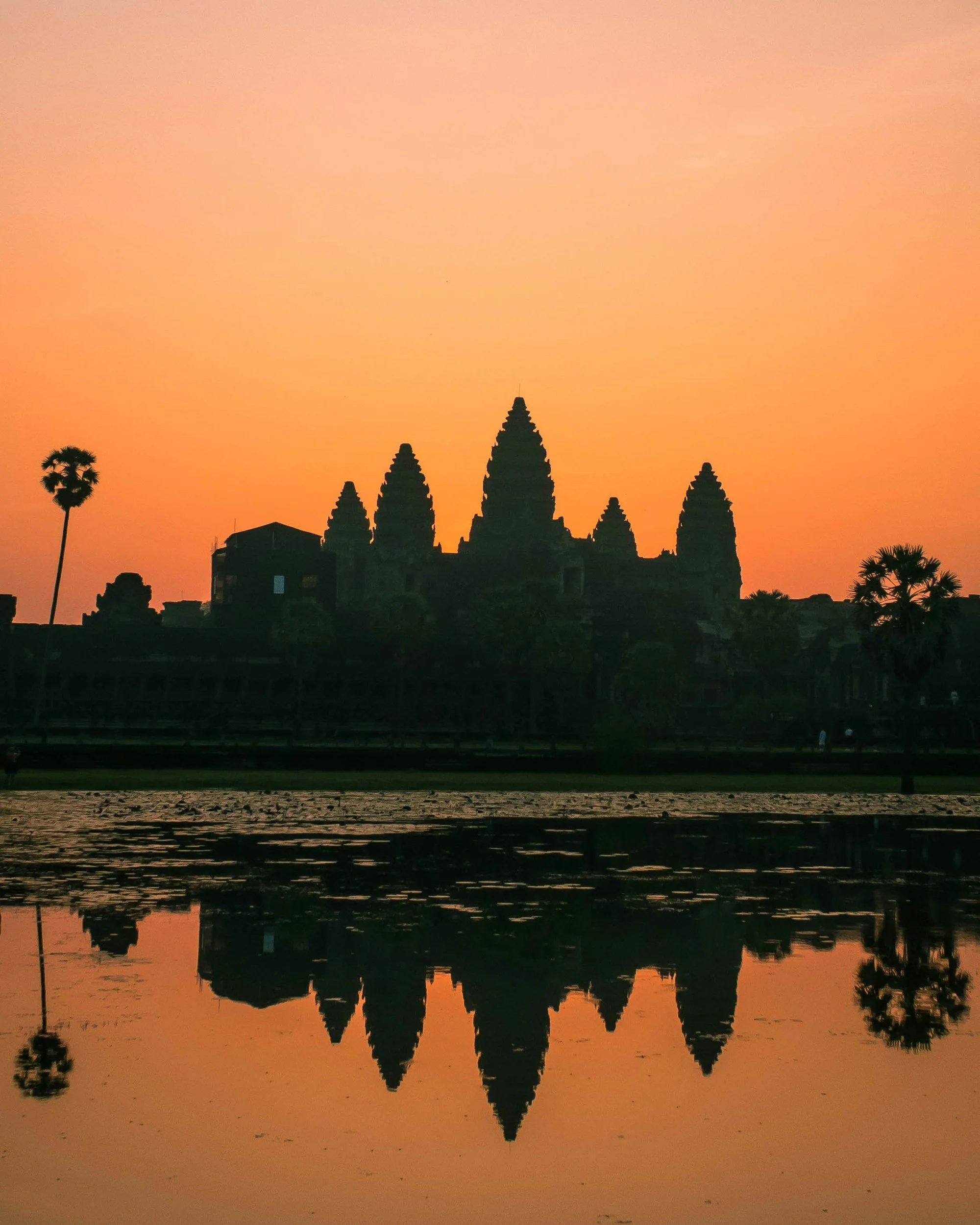
ANGKOR WAT AT SUNRISE
Angkor Wat at the moment the sun rises over the reflecting pool is one of the most photographed images in Southeast Asia, but experiencing it privately means arriving in the dark, finding the position on the causeway before any other visitor and watching the sky change over a monument that has been standing for nine hundred years. A specialist guide who can explain the cosmological logic of the architecture in the first light makes it something understood rather than simply witnessed.
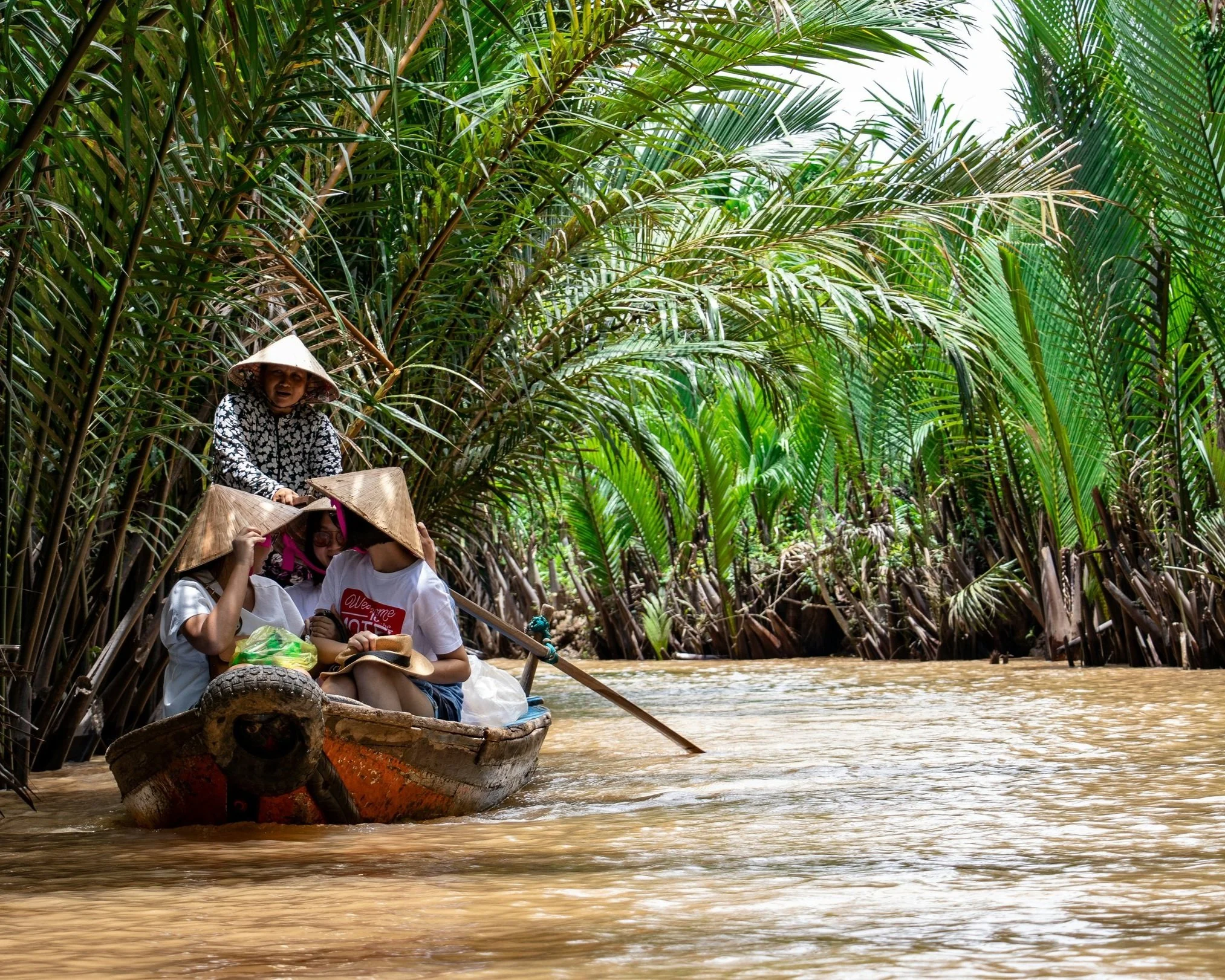
MEKONG RIVER CRUISE
A private boat on the Mekong north of Phnom Penh, moving through the river communities, the floating villages and the extraordinary bird sanctuary of Prek Toal on the edge of the Tonle Sap, reveals a Cambodia that the temple circuit never shows. The rhythm of life on the river, the fishing communities and the quality of the late afternoon light on the water make this one of the most quietly extraordinary experiences the country offers.
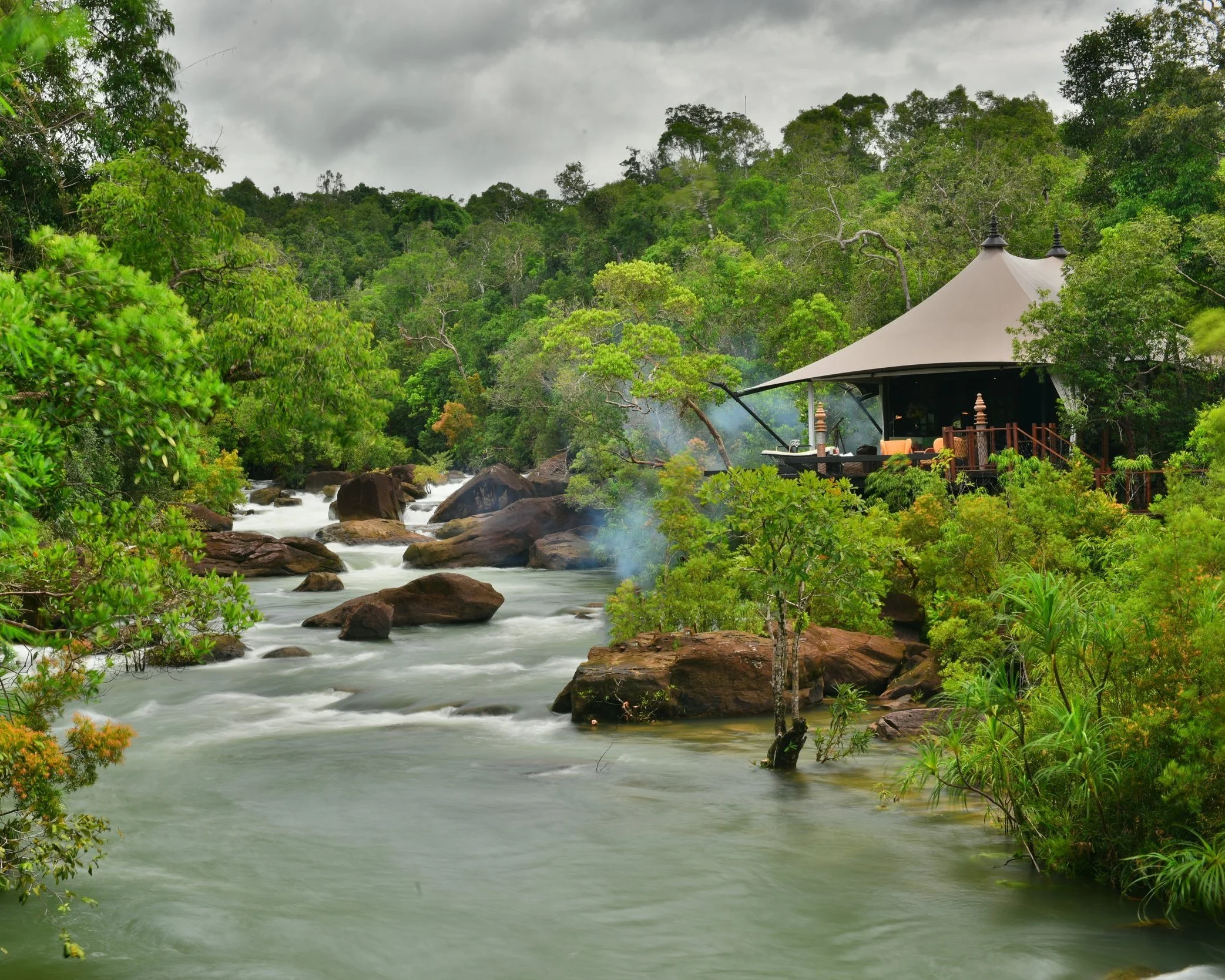
WILD FOREST CAMP IN THE CARDAMOM MOUNTAINS
A tented camp deep in the Cardamom Mountains, one of the largest remaining areas of intact tropical forest in mainland Southeast Asia, accessible only by boat and on foot through one of the most biodiverse landscapes in the region, is the experience that most surprises visitors who thought they knew what Cambodia had to offer. Wildlife tracking at dawn, waterfall swimming, forest guides from the local communities and the specific silence of a forest that has been protected from logging: it is a completely different country from the temples and the capital.
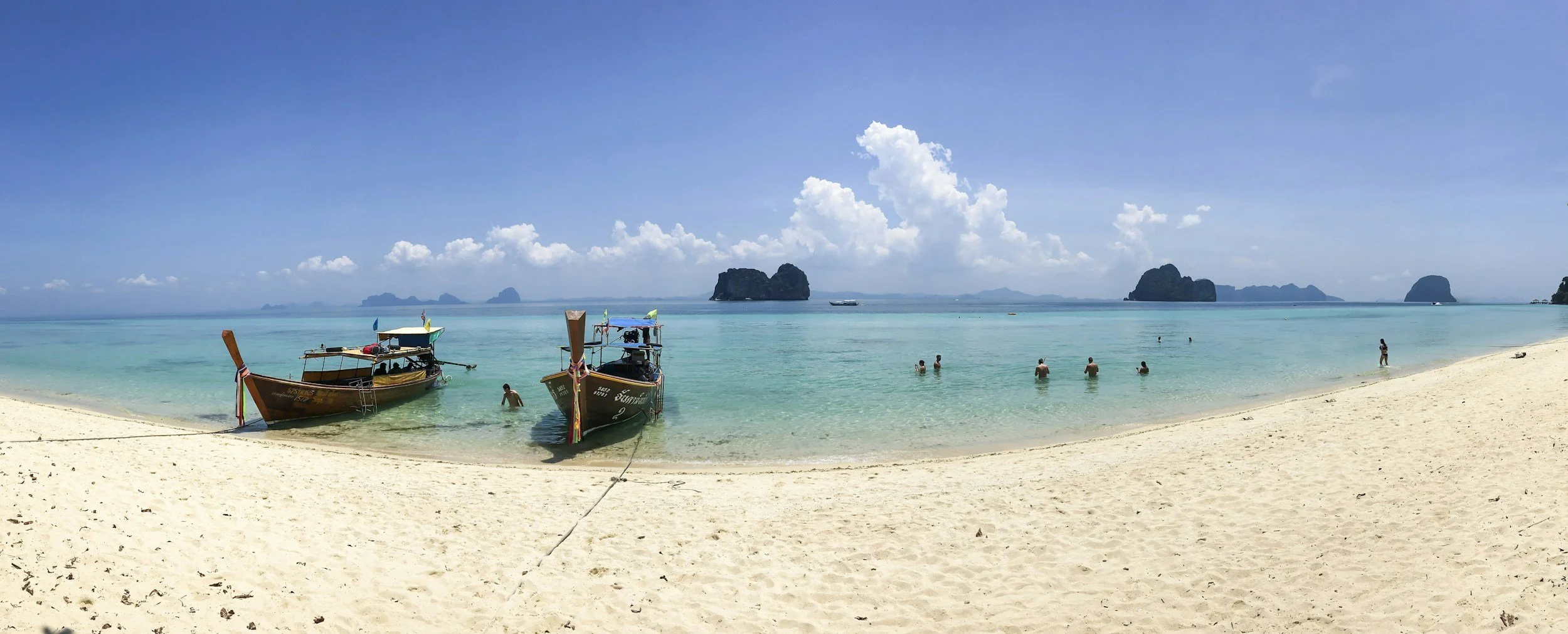
PRIVATE ISLAND ESCAPE
A private boat to one of the smaller uninhabited islands off the Cambodian coast, anchoring in a bay of extraordinary turquoise water with no resort, no other boats and no agenda beyond the quality of the afternoon, is the experience that completes a Cambodia journey in the finest possible way. The bioluminescent plankton in the shallows after dark, the coral in the shallows in the morning and the specific feeling of an island that belongs entirely to you for the day: Cambodia's islands offer this more honestly than almost anywhere else in the region.
Frequently Asked Questions About Traveling to CAMBODIA
-
November to February is the dry season and our most recommended window. Angkor is at its finest, the islands are calm and the conditions across the country are excellent. March to May is hotter but significantly less crowded. The wet season from June to October brings extraordinary lush scenery and very few visitors, and rewards those who plan around the afternoon rains. October and November offer the Water Festival in Phnom Penh, one of the finest cultural events in Southeast Asia.
-
We recommend a minimum of seven days for a first Cambodia journey combining Siem Reap and Angkor with Phnom Penh. Those wanting to add the Cardamom Mountains and the islands should plan for ten to twelve days. Cambodia is compact and the distances between the main regions are manageable by domestic flight and private road transfer.
-
It is deeply sobering and we consider it essential for anyone wanting to understand the Cambodia that exists today. The Khmer Rouge period between 1975 and 1979, during which approximately two million Cambodians died, shapes every aspect of the country's contemporary culture, its demographics, its politics and its particular warmth toward international visitors. A private visit with a guide who can provide the full historical context makes it an experience of genuine understanding rather than simply witnessing.
-
Khmer cuisine is one of the most underrated in Southeast Asia, built on a base paste of lemongrass, galangal, kaffir lime and turmeric called kroeung that underpins almost every dish and that has a completely different character from the Thai or Vietnamese cuisines that surround it. Amok, the coconut curry steamed in banana leaf, fish from the Tonle Sap lake and the extraordinary street food of Phnom Penh are all essential. We weave private food experiences into every Cambodia itinerary.
-
US and UK passport holders require a visa for Cambodia, available as an e-visa online before travel for stays of up to 30 days. We always handle visa arrangements as part of our pre-departure planning and confirm the latest requirements for your specific passport before travel.
-
Cambodia pairs naturally with Vietnam for a classic Indochina journey, one of the finest multi-country combinations in Southeast Asia. It also combines well with Thailand, Laos or Myanmar for those designing a broader regional circuit. We design all multi-country itineraries as fully private and tailor-made.
-
Cambodia is a safe and welcoming destination for international visitors. Siem Reap, Phnom Penh and the main tourist regions are all well-established and the country has invested significantly in tourism infrastructure. A private guide and privately arranged transfers ensure the most comfortable and secure experience throughout.
-
The difference in Cambodia is felt most at Angkor, where the gap between arriving at the temples in a tuk-tuk at seven in the morning with hundreds of other visitors and arriving in the dark with a private guide who positions you correctly for the dawn is the entire quality of the experience. Beyond Angkor, the Cardamom Mountain camp, the uninhabited island and the Mekong river communities are all genuinely inaccessible without local knowledge and genuine relationships. Cambodia's greatest depth is available only to those who arrive with the right person beside them.
Plan Your CAMBODIA Journey
Cambodia is a country of extraordinary contrasts and the journey we design for you will reflect exactly what draws you most. Tell us whether it is the ancient temples, the river life, the wild forest or the islands, and we will build your Cambodia journey from the first conversation.