
The Great Wall Privately: How to Experience One of the World's Greatest Monuments Without the Crowds
Two thousand kilometres of mountain fortification. One of the most visited sites on earth. Almost entirely empty if you know where to go.
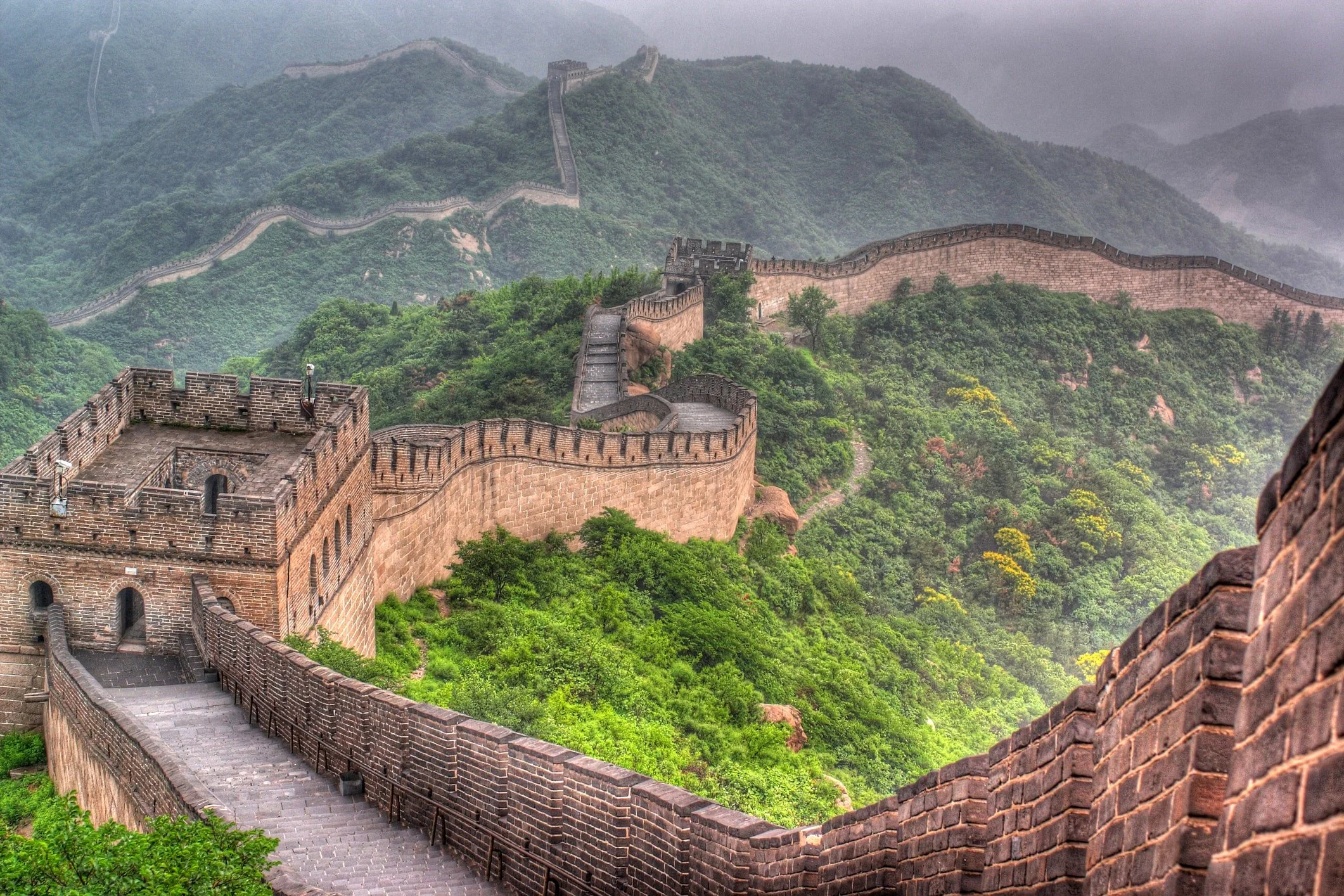
The Great Wall of China is one of those monuments that almost everyone has seen in photographs and almost no one has experienced properly. The images that most people carry, the restored battlements of Badaling crowded with visitors on a summer Saturday, the souvenir stalls at the base of the cable car, the selfie queues at the watchtowers, bear almost no relationship to what the wall actually is when you stand on an unrestored section of it alone at dawn, looking out over the mountains of Hebei Province in every direction, with the stonework under your feet unchanged since it was laid by Ming dynasty soldiers five centuries ago.
The Great Wall is not a single structure. It is a series of walls, barriers and fortifications built across two thousand years by successive Chinese dynasties, stretching in various forms across approximately twenty-one thousand kilometres of the most dramatic mountain terrain in northern China. The sections most visited by tourists near Beijing represent a tiny fraction of the whole and the most heavily managed and least representative section of what the wall actually is across most of its length. The experience of the Great Wall that stays with people for the rest of their lives is almost never had at Badaling or Mutianyu. It is had at sections that require a helicopter, a long hike, a knowledgeable guide or some combination of all three to reach.
Why the standard visit misses the point
Understanding what makes the Great Wall extraordinary requires understanding what it was for. The wall was not primarily a barrier. It was a system of communication, supply and surveillance, a continuous military infrastructure that allowed the Chinese empire to monitor and respond to threats from the steppe nomads of the north with a speed and a coordination that would otherwise have been impossible. The watchtowers, spaced at intervals of approximately five hundred metres across the entire length, were signal stations from which smoke by day and fire by night could transmit messages across the entire system within hours. The garrison towns behind the wall supplied and housed the soldiers who maintained it. The wall itself was less a defence and more the physical expression of the boundary between the agricultural civilisation of China and the pastoral world of the steppes beyond.
Understanding this transforms what you see when you stand on the wall. The watchtower is not a scenic viewpoint. It is a communication node in a military network of extraordinary sophistication. The beacon platform on the top is not decorative. It is the technology of an early warning system that worked. The garrison wells cut into the mountain rock beside the wall are not archaeological curiosities. They are the logistics infrastructure of an army that lived on this ridge for generations. A guide who can explain all of this while you walk the wall gives the experience a depth that the cable car and the gift shop cannot begin to approach.
The helicopter approach
The finest way to arrive at a remote section of the Great Wall for a private visit is by helicopter, and it is the approach that most completely changes the nature of the experience.
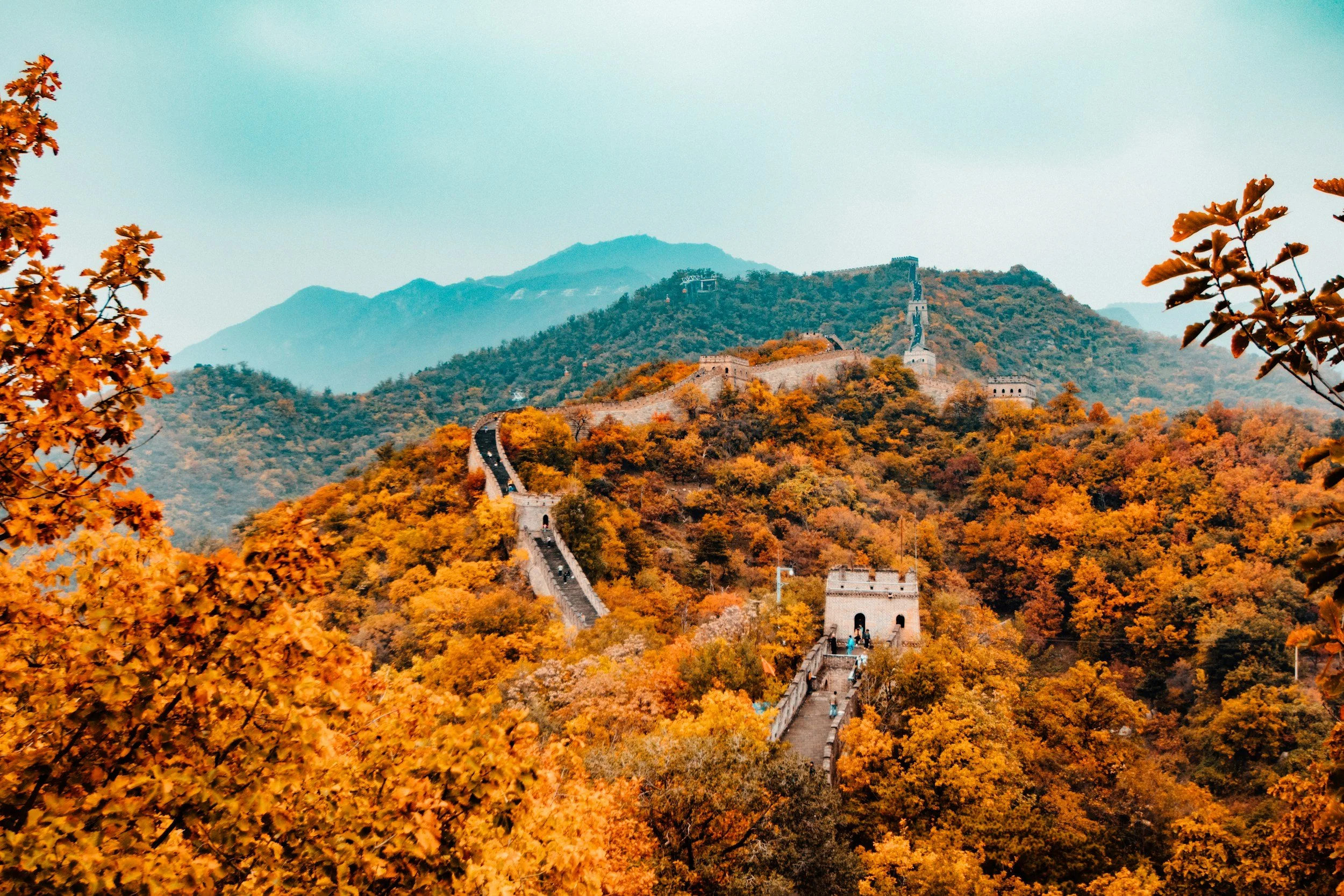
From the air, the wall reveals itself as what it actually is: a structure that follows the absolute crest of the mountain ridges without deviation, climbing impossible angles and descending the other side with the same indifference to gradient, tracing the highest point of every rise for as far as the eye can see. From the ground, even from the most dramatic viewpoints, you are always looking at a section of the wall. From a helicopter at the right altitude and angle, you are looking at the wall as a system, as a continuous line of military intention drawn across the entire visible landscape, and the scale and the ambition of it become, for the first time, fully legible.
Landing on or near a remote section of the wall, at a point that requires a helicopter or a significant multi-hour hike to reach and that sees perhaps twenty visitors in an entire year, resets everything about the experience. The silence is the first thing. Then the scale. Then the specific quality of the stonework, which is unrestored and which in many sections has been partially reclaimed by the mountain vegetation, with trees growing through the battlements and grass pushing up between the paving stones of the walkway. This is what the wall looks like when left to itself and it is, paradoxically, more impressive than the restored sections because it makes the age and the endurance of the structure physically present in a way that the reconstruction cannot.

The best unrestored sections near Beijing
Several sections of the wall within two to three hours of Beijing offer the combination of accessibility and genuine remoteness that makes a private visit extraordinary.
Jiankou is the most visually dramatic unrestored section near Beijing, a stretch of wall that climbs at angles approaching sixty degrees up the ridge above the valley of Huairou, with crumbling watchtowers and sections where the walkway has collapsed entirely, requiring careful scrambling rather than walking. The approach on foot takes approximately two hours from the nearest road and involves a climb of several hundred metres through oak and walnut forest before the ridge and the wall appear simultaneously. The view from the watchtowers at Jiankou across the mountains of Huairou, with the wall visible in both directions disappearing into the distance, is one of the finest mountain views accessible from Beijing.
Simatai, further east in the Miyun district, is the section of the wall that most clearly shows the Ming dynasty engineering at its most demanding and most dramatic. The eastern section, which cannot be accessed without crossing a ravine on a bridge that has partially collapsed, is one of the most remote and most intact unrestored sections within reasonable distance of the capital. The wall here climbs a knife-edge ridge above the Miyun Reservoir with drops of several hundred metres on both sides, and the watchtowers, many of them intact to full height, give a clear sense of what the garrisoned wall actually looked like when it was maintained and occupied.
Gubeikou, to the northeast of Beijing near the town of Miyun, sits at the point where the wall passes through one of the few low passes in the mountain chain north of the capital, which made it strategically one of the most important sections of the entire Beijing region wall. It was through Gubeikou that the Mongol armies of Genghis Khan breached the wall in the thirteenth century and it was here that some of the most significant military engagements of the Ming period took place. The wall at Gubeikou is unrestored and in places heavily overgrown, but the historical significance of the site and the relative accessibility of the surrounding landscape make it one of the most rewarding private visits available within a day's drive.
Dawn on the wall
The single most important variable in the Great Wall experience is the time of arrival. At Badaling, the most visited section, the first tour buses begin arriving at around eight in the morning and by nine the walkway is crowded in both directions. At any other section, including the restored but less visited Mutianyu, the same pattern applies within an hour or two of opening.
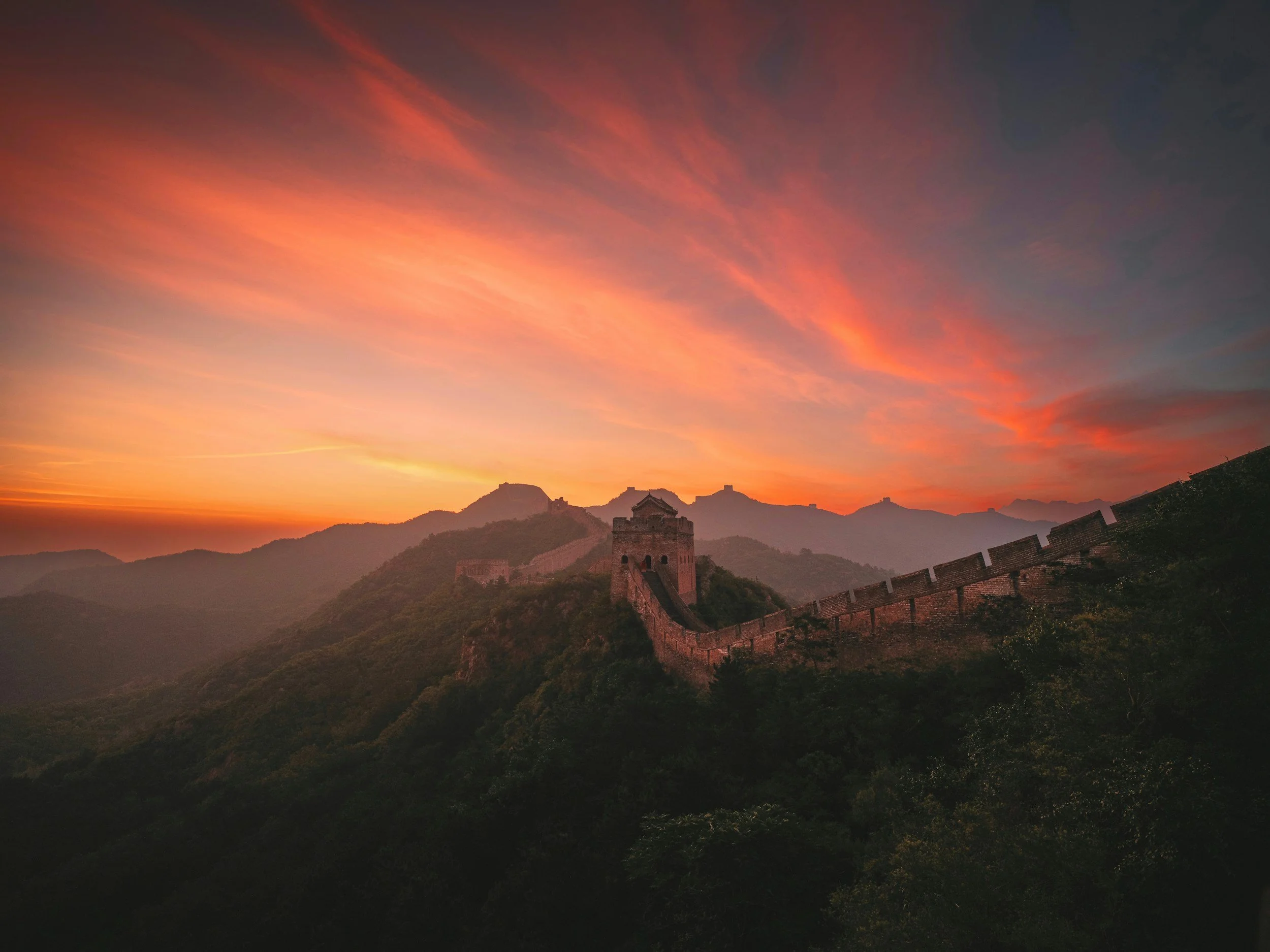
A private dawn visit, arriving at the wall in the forty-five minutes before sunrise and walking the section in the half-light as the sky begins to change colour over the mountains, is an experience that is categorically different from anything available during normal visiting hours. The mist in the valleys below the ridge, the specific quality of the pre-dawn silence at altitude, the moment when the first direct sunlight touches the top of the watchtowers while the valleys are still in shadow: these are the conditions in which the wall reveals its full character and these conditions exist for approximately one hour each morning before the day visits begin.
Getting to the wall before dawn requires a very early departure from Beijing, typically between three and four in the morning for the sections two to three hours from the city. It requires a driver who is on time, a guide who has done it before and knows the access points that are navigable in the dark, and the willingness to trade a comfortable hotel breakfast for something that cannot be replicated at any other hour. Almost everyone who has done a dawn Great Wall visit considers it the correct trade.
The wall in winter
The Great Wall near Beijing is visited by the fewest people between November and March, when the temperatures drop significantly and the majority of the tour groups that fill the popular sections in spring and autumn disappear. What replaces the crowds in winter is something that the other seasons cannot provide: the wall under snow.
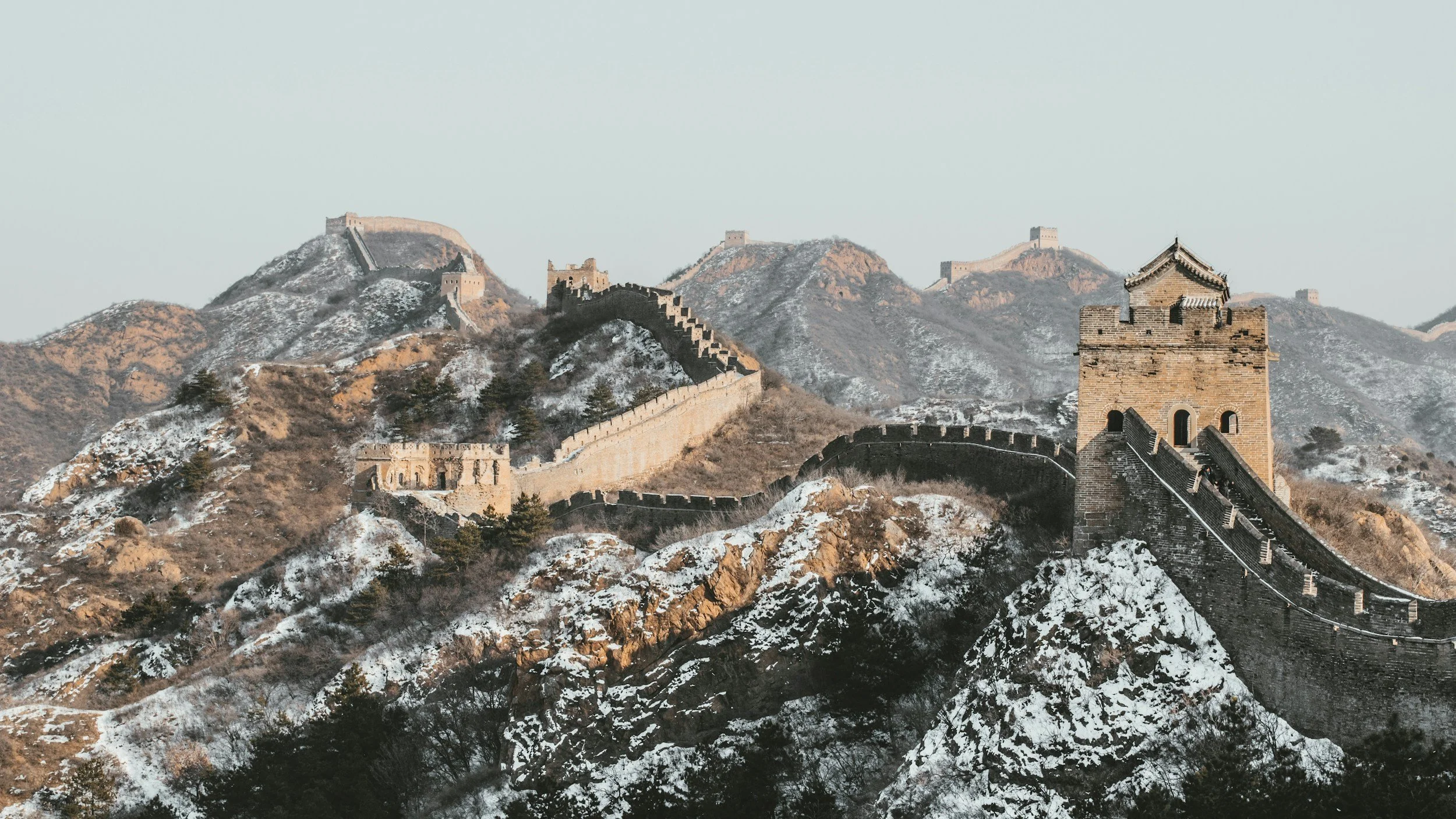
The Great Wall under a significant snowfall is one of the most extraordinary natural and architectural spectacles available in northern China. The white of the snow against the grey of the unrestored Ming stonework, the silence that a heavy snowfall imposes on a mountain landscape, the specific visual drama of the wall disappearing into a white horizon where the sky and the hillside become the same colour: winter is the season in which the wall most clearly reveals the severity of the military environment it was built to manage and the extraordinary human determination required to build and maintain it in these conditions.
The practical consideration is that the unrestored sections become genuinely dangerous under ice and should not be attempted without crampons and a guide who knows the specific hazards of the section in winter conditions. The restored sections at Mutianyu and Jinshanling are manageable in winter with appropriate footwear and offer, in the right conditions, the finest visual experience of the wall available at any time of year.
Combining the wall with Beijing properly
The Great Wall deserves a minimum of one full day, and ideally two, within a Beijing itinerary. The temptation to combine it with a full day of city sightseeing is one that should be resisted. The dawn visit requires an early departure and will produce a level of tiredness that makes an afternoon at the Forbidden City less rewarding than it should be. A dedicated wall day, with the dawn visit, several hours on the remote section and an afternoon of recovery and reflection, followed by a full Beijing day the following day, is the right structure.
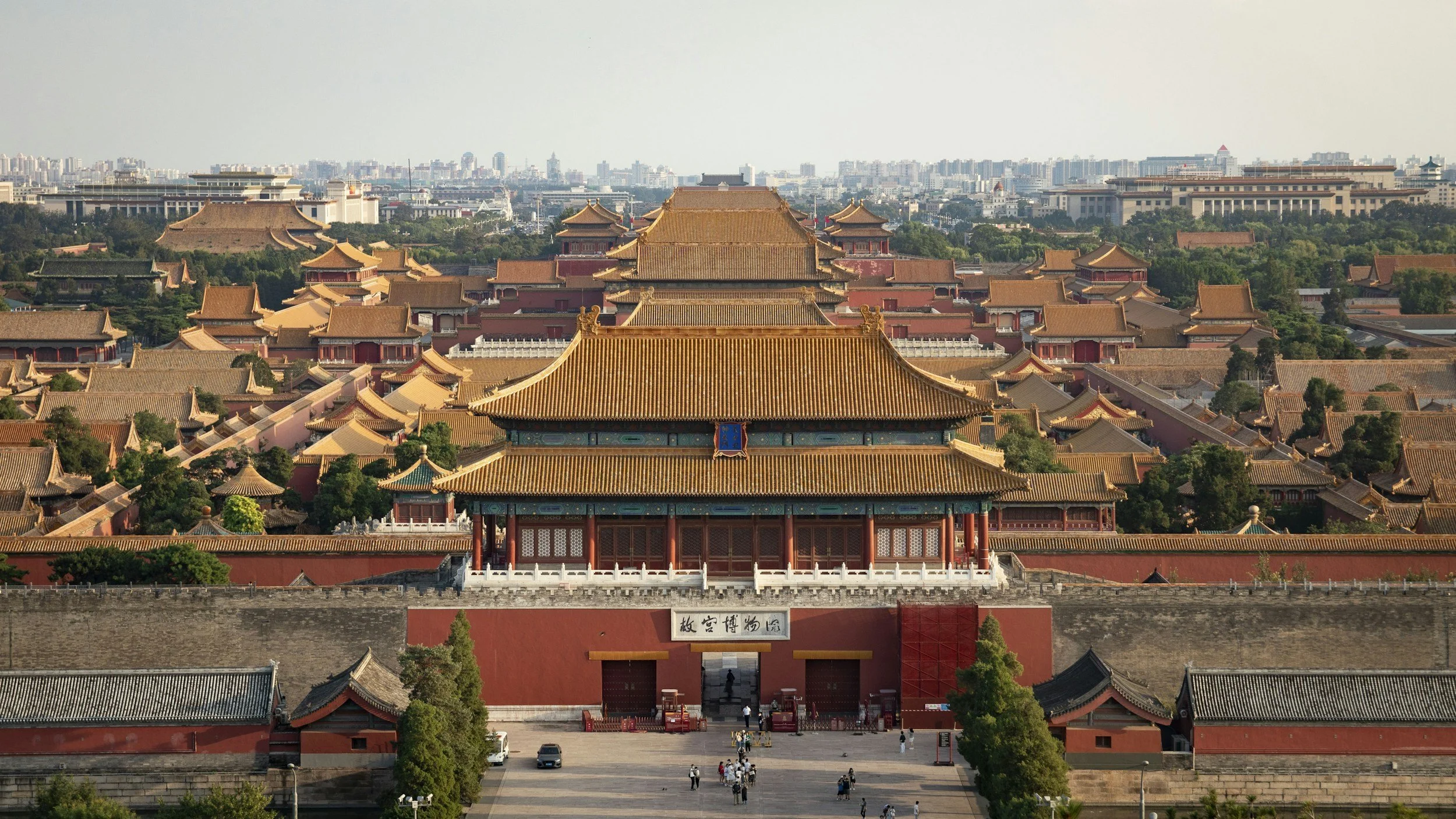
Beijing itself, with the Forbidden City, the Temple of Heaven, the Summer Palace and the extraordinary hutong alleyways of the old city, is a destination of sufficient depth to reward two full days of private exploration. The combination of a great imperial capital and the world's most extraordinary fortification, both within an hour or two of each other, makes Beijing one of the finest single-city destinations in Asia and one that consistently rewards those who give it the time it deserves.
Ready to start planning your China journey?
Explore our China destination page for more on regions, experiences and the best time to visit. When you are ready, get in touch and we will begin designing your journey around you.