
Ha Long Bay by Private Cruise: The Only Way to Experience Vietnam's Most Extraordinary Landscape
Two thousand islands. One private vessel. The most beautiful seascape in Southeast Asia entirely on your own terms.
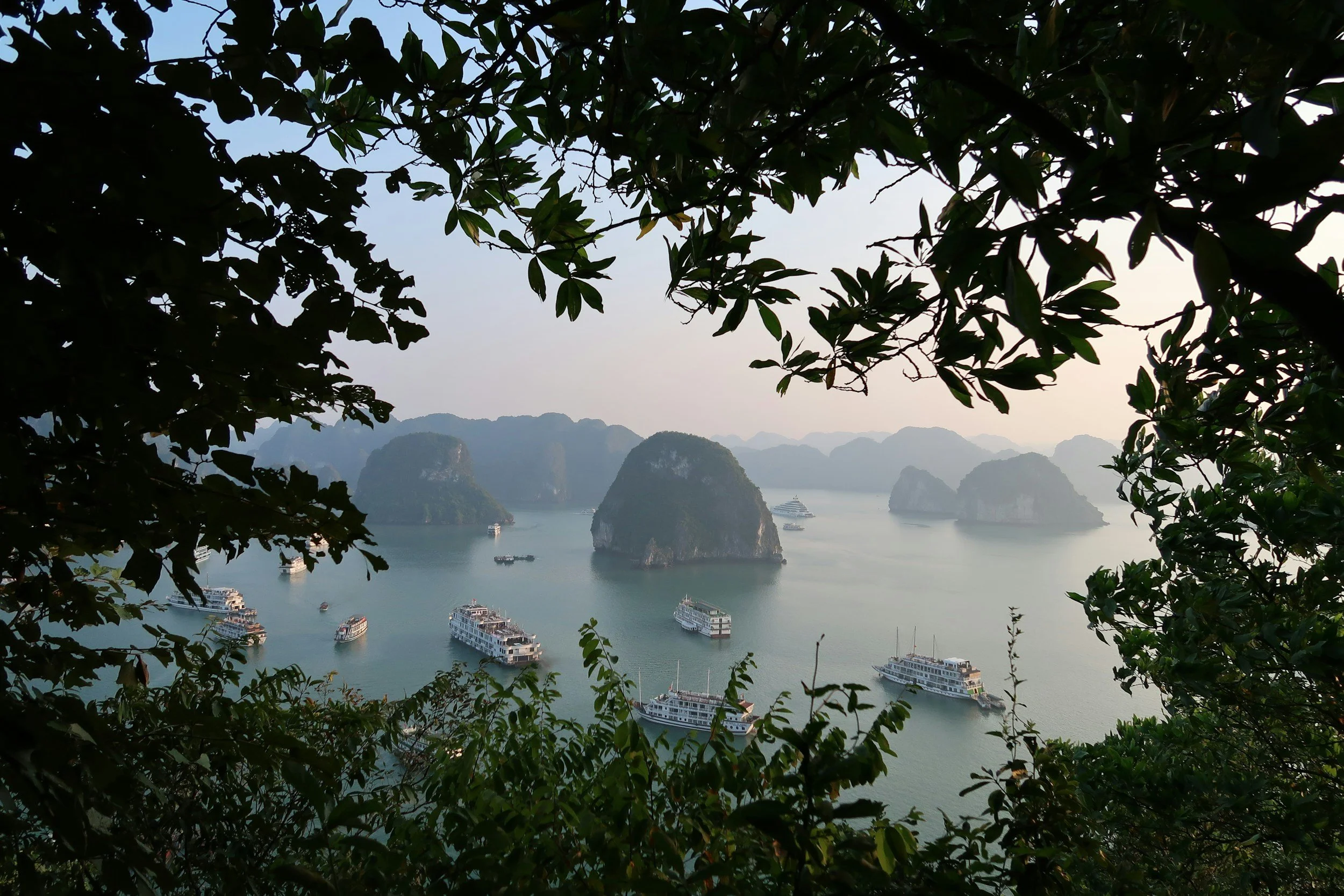
Ha Long Bay is one of those places that appears on every Vietnam itinerary and is genuinely experienced by almost nobody. Not because it is difficult to reach or because the landscape disappoints, it does not, the limestone karsts rising from the emerald water of the Gulf of Tonkin are as extraordinary in reality as they are in photographs, but because the standard experience of Ha Long Bay, the shared cruise boat with its fixed schedule and its crowded dining room and its anchor points chosen for logistics rather than beauty, reduces one of the most extraordinary natural landscapes in the world to a series of viewpoints from a deck you share with forty strangers.
The difference between Ha Long Bay on a shared cruise and Ha Long Bay on a private vessel is not a difference of degree. It is a difference of kind. It is the difference between looking at the landscape from a distance and being inside it, between moving at a schedule designed for operational efficiency and moving at the pace that the landscape deserves, between anchoring in a bay that every other boat uses and anchoring in a bay that nobody else has found that day.
Understanding the landscape
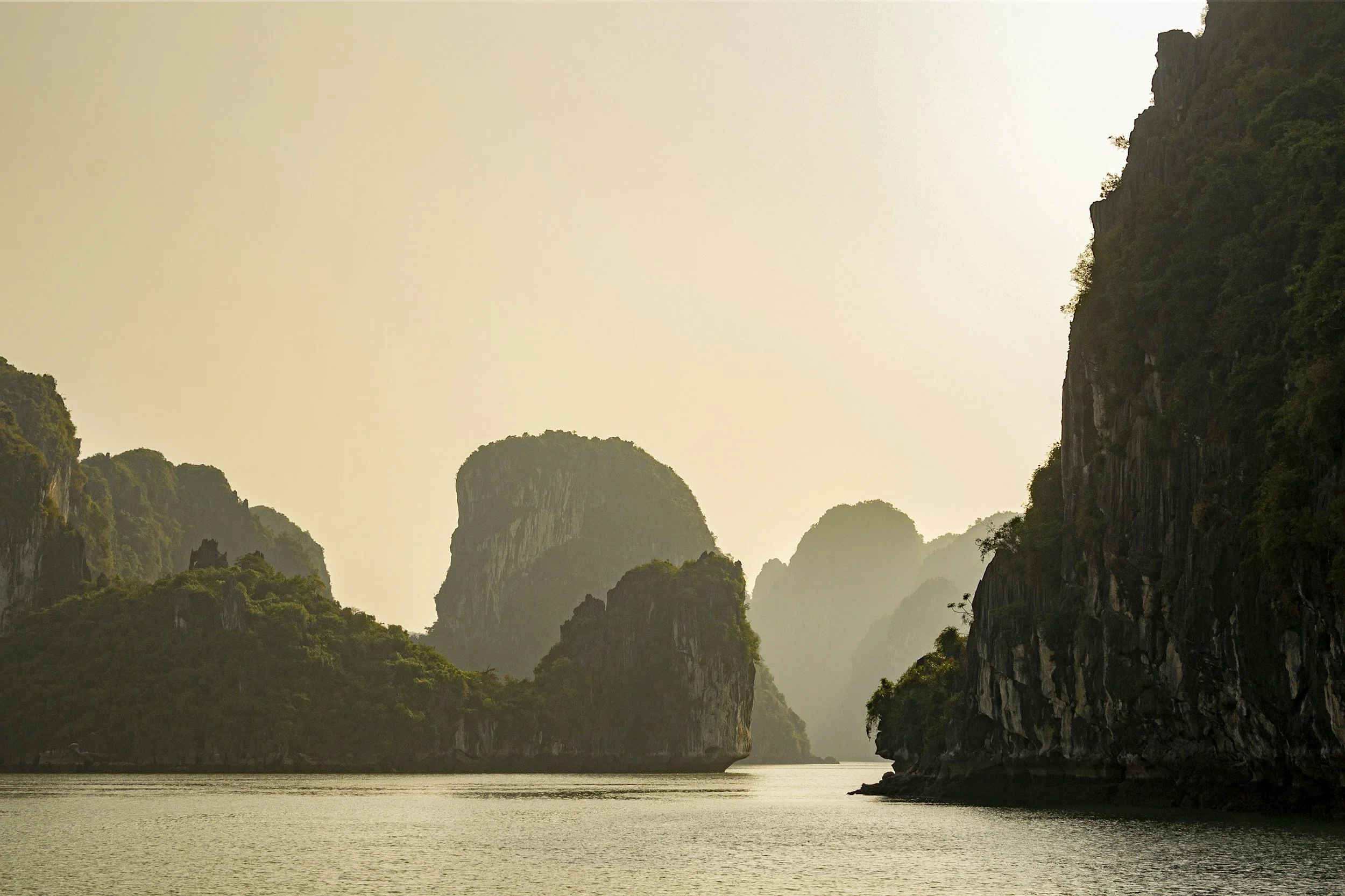
Ha Long Bay covers approximately fifteen hundred square kilometres of the Gulf of Tonkin in the northeast of Vietnam, and within that area there are nearly two thousand islands and islets, the vast majority of which have never had a visitor set foot on them. The islands are limestone karsts, formed over three hundred and forty million years as the sea level rose and fell and the limestone of the region was dissolved, carved and shaped by water into the extraordinary forms that now rise from the bay. Some are sheer-sided columns rising two hundred metres from the water. Some are broader massifs with hidden lagoons accessible only through narrow cave passages at sea level. Some are so small that a single tree grows from a crack in the summit rock with nothing else around it for half a kilometre in every direction.
The variety within the bay is one of its most remarkable qualities and one that the fixed-route shared cruise almost entirely misses. The main cruise routes follow a corridor of the most famous viewpoints, passing the same islands in the same order on the same schedule that every other boat uses. A private vessel, with a captain who knows the bay deeply and can design a route around the specific conditions of the day, the wind direction, the light, the tide and the season, moves through a completely different Ha Long Bay from the one on the standard itinerary.
The private vessel
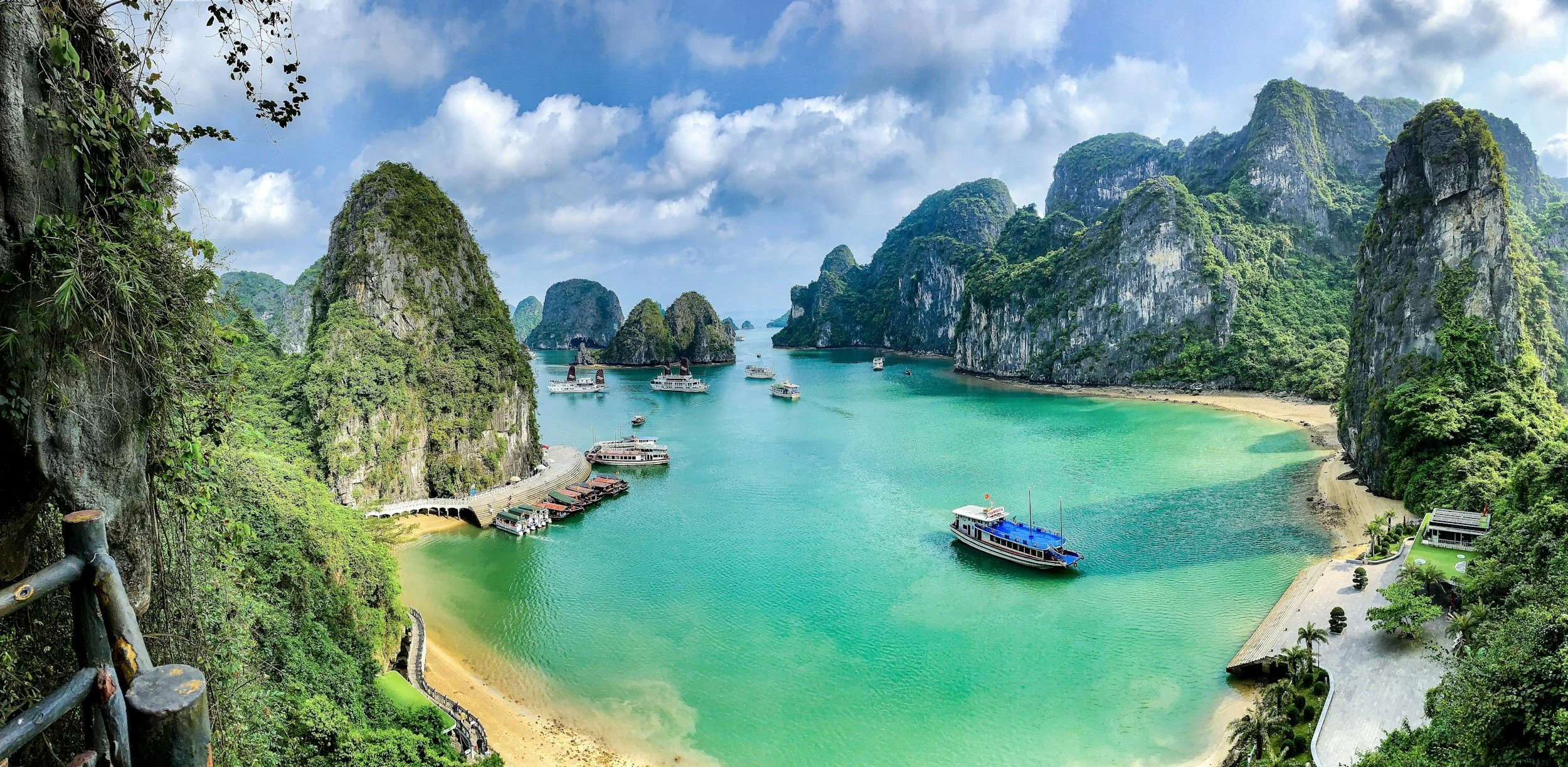
The right vessel for a private Ha Long Bay experience is a traditional Vietnamese junk, a wooden boat of between ten and twenty metres that combines the aesthetic character of the regional boat-building tradition with the comfort of a small private yacht. The finest private junks have two to four cabins, a dining area where the food is prepared fresh for each meal using ingredients bought at the floating markets in the early morning, a sun deck for watching the landscape pass and a tender for exploring the caves and lagoons that the main boat cannot enter.
A private junk on Ha Long Bay operates entirely around you. The route is discussed with the captain the evening before and adjusted each morning based on the weather and the specific desires of the group. If the cave at the end of the inlet is worth an extra hour, the schedule allows for an extra hour. If the light on the karst at the northern end of the bay is exceptional in the late afternoon, the anchor is raised and the boat moves north. If the kayaking in the hidden lagoon behind the island takes longer than planned because the lagoon is too extraordinary to leave, nothing is waiting.
The caves and lagoons
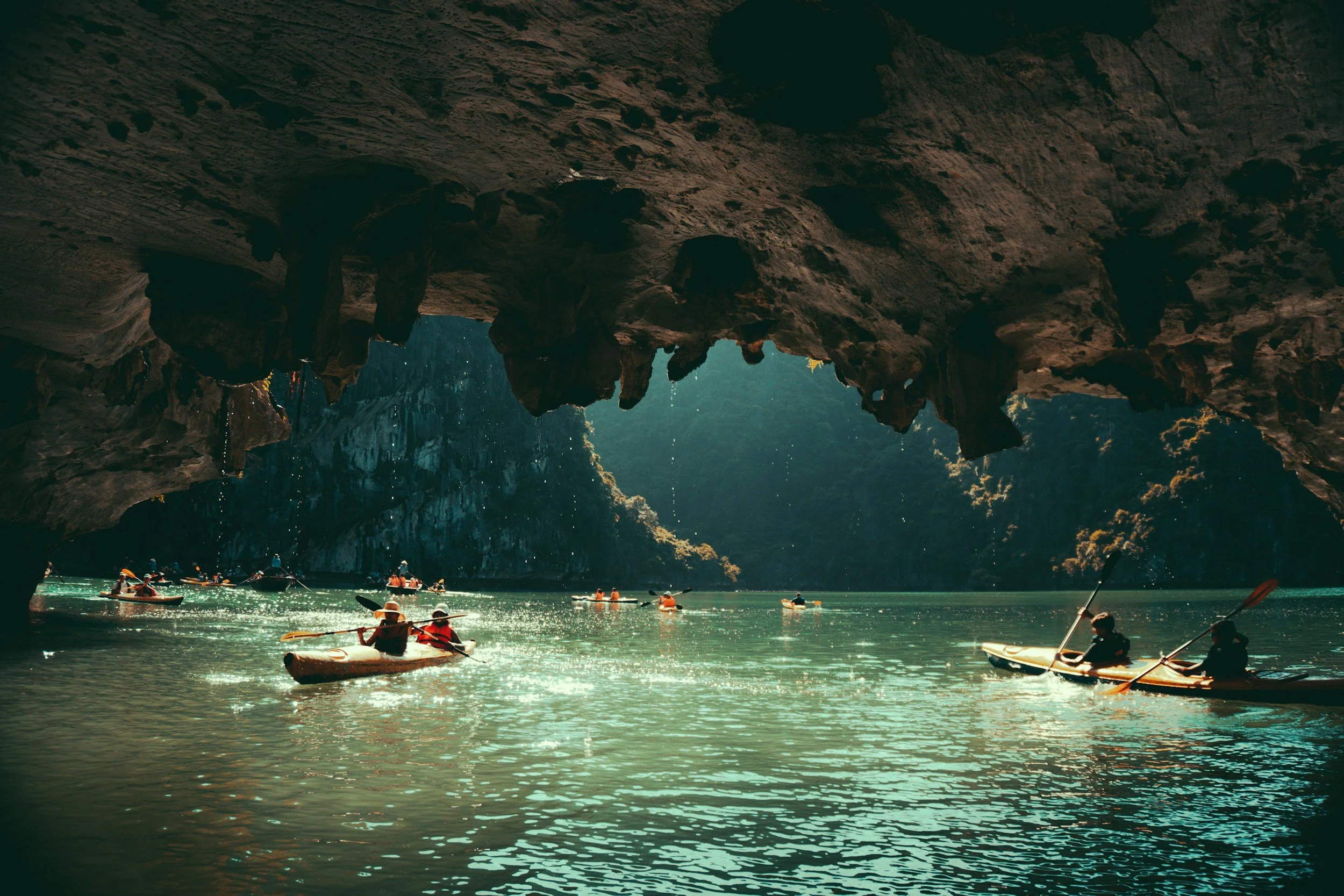
Ha Long Bay contains several hundred caves and hidden lagoons within its limestone karst system, and the finest of them are accessible only by small boat, kayak or swimming through low passages at high tide. These are the experiences that define a private Ha Long Bay journey and that the shared cruises either do not visit or visit in groups of thirty with a guide and a timetable.
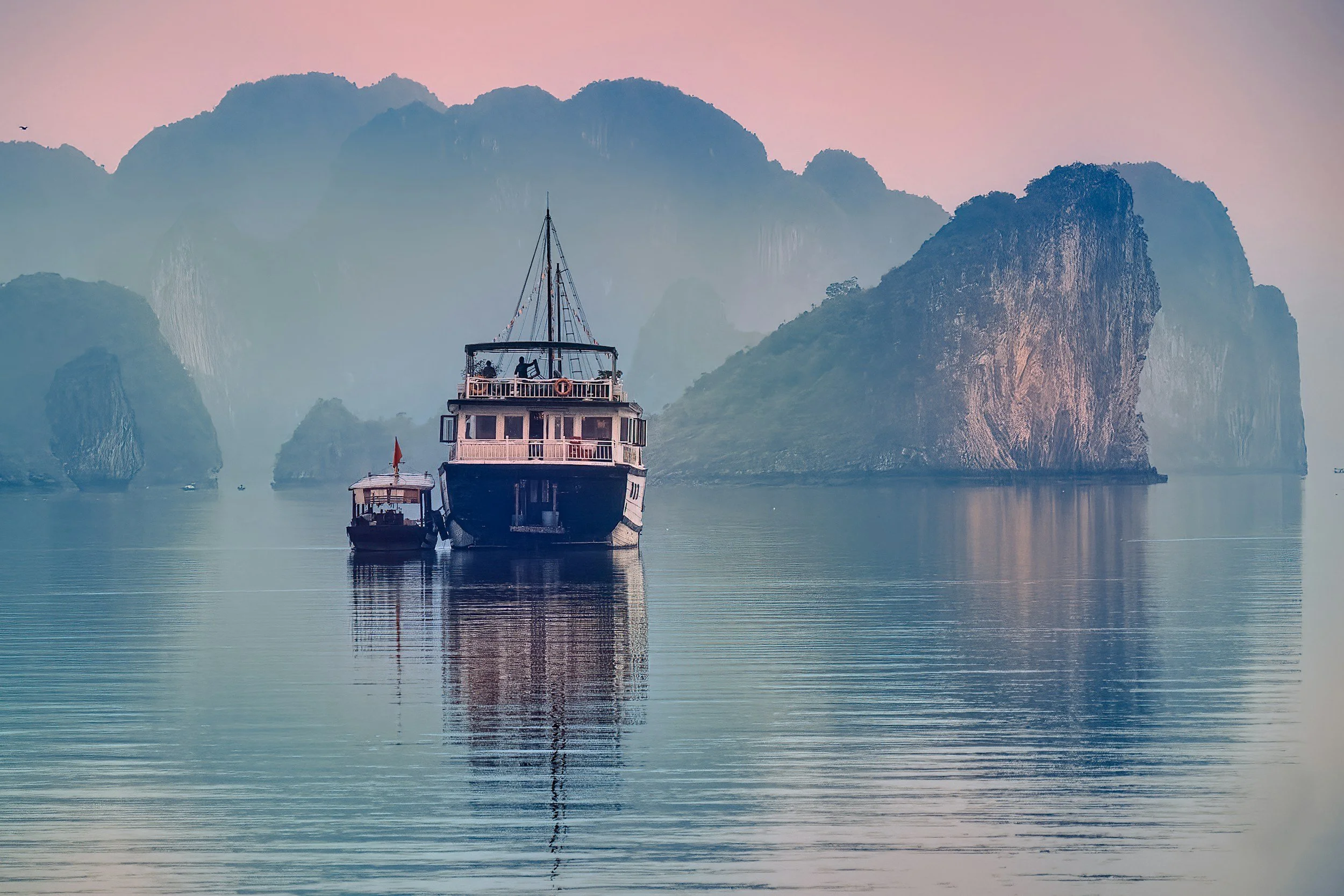
The Hang Luon lagoon, enclosed within a ring of karst and accessible only through a low cave passage that requires kayaking or swimming depending on the tide, is one of the most extraordinary enclosed spaces in the bay. Inside, the water is a different colour from the open bay, calmer and a deeper green, and the silence is complete. The walls of the surrounding karst rise above you in a circle that frames a patch of sky that is always slightly brighter than it appears from outside. It is entirely inaccessible to a large cruise boat and entirely unhurried on a private kayak.
The dark caves of the Hang Toi system, accessible by kayak through a low passage that opens into a cathedral-sized cavern whose roof is invisible in the dark, with the light from the entrance silhouetting the karst formations around the water, is one of those natural spaces that produces a genuine physical response of awe rather than simply appreciation. Floating in silence inside a cave of this scale, hearing the sound of the water amplified by the rock around you and watching the bats move through the entrance light, is an experience that requires both the right conditions and the right vessel to be in the right place when those conditions exist.
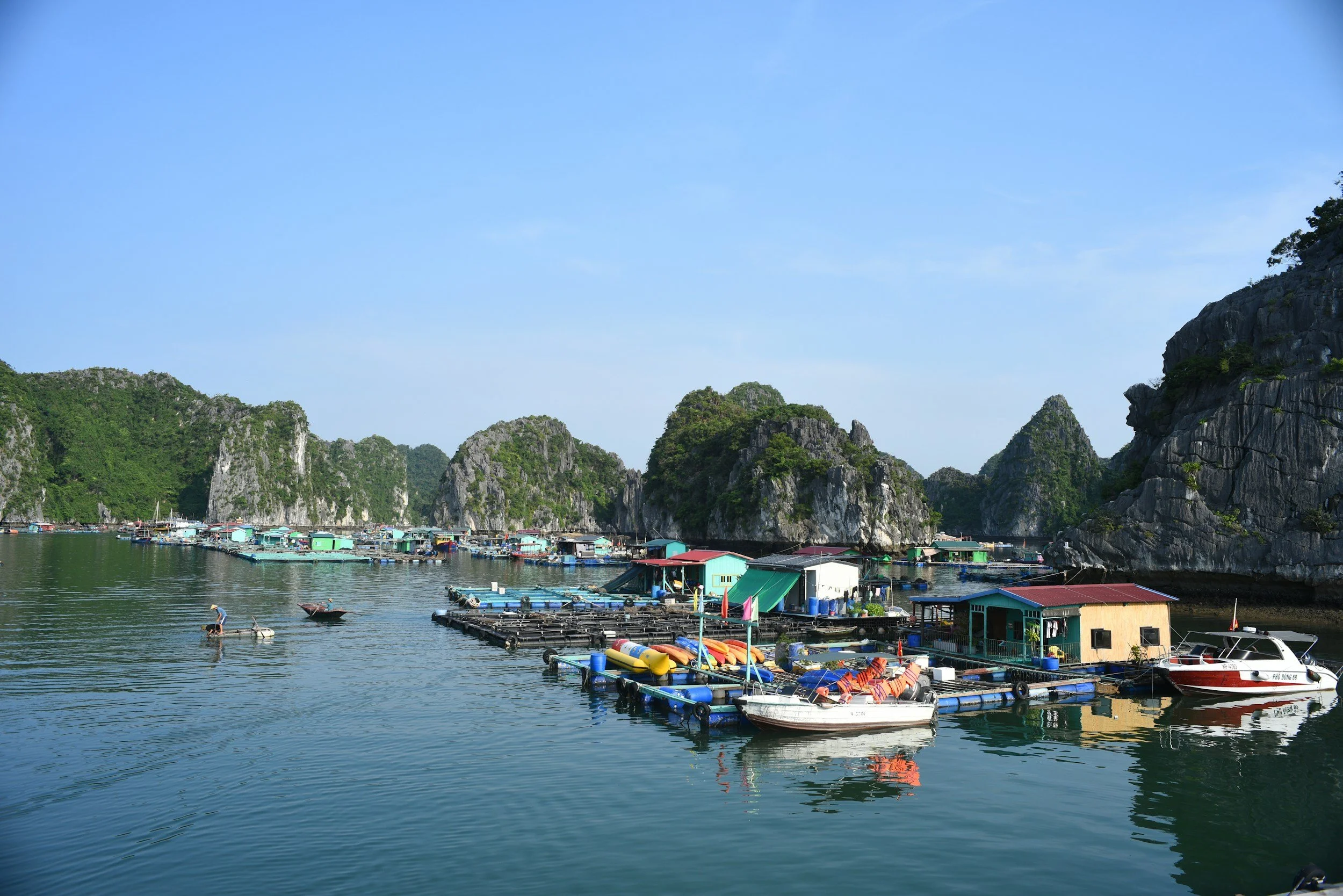
The floating fishing villages, where communities of several hundred people live entirely on the water in houses built on pontoons and earn their living from fish farms and fishing nets spread across the surrounding bay, are accessible to any boat but meaningful only with a guide who has genuine relationships in the community. A private visit to a floating village, arriving by tender rather than by the tourist transfer boat and spending time with a family rather than photographing the village from the deck, gives the human dimension of the Ha Long Bay landscape the same depth that the geological dimension receives from a private vessel.
The light and the seasons
Ha Long Bay in the right light is one of the most beautiful places in the world. The light in the wrong light, in the flat overcast grey of the monsoon months or the flat haze of the hottest summer days, is still beautiful in the way that all extraordinary landscapes are beautiful regardless of conditions, but the specific combination of morning mist, direct sunlight and the particular quality of reflection that the limestone and the water produce together on clear mornings in the cooler months is something that photographs regularly but that has to be physically present to understand.
The finest season for Ha Long Bay is from October through to April, when the northeast monsoon brings cooler, drier air to the Gulf of Tonkin and the visibility is at its most extraordinary. The mist that sits in the valleys between the karsts on cool mornings in November and December, burning off slowly as the sun rises and leaving the peaks clear against a sky of extraordinary blue by mid-morning, is the condition in which the bay most completely reveals its character.
March and April, before the heat and humidity of summer arrive, are perhaps the finest months of all. The water is calm, the visibility is exceptional, the tourist season has not yet reached its peak and the specific quality of the spring light in the late afternoon, turning the limestone towers amber and gold as the sun descends toward the hills of the mainland, produces the landscape at its most vivid and most beautiful.
Summer, from May through to September, brings higher temperatures and occasional storms but also lush green vegetation on the island slopes, dramatically different light conditions that can be extraordinary on the right day and significantly fewer international visitors than the peak winter season. A private vessel in summer, flexible enough to move to sheltered anchorages when the weather requires it and to take advantage of the extraordinary post-storm clarity when the weather breaks, can offer an experience of the bay that is entirely its own.
How to plan a private Ha Long Bay cruise
A private Ha Long Bay cruise requires a minimum of two nights to do the bay justice. One night gives you the arrival, the first morning and the return, which is enough to understand why the landscape is extraordinary but not enough to move beyond the main routes and find the sections that require time to reach. Two to three nights allows the captain to take the boat into the sections of the bay that the overnight cruises never reach and to time the best viewpoints, the finest caves and the most extraordinary anchorages around the conditions of each specific day.
The boat should be booked exclusively for your group regardless of size. The shared cruise model, where individual cabins are sold to different groups who share the dining room, the deck and the daily schedule, is entirely at odds with the experience that Ha Long Bay's landscape deserves and that a private vessel makes possible. The additional cost of exclusivity on a private junk is one of the finest investments available in Vietnam travel.
Ready to start planning your VIETNAM journey?
Explore our Vietnam destination page for more on regions, experiences and the best time to visit. When you are ready, get in touch and we will begin designing your journey around you.