
The Northern Lights in Iceland: How to Plan the Perfect Private Hunt
The most searched natural phenomenon in travel. The most misunderstood experience in Iceland. Here is how to actually see it.
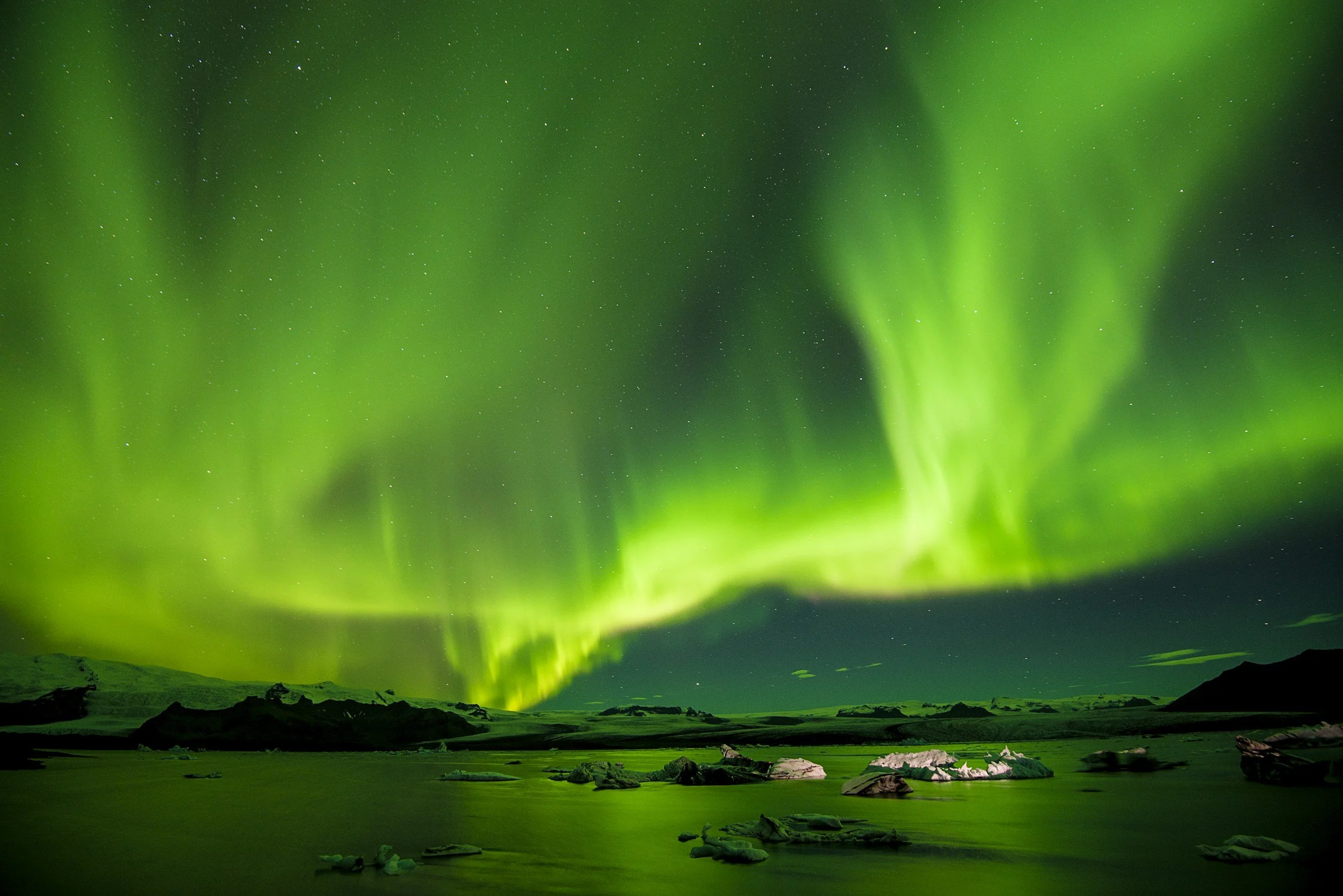
The Northern Lights are one of those travel experiences that exist in two completely separate versions: the version in the photograph and the version in reality. The photograph, which is almost always a long-exposure shot that compresses several minutes of relatively faint movement into a single frame of vivid green and purple, sets an expectation that the reality frequently fails to meet. The reality, when experienced properly on the right night in the right place with the right conditions and the flexibility to be there when everything aligns, is something that the photograph cannot begin to contain. It is not a static image. It is a movement, a shimmer, an unpredictable sweep of colour across the sky that appears without warning and produces a physical response of awe that no amount of preparation anticipates.
Planning a Northern Lights journey to Iceland properly is the difference between those two versions of the experience. It is the difference between arriving in Reykjavík in January with two nights booked and leaving without having seen anything, and designing a journey with the flexibility, the knowledge and the local relationships to be in the right place on the night when the conditions are exceptional. Iceland is the finest destination in the world for Northern Lights viewing and almost nobody experiences them properly because almost nobody plans them properly.
Understanding the aurora: what it actually is
The Northern Lights, or aurora borealis, are produced when charged particles from the sun, carried on the solar wind, interact with the gases of the earth's upper atmosphere along the magnetic field lines that converge at the poles. The interaction produces light of different colours depending on the specific gas involved and the altitude at which the collision occurs: oxygen at high altitude produces the rare red aurora, oxygen at lower altitude produces the green that is most commonly seen, and nitrogen produces the blue and purple that appear at the edges of the most active displays.
The intensity of the aurora depends on the activity of the solar wind, which is driven by solar storms and sunspot activity on the surface of the sun. The KP index, which runs from zero to nine, is the standard measure of geomagnetic activity and the primary tool for aurora forecasting. A KP of three or four produces a visible aurora at Icelandic latitudes on a clear night. A KP of six or above produces the kind of full-sky display, moving curtains and spiralling columns of colour that sweep from horizon to horizon, that the photographs attempt to capture. A KP of eight or nine, which corresponds to a major geomagnetic storm, produces an aurora visible as far south as central Europe and is one of the most extraordinary natural spectacles available anywhere on earth.
The practical implication of all this is that the aurora cannot be planned with the same certainty as a museum visit or a restaurant reservation. The forecast can be good and the sky can cloud over. The forecast can be moderate and a gap in the clouds can produce an extraordinary display. The KP can be nine and the entire sky can be overcast. The traveller who arrives in Iceland with the flexibility to respond to the conditions of each night, rather than the fixed itinerary that requires them to be in a specific place regardless of what the sky is doing, will see the Northern Lights. The traveller who does not have that flexibility may not.
When to go: the aurora season
The Northern Lights are visible in Iceland from late August through to mid-April, the period when the nights are dark enough for the aurora to be seen against the sky. Outside these dates the midnight sun means that the sky never gets dark enough for the lights to be visible regardless of the geomagnetic activity.
Within the aurora season, the peak months for viewing are September to October and February to March, when the combination of reasonable darkness, manageable temperatures and statistically higher aurora activity produces the best average conditions. The winter solstice months of November to January offer the longest nights and therefore the most hours of darkness in which the aurora can be seen, but the weather is at its most unpredictable and the temperatures are at their lowest.
September is our most recommended single month for a Northern Lights journey that wants to combine the possibility of the aurora with other Iceland experiences. The nights are dark but not brutally cold, the landscape still carries the colour of the Icelandic autumn, the summer crowds have dispersed and the aurora activity is statistically good. A September visit that combines the South Coast and the glacier lagoon by day with Northern Lights hunting by night is the finest single-month Iceland experience available.
Where to go: escaping the cloud and the light
Iceland's cloud cover is the most significant limiting factor for Northern Lights viewing and the most misunderstood by visitors who plan a single-location stay and hope for the best. Iceland's weather is highly localised, produced by the interaction of the warm Gulf Stream with the cold Arctic air and the volcanic topography of the island, and it changes rapidly. A sky that is completely overcast in Reykjavík can be crystal clear two hours to the north or east. The visitor who is committed to staying in Reykjavík will see the Northern Lights only if the weather cooperates above Reykjavík. The visitor who is prepared to drive is playing a completely different game.
The most reliable approach to Northern Lights hunting in Iceland is to monitor both the aurora forecast and the cloud cover forecast simultaneously and to make a nightly decision about which direction to drive based on both. The cloud cover satellite images, updated every few hours, show exactly where the clear sky is at any given moment. The aurora forecast shows where the activity is strongest. The guide who has been doing this for years, who can read both forecasts together and make a decision about which direction to drive on any given night, is the most valuable resource in an Iceland Northern Lights journey.
The areas of Iceland that are statistically clearest most frequently are the north, particularly the Mývatn district and the Snæfellsnes Peninsula in the west, and the east around the Jökulsárlón glacier lagoon. The south coast is frequently cloudy due to the warm and moist air coming off the Atlantic. Reykjavík itself, apart from the light pollution problem, is on the Atlantic-facing coast and is among the cloudiest areas of the island.

The viewing experience: what to expect
The Northern Lights experience that most visitors describe as their finest is almost never the one they planned. It is the one that happened unexpectedly, at a moment when the conditions aligned and someone who knew what to do with that moment was there to respond to it.
The aurora at its most active is not a faint green smear on the horizon. It is a movement across the entire sky simultaneously, curtains of green and white that shift and fold and occasionally burst into spirals of extraordinary speed and brightness. It makes sound in the tradition, though this is scientifically disputed and may be an acoustic memory of the visual experience, and it produces in almost everyone who witnesses a significant display a profound and slightly overwhelming response that is very difficult to describe accurately to someone who has not experienced it.
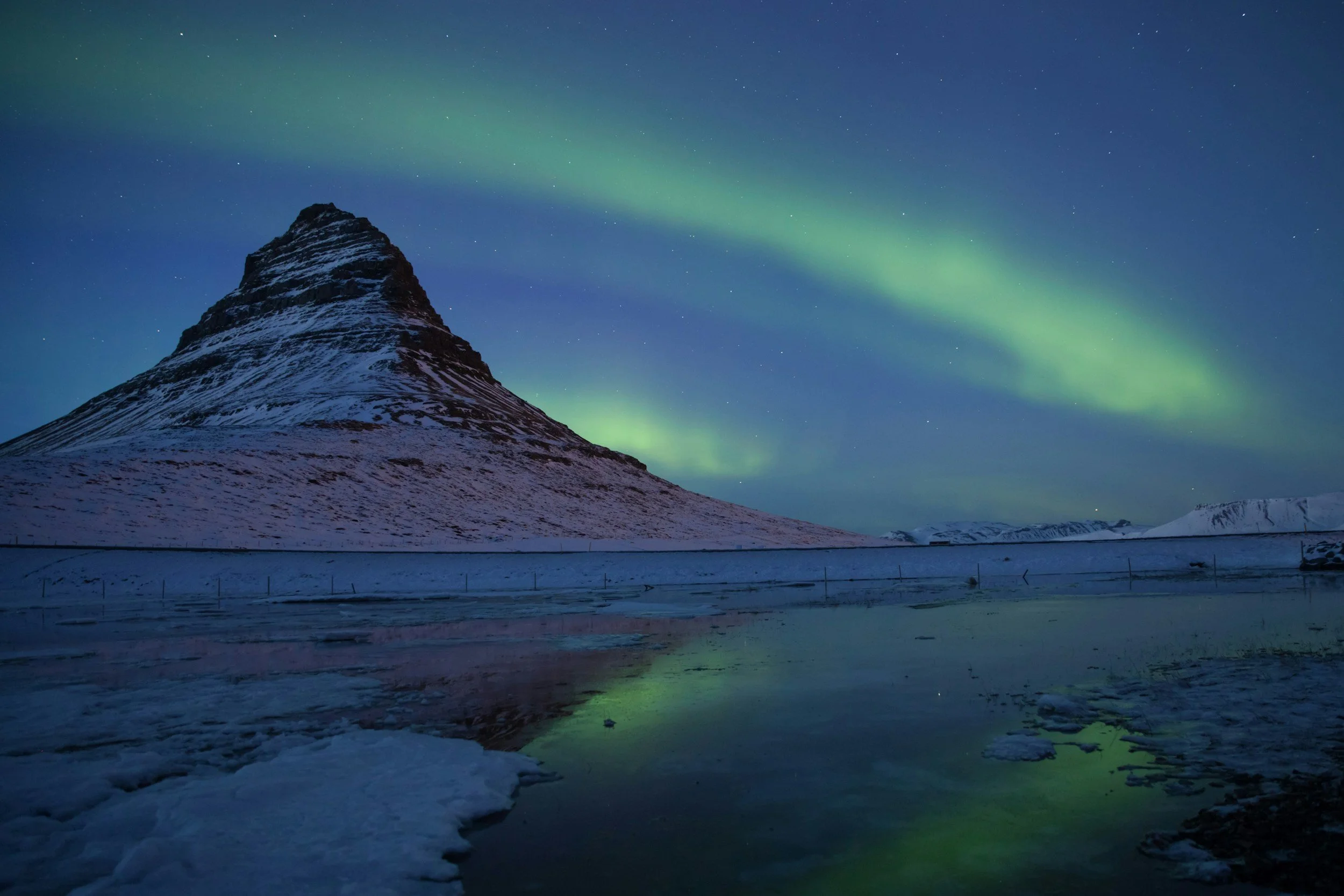
The practical conditions for the finest viewing are simple: complete darkness, a clear sky and a foreground that adds visual interest to the images if you are photographing. The reflection of the Northern Lights in still water, which Iceland provides in abundance in its lagoons and lakes, produces some of the most extraordinary aurora images available anywhere. The silhouette of a glacier or a volcanic mountain against an aurora-lit sky is another. A private guide who knows the specific locations in each region of Iceland that combine the finest foreground with the best chance of clear sky on any given night is planning your Northern Lights night in real time rather than in advance.
Photographing the aurora
The Northern Lights are one of the most photographed natural phenomena in the world and one of the most technically demanding. The long exposure times required to capture a visible image, typically between two and twenty seconds depending on the brightness of the display, mean that any movement in the camera produces blur, which requires a tripod and a remote shutter release as minimum equipment. The white balance setting changes the colour of the recorded aurora significantly from what the eye sees and finding the right balance between technical accuracy and visual impact requires experimentation.
The most important single piece of advice for aurora photography is to look at the sky before looking through the camera. The experience of a significant aurora display is in the movement and the scale of what is happening above you, neither of which is captured by a photograph, and the traveller who spends the entire display behind a lens misses the experience in the attempt to document it. Photograph for the first ten minutes, then put the camera down and simply watch.
Planning the itinerary around the aurora
A Northern Lights journey to Iceland should be planned with maximum flexibility as its primary architectural principle. This means choosing accommodation that is spread across different regions rather than concentrated in a single base, so that the response to the nightly forecast can involve staying where you are or moving east or north depending on the conditions. It means building three or four nights of the itinerary specifically around the possibility of Northern Lights, with no fixed daytime commitment on the mornings after a successful night so that the inevitable late night does not compromise the following day.
It means having a guide who monitors the forecast from the moment you land and who is available to make a same-evening decision about where to drive. It means having a vehicle appropriate for the Icelandic winter roads and a driver who knows them. And it means accepting that the aurora is a natural phenomenon rather than a ticketed attraction and that part of the extraordinary quality of the experience comes precisely from its unpredictability.
The visitors who leave Iceland having witnessed a significant Northern Lights display almost universally say the same thing: that no photograph they had seen beforehand had prepared them for it. That is the experience worth planning for and it is entirely available to those who plan for it correctly.
Ready to start planning your Iceland journey? Explore our Iceland destination page for more on regions, experiences and the best time to visit. When you are ready, get in touch and we will begin designing your journey around you.