
Private Andalusia: Seville, Granada, Córdoba and the Soul of Southern Spain
The part of Spain that stays with you longest is rarely the most obvious one.
Andalusia is where Spain reveals its deepest character. The region that gave the world flamenco, sherry, tapas culture and some of the most extraordinary Islamic architecture outside the Middle East is also the one that most rewards the traveller who moves through it slowly, with genuine local guidance and the freedom to follow their curiosity rather than a fixed schedule. From the Alhambra at dusk to a private olive oil tasting in the countryside, from the whitewashed cliff villages of the interior to the Atlantic coast of Cádiz, Andalusia is a journey that unfolds differently for every traveller who takes it seriously.
Seville: the city that defines Andalusia
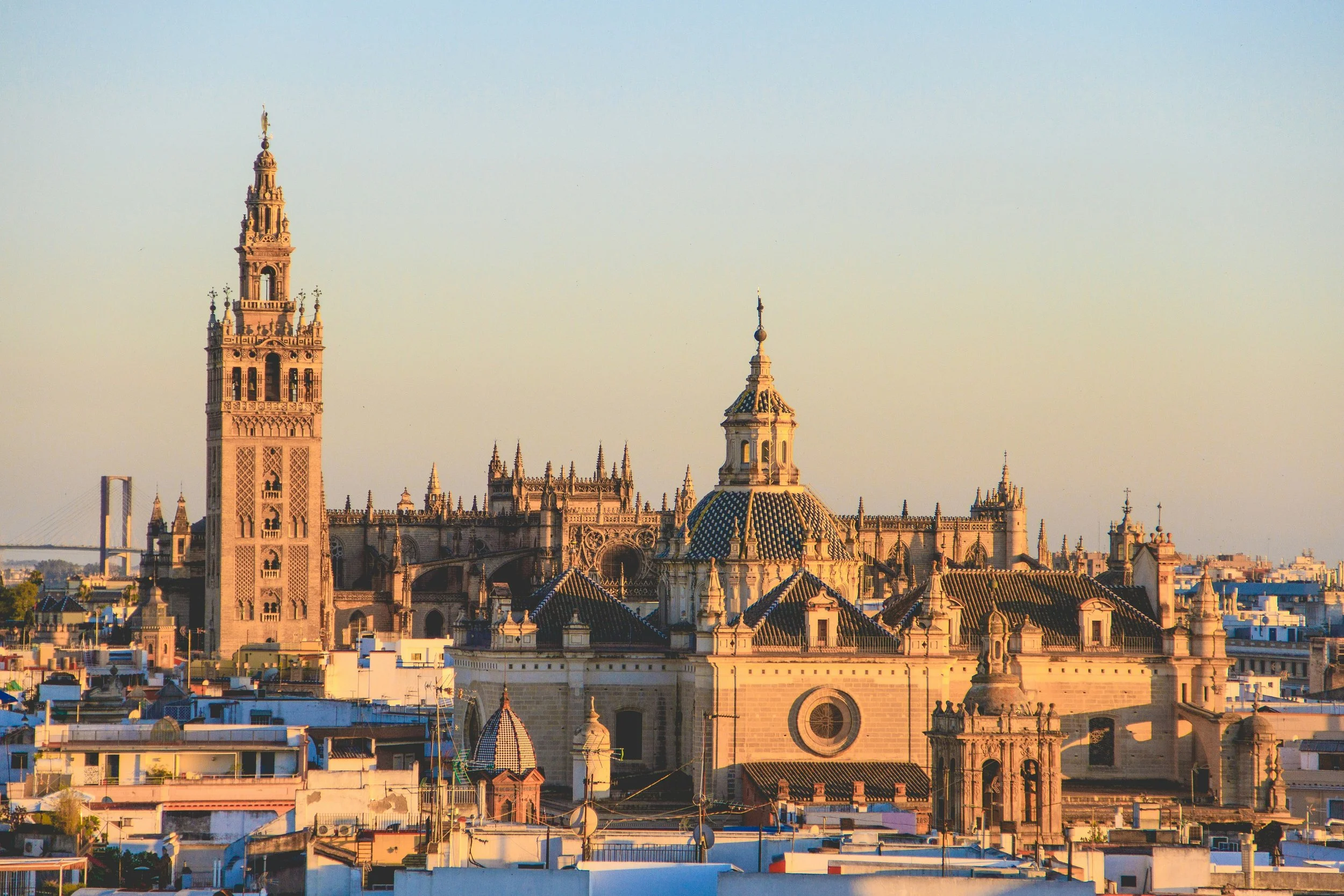
Every private Andalusia journey begins in Seville, and with good reason. The capital of the region is one of the great cities of southern Europe, a place where the Moorish, Jewish and Christian layers of Spanish history exist in the same streets and sometimes in the same buildings, and where the culture of the south, flamenco, tapas, the passion for public life that fills every plaza at every hour, feels most concentrated and most alive.
The Seville Cathedral is the natural starting point. The largest Gothic cathedral in the world and a UNESCO World Heritage Site, it contains the tomb of Christopher Columbus and a scale of ambition that still astonishes after five centuries. Alongside it, the Alcázar of Seville is one of the most beautiful palaces in Europe, a Mudéjar masterpiece still used by the Spanish royal family today, with intricate tilework, lush walled gardens and ornate courtyards that trace the city's extraordinary layering of civilisations.
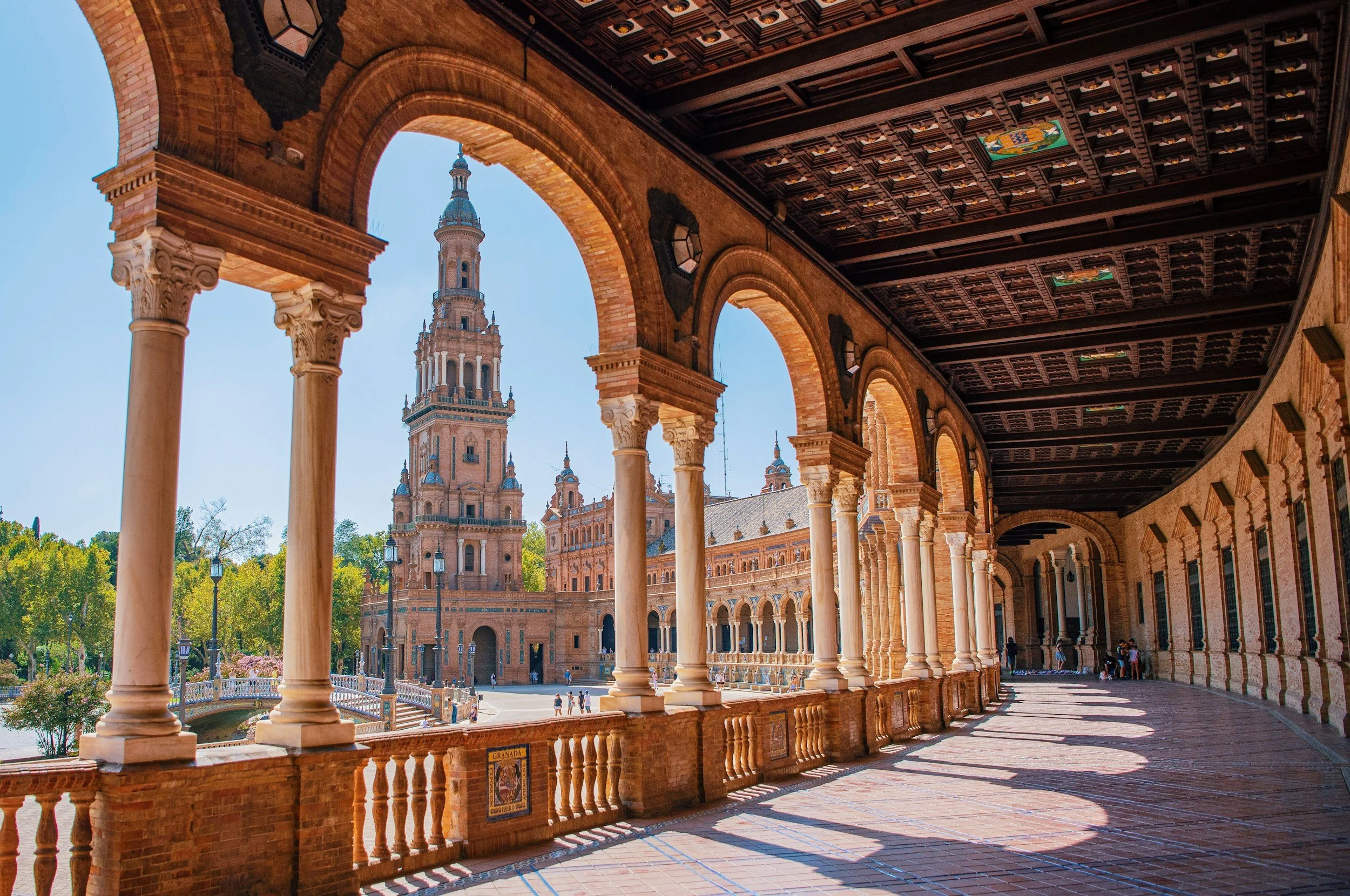
The afternoon belongs to Seville at its own pace. The Plaza de España, the vast semicircular landmark built for the 1929 Ibero-American Exposition, is one of the most dramatic public spaces in Spain and best explored without a guide, simply wandering its tiled alcoves and colonnaded galleries. In the evening, a private flamenco experience in an intimate vaulted space, where ancient Roman walls form the backdrop and the seating is close enough to feel every movement and breath of the performers, offers a completely different encounter with flamenco to anything available in a commercial venue. Recognised by UNESCO as an Intangible Cultural Heritage, flamenco in Seville is not a performance put on for tourists. It is a living art form with deep roots in the city's identity, and experiencing it privately and intimately is one of the most memorable evenings available anywhere in Andalusia.
Granada: the Alhambra and the living memory of Al-Andalus
Granada occupies a unique place in the story of Spain. It was the last Muslim kingdom on the Iberian Peninsula, holding out until 1492 when the Catholic Monarchs Ferdinand and Isabella completed the Reconquista and changed the course of European and world history. The legacy of that moment, and of the eight centuries of Moorish civilisation that preceded it, is visible in every corner of the city.
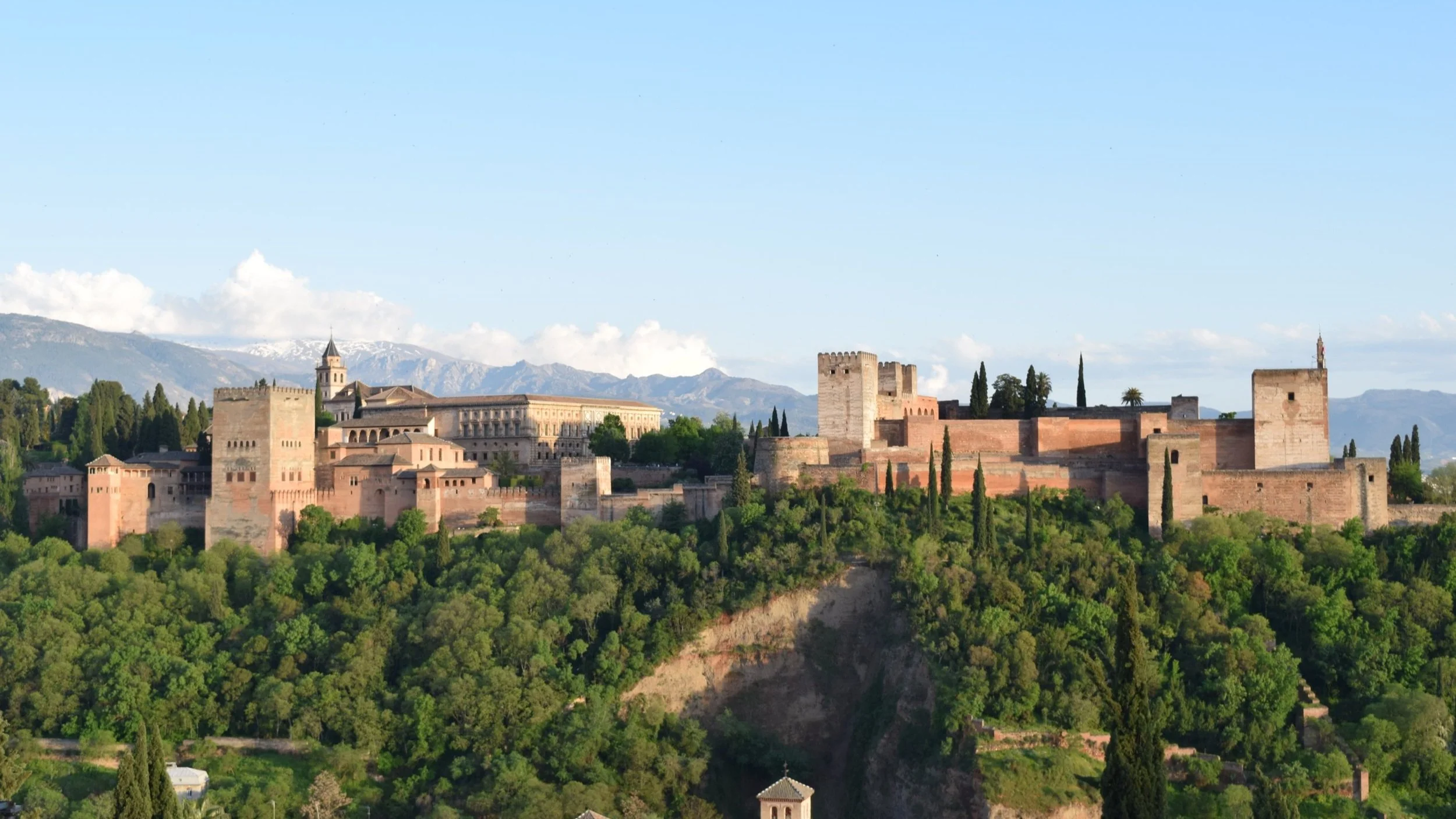
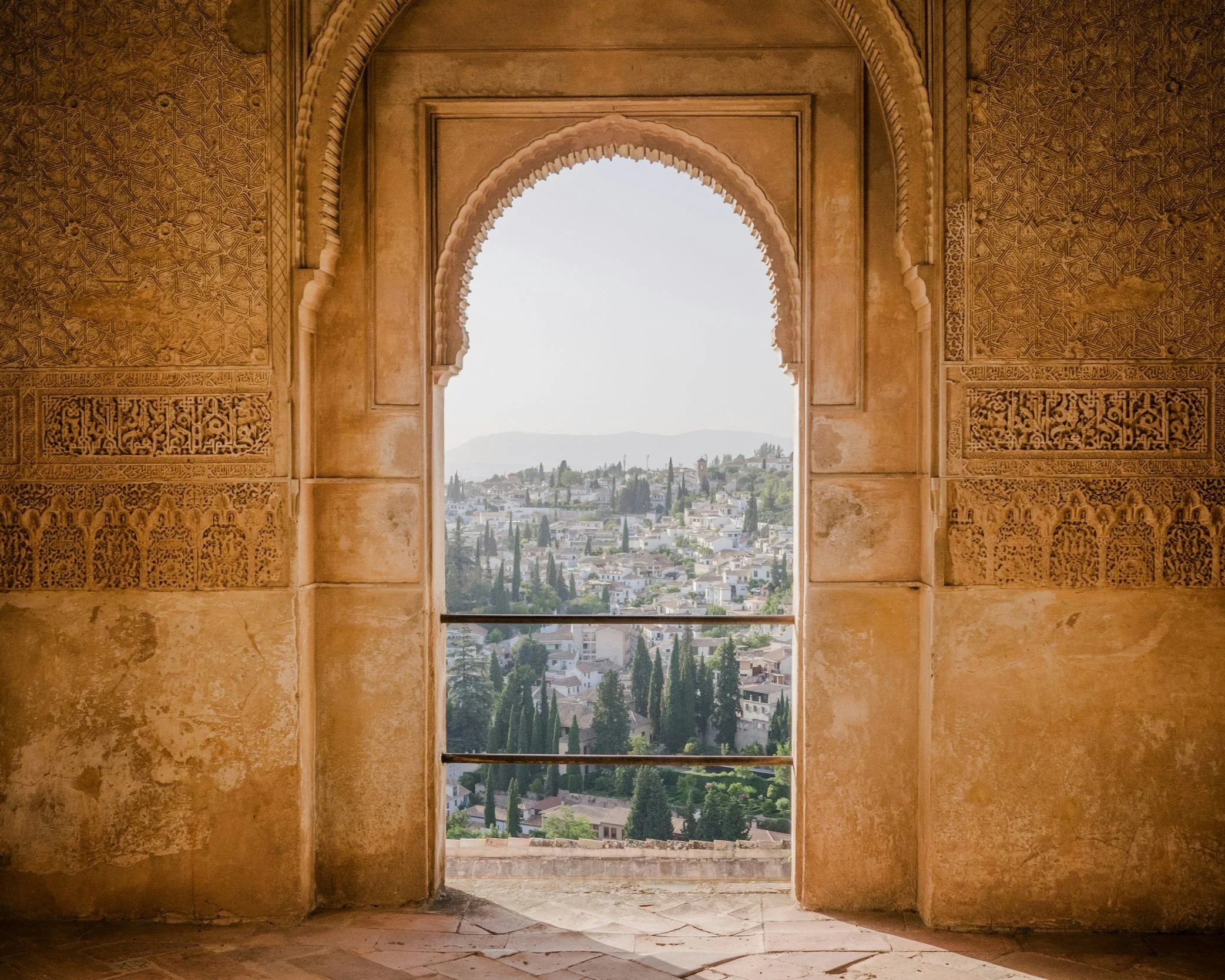
The Alhambra is the centrepiece of any Granada visit and one of the most extraordinary buildings in the world. Built in the 10th century as a palace and fortress complex, it was later transformed into a Christian royal residence after the Reconquista, and its extraordinary layering of Islamic and Renaissance architecture tells the story of that transition in stone, tilework and carved plaster. A private guided visit timed for late afternoon, when the light changes across the Nasrid Palaces and the crowds of the morning have thinned, transforms what is already one of the world's great cultural experiences into something genuinely intimate. The Nasrid Palaces require timed entry and book out months in advance, making advance planning essential.
The following day reveals a different Granada entirely. The Cathedral and the Royal Chapel, built on the site of a former mosque by Queen Isabella after the conquest, are among the finest examples of Spanish Renaissance architecture in existence. The Royal Chapel houses the tombs of the Catholic Monarchs themselves, a surprisingly moving space given the weight of history that rests here. From the Cathedral the journey continues into the Albayzín, Granada's ancient Arab quarter, where narrow winding streets and whitewashed houses climb the hillside above the city and the Moorish past feels genuinely present rather than reconstructed. The Mirador de San Nicolás offers one of the great views in Spain, looking directly across the valley to the Alhambra with the Sierra Nevada mountains rising behind it.
The evening belongs to dinner overlooking the Alhambra, watching the palace illuminate against the darkening sky while the city settles into its late-night rhythm below.
Córdoba: the Mezquita and the golden age of Al-Andalus
Córdoba was once the most sophisticated city in Europe. At its height in the 10th century, under the Umayyad Caliphate, it was a centre of science, philosophy, medicine and culture that attracted scholars from across the known world. The Mezquita, the great mosque begun in the 8th century and expanded over the following two hundred years, is the physical monument to that extraordinary period, and one of the most remarkable buildings in the world.
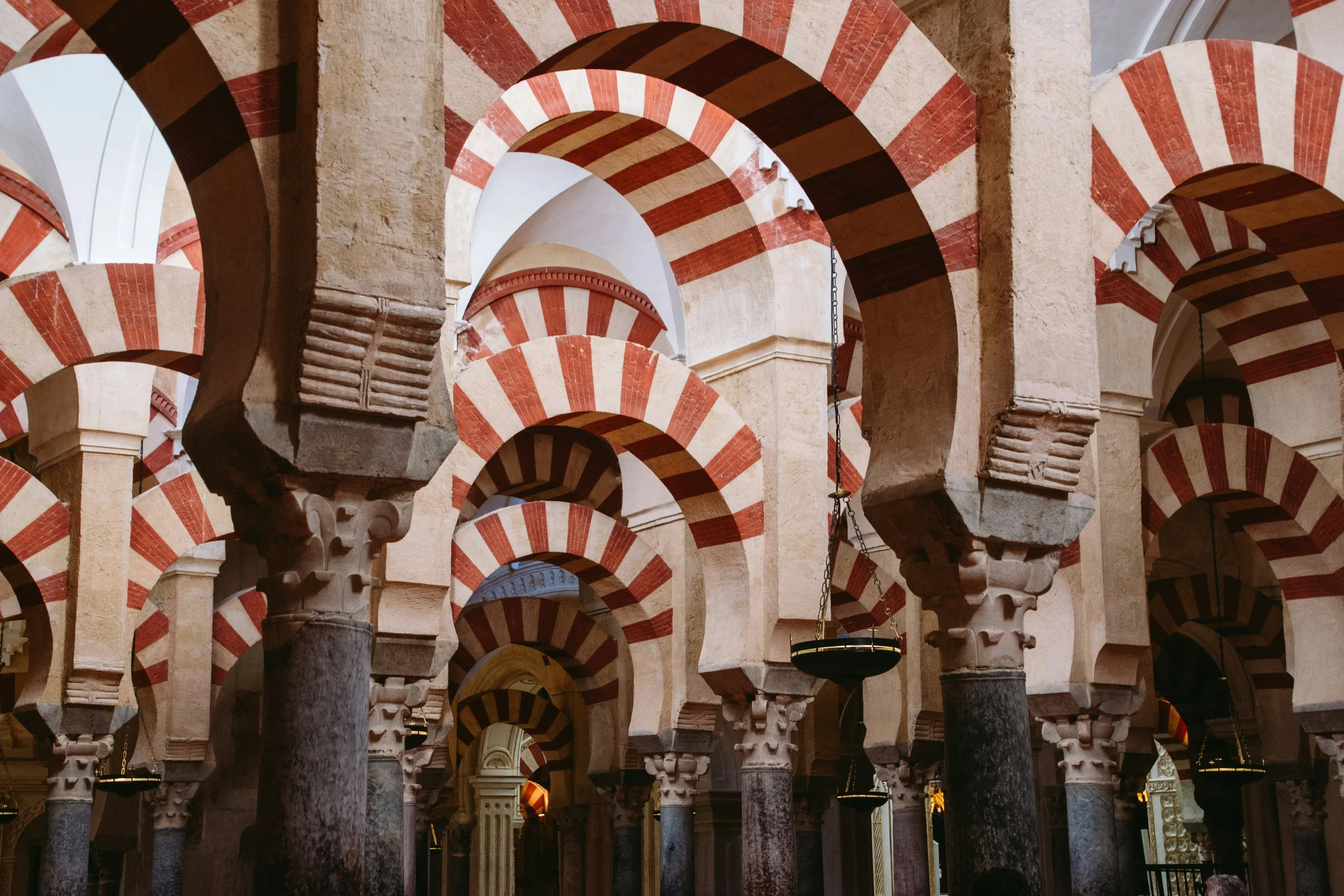
Walking through the Mezquita's vast interior, with its forest of striped horseshoe arches stretching in every direction and the Renaissance cathedral that sits incongruously at its heart, is unlike any other architectural experience in Spain. A private guide who can illuminate the full story of what you are looking at, the layers of civilisation compressed into a single building, transforms the experience entirely.
The rest of Córdoba rewards equally attentive exploration. The Roman Bridge, one of the oldest in Spain, stretches across the Guadalquivir River with the Mezquita visible behind it. The Alcázar de los Reyes Cristianos, with its remarkable Roman mosaics and Moorish baths, tells the story of the city's transition from Islamic to Christian rule. The Jewish Quarter, one of the best-preserved in Spain, contains a 14th-century synagogue that is one of only three surviving medieval synagogues in the country and a profound reminder of the remarkable cultural plurality of medieval Andalusia.
Córdoba is also home to one of Andalusia's most celebrated annual events. The Fiesta de los Patios de Córdoba, held each May, sees the city's private courtyards thrown open to the public, filled with extraordinary displays of flowers, jasmine and geraniums that have been tended for months in preparation. It is a UNESCO-listed tradition and one of the most singular celebrations in Spain. For those visiting in May, timing a Córdoba stay to coincide with the festival adds a dimension to the city that no amount of sightseeing can replicate.
The countryside: olive oil, white villages and the Atlantic coast
Between the main cities, Andalusia's countryside offers some of the journey's most memorable experiences. A private visit to a traditional olive oil mill, one of the region's working almanzaras, reveals the extraordinary depth of Andalusia's agricultural heritage. Olive oil production here dates back more than three thousand years, and a private tasting with the producers who press the oil, followed by a picnic lunch among the olive groves, is a completely different kind of Andalusian experience to anything available in the cities.
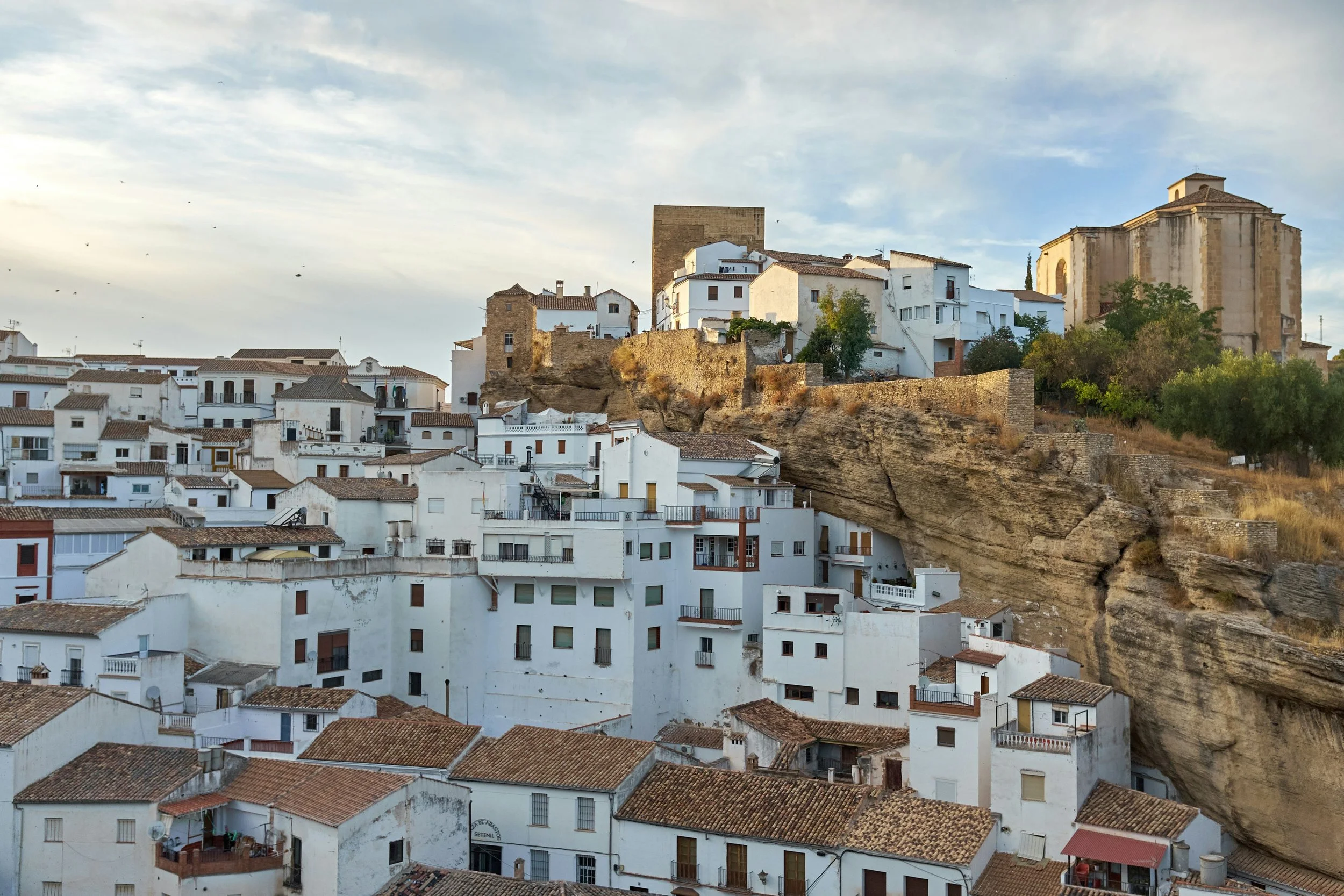
The Pueblos Blancos, the white villages of the interior, deserve at least a full day. Setenil de las Bodegas is one of the most extraordinary villages in Spain, its whitewashed houses built directly into the cliff overhangs above the river, creating streets that run literally beneath the rock. Nearby Ronda sits dramatically on the edge of a deep gorge, its 18th-century bridge one of the most photographed structures in Spain, its history of bullfighting, bandits and literary associations running through everything from Byron to Hemingway to Orson Welles, all of whom spent time here. A private guide who knows both villages and the landscape between them brings the full depth of this remarkable corner of Andalusia to life.
The Atlantic coast beckons for the final chapter. Jerez de la Frontera is the birthplace of sherry wine, flamenco and the Spanish equestrian tradition, and a private tour of one of its great bodegas, with a proper sherry tasting that moves from fino to amontillado to oloroso, is one of the great sensory experiences of southern Spain. From Jerez the road runs to Cádiz, widely considered the oldest continuously inhabited city in western Europe, a place of extraordinary light, Atlantic air and a relaxed confidence that comes from two thousand years of watching history flow in and out of its harbour. The afternoon can end on the beach or wandering the traditional neighbourhoods of La Viña and El Pópulo, where the city's real character reveals itself most clearly.
Andalusia in the context of a broader Spain journey
Andalusia combines naturally with Madrid and Barcelona for a complete Spanish journey, moving between the imperial capital, the cosmopolitan northeast and the extraordinary south in a single private itinerary. It also pairs beautifully with Morocco, which lies just fourteen kilometres across the Strait of Gibraltar from Tarifa. The two destinations share eight centuries of shared history and a cultural connection that makes the combination one of the most compelling multi-country journeys available anywhere in the world. Many of our clients who visit Andalusia find themselves drawn to Morocco, and vice versa. Explore our full Spain destination page for more on what a private journey through the country can look like.
Every journey is designed around you
A private Andalusia itinerary is not a fixed route. It is a framework shaped entirely by the interests and pace of each traveller. Those drawn by the architectural legacy of Al-Andalus will move differently through the region than those whose priority is the food culture, or the flamenco, or the countryside. We design every journey from scratch, with specialist local guides in each city, private transfers throughout and the flexibility to follow the journey wherever it leads.
Ready to start planning your ANDALUSIA journey?
Explore our Spain destination page for more experiences and inspiration. When you are ready to talk, get in touch and we will begin designing your Andalusia journey.